
Seasonal Skid Steer Attachments for Snow Removal & Dirt Work
Many contractors only use their skid steers for a portion of the year, leaving valuable equipment parked when seasonal work changes. Every day a machine sits idle is a missed opportunity to generate revenue and recover ownership costs. Keeping your equipment productive year-round is one of the simplest ways to improve its return on investment.
The good news is that the right attachments can keep your skid steer productive throughout the year. From snow removal in the winter to grading, landscaping, material handling, and site preparation during the warmer months, one machine can perform a wide range of jobs. By adapting your equipment to the season, you maximize its value, reduce the need for additional machines, and keep work coming in year-round.
Understanding which attachments deliver the most value for each season helps you plan ahead and get the most from your investment. In this guide, we’ll explore the essential skid steer attachments for winter and warm-weather work, along with practical tips for choosing the right tools to keep your machine productive all year long.
Winter Snow Removal Attachments
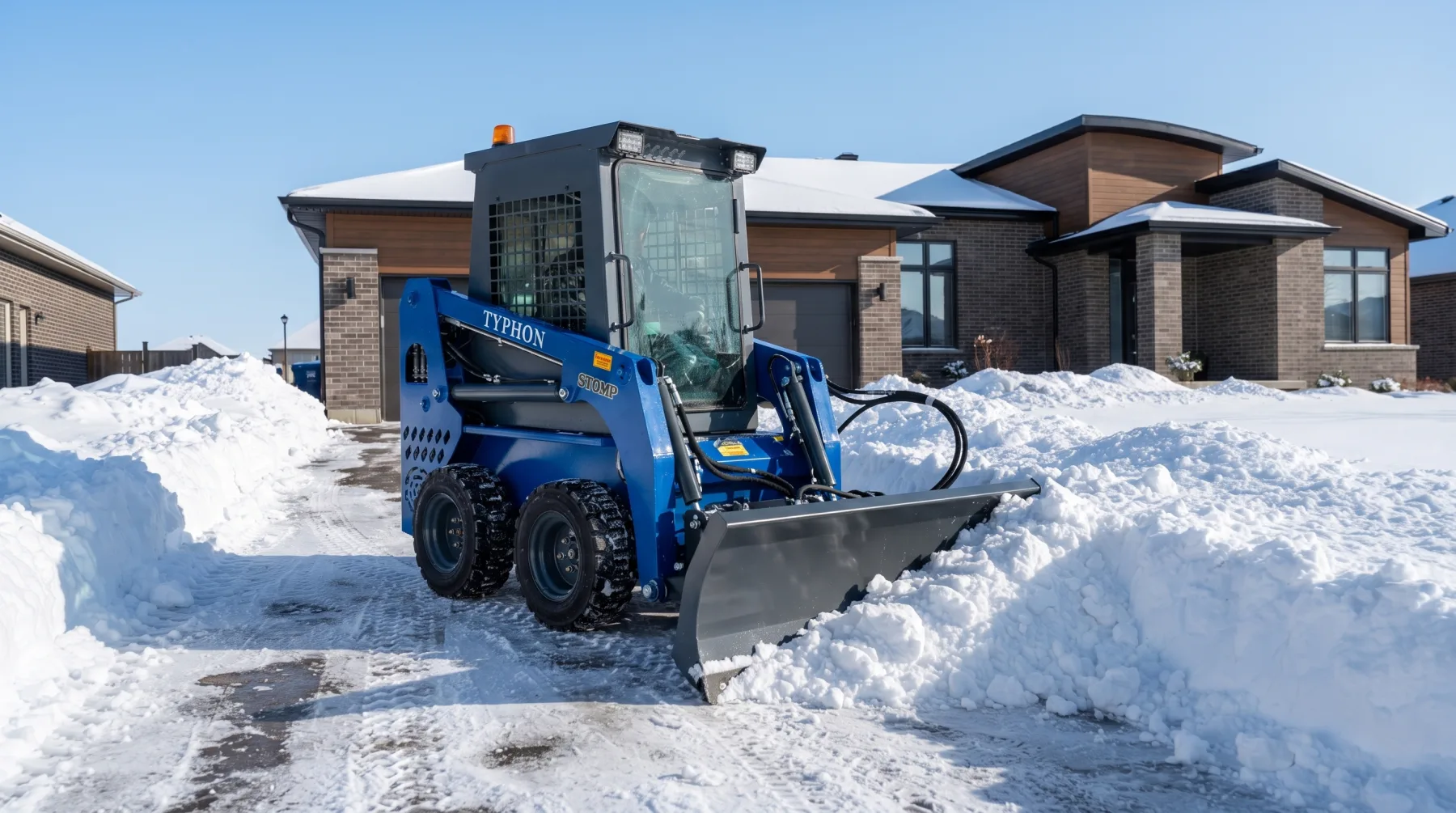
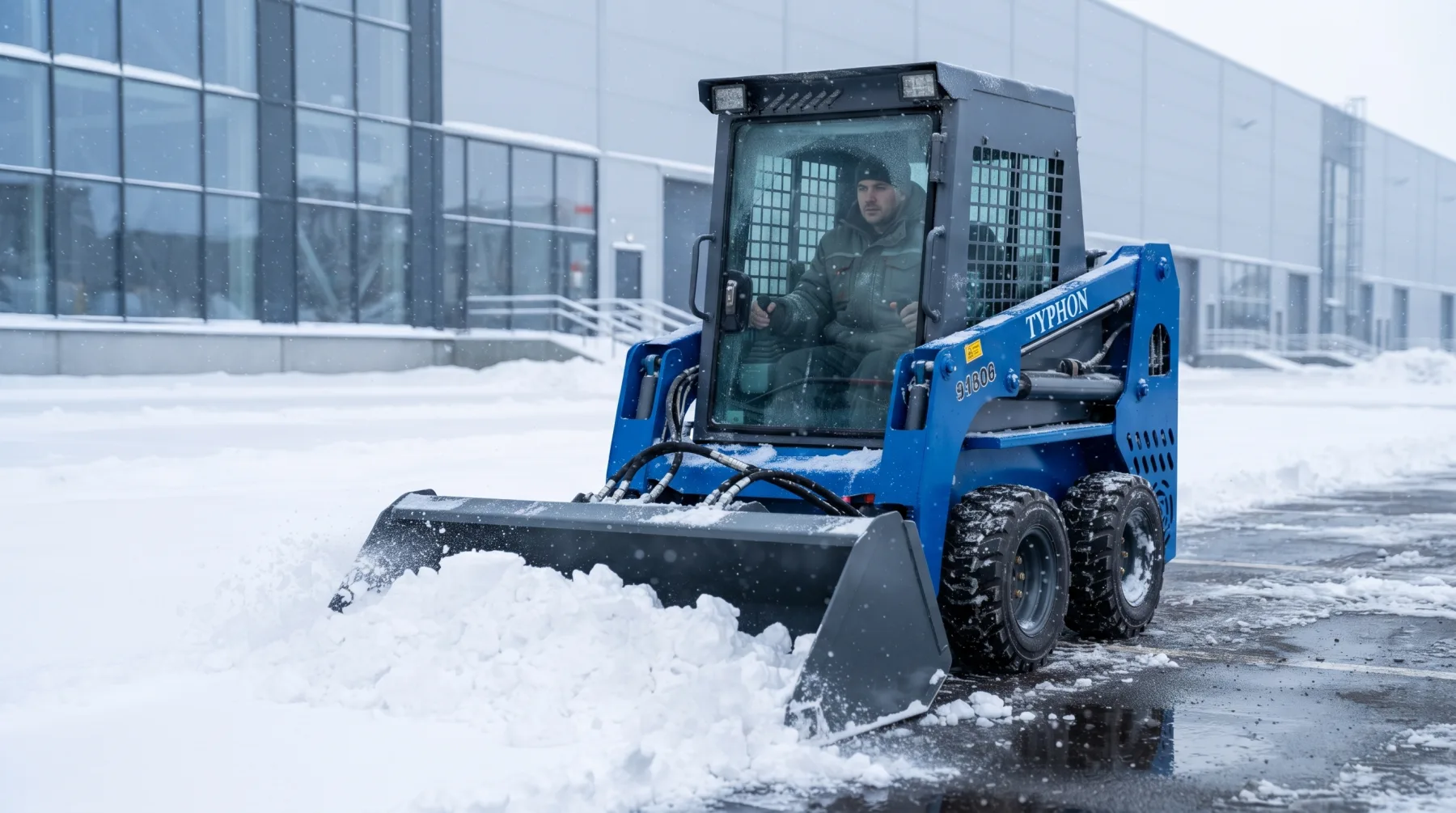
Snow removal is one of the smartest ways to keep your skid steer earning when the ground freezes. Commercial lots, private drives, and sidewalks all need clearing, and that demand shows up like clockwork every winter.
The key is choosing the right attachment for the conditions and the areas you need to clear. Snow blades work well for pushing light to moderate snowfall on paved surfaces, while snow pushers move larger volumes more efficiently in parking lots and commercial properties. Buckets can also handle piled or compacted snow when loading and relocating it. Matching the attachment to the job improves clearing speed, reduces cleanup time, and helps deliver a cleaner, more professional finish.
Snow Blades
A snow blade is the workhorse of winter clearing. It angles left or right, letting you push snow to one side as you drive forward. This makes quick work of driveways, roads, and long straight runs.
Blades are durable, simple, and affordable. For contractors just adding snow removal to their services, a blade is often the smartest first purchase. It handles the majority of jobs without a steep learning curve.
Look for a blade with a floating design and a replaceable cutting edge. The floating feature helps the blade follow uneven surfaces for cleaner snow removal, while a replaceable edge reduces maintenance costs over time. If you clear a variety of properties, a hydraulic angle adjustment can also improve efficiency by making it easier to direct snow where it’s needed.
Snow Pushers
When you’re clearing large open areas like parking lots, a snow pusher moves far more volume than a blade. Instead of angling snow aside, the pusher’s boxed design carries a full load straight ahead, letting you stack it exactly where you want it.
Pushers come in steel-edge and rubber-edge versions. Steel edges scrape hard-packed snow and ice, while rubber edges protect delicate surfaces like decorative concrete and pavers. Pick based on the surfaces you service most.
For high-volume commercial accounts, a pusher pays for itself fast. You clear bigger areas in fewer passes, which means more properties served per shift.
Snow Blowers
Snow blowers handle the heavy, deep snow that blades and pushers struggle with. Rather than pushing snow, they cut into it and throw it clear, which is ideal when snowbanks are already high and there’s nowhere left to pile more.
These attachments excel in regions with heavy snowfall or on jobs where snow needs to be relocated entirely. Adjustable chutes let you direct the discharge exactly where it belongs, away from walkways and entrances.
A snow blower is a larger investment, but it can pay off quickly for contractors who work in areas with frequent or heavy snowfall. Unlike blades or pushers that move snow into piles, a snow blower throws it clear of the work area, making it easier to keep parking lots, sidewalks, and driveways open during major storms. If you regularly deal with deep accumulation or need to clear large areas efficiently, a snow blower can significantly reduce cleanup time and improve productivity throughout the winter.
Warm-Season Dirt Work Attachments
Once winter ends, your skid steer moves into its busiest season. From site preparation and grading to landscaping, trenching, and material handling, warm-weather projects create steady demand for a versatile machine. With the right attachments, a single skid steer can take on a wide variety of tasks without the need for additional equipment.
Choosing attachments that match the work you perform most often keeps your machine productive and your crews working efficiently. Instead of switching between multiple machines, operators can quickly swap attachments to move from one task to the next, reducing downtime and increasing jobsite productivity. Building a practical attachment lineup also helps you expand the services you offer while getting more value from your skid steer throughout the construction season.
Buckets
The standard bucket is the most-used attachment for good reason. It digs, scoops, carries, and loads material across nearly every job type. From moving gravel to backfilling trenches, a quality bucket handles daily tasks without complaint.
Consider adding a low-profile bucket for better visibility and a tooth bar for tougher digging. Specialty buckets, like grapple buckets, extend your capabilities even further when you’re handling loose or bulky material.
Grapples
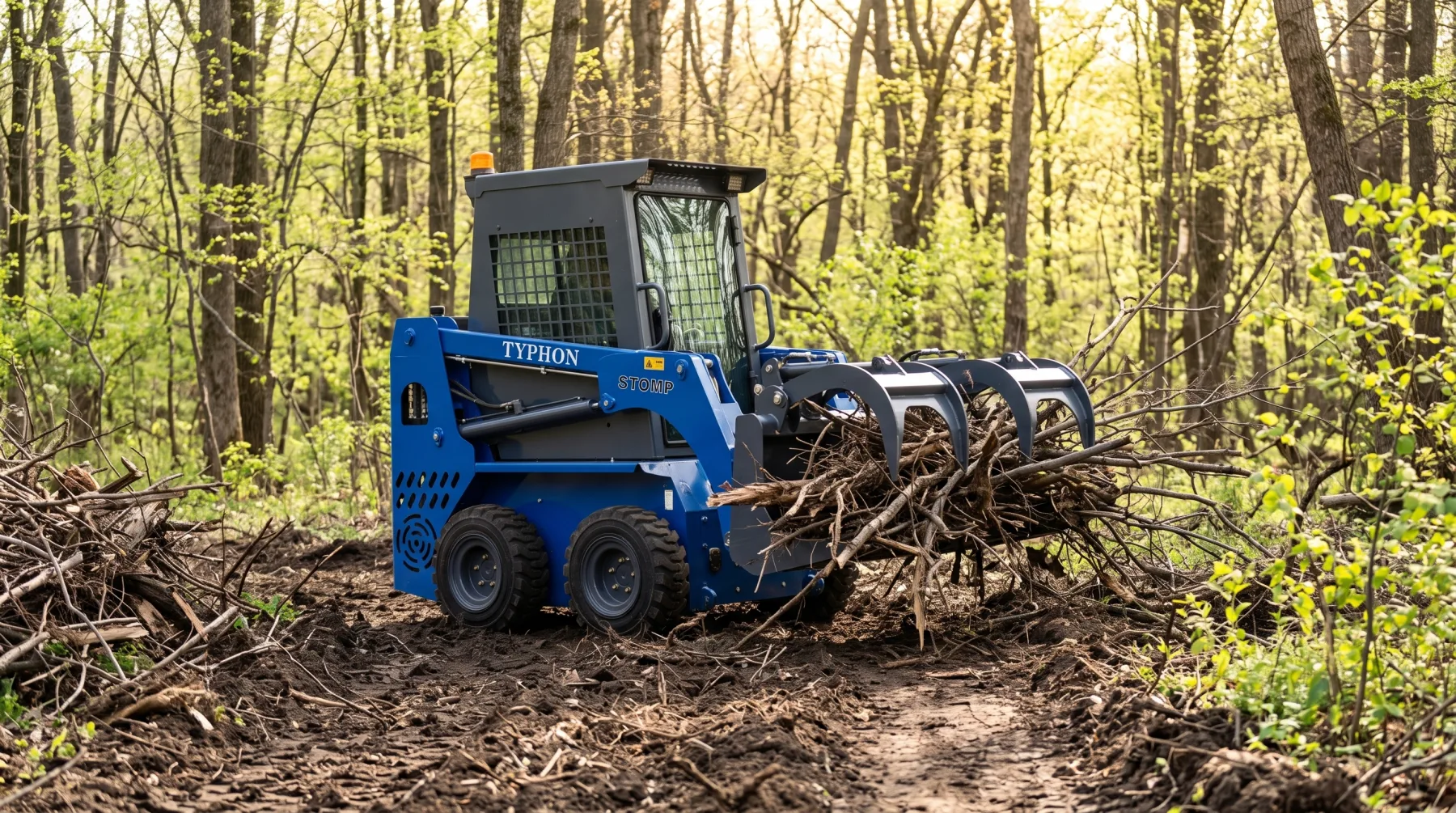
Grapples turn your skid steer into a serious material-handling machine. The hydraulic jaws grip logs, brush, rocks, and debris that a bucket alone can’t hold securely. That makes them essential for land clearing and cleanup jobs.
Root grapples work great for clearing brush and separating soil from debris, while industrial grapples handle demolition waste and scrap. Choose based on whether you’re clearing land or hauling heavy material.
Tillers and Soil Conditioners
Landscaping and site prep often demand a smooth, workable seedbed. Tillers and soil conditioners break up compacted ground, mix in amendments, and level the surface in a single pass. This saves hours of manual raking and prep.
Soil conditioners are especially valuable for lawn installation and grading finish work. They pulverize clumps, remove small rocks, and leave a clean surface ready for seed or sod. For landscapers, this attachment is a real time-saver.
How to Choose the Right Skid Steer Attachments
Choosing the right attachments depends on your machine’s capabilities and the type of work you do most often. Always check hydraulic flow, operating weight, and coupler compatibility before buying, since a mismatch can reduce performance and cause unnecessary wear. Start with everyday essentials like a bucket, then add high-use tools such as a grapple or snow attachment as your workload grows. Specialty tools like grading buckets or tillers should come later, once your projects actually require that level of precision.
It also helps to think about how each attachment will affect your overall workflow. Some tools can replace multiple manual tasks, saving time and reducing labor on site. Others are more specialized and only add value in specific conditions, so choosing carefully ensures you are not overloading your machine with equipment you rarely use.
Another key factor is long-term cost efficiency. A well-chosen attachment should improve productivity enough to justify its price over time. Focusing on durability and compatibility upfront helps avoid frequent replacements and keeps operating costs under control.
Match the Attachment to Your Machine and Jobs
Every skid steer has limits, and each attachment must stay within them to work properly. When an attachment exceeds hydraulic or weight capacity, it puts strain on both the tool and the machine, leading to slower performance and faster wear. Choosing based on your regular jobsite demands ensures better efficiency and longer equipment life.
It is also important to consider how consistently your machine can handle the attachment under real working conditions. Even if an attachment technically fits, pushing it near its maximum capacity for long periods can still reduce efficiency and increase maintenance needs.
Matching equipment properly also improves operator control and safety. A balanced setup responds more predictably, reduces stress on hydraulic systems, and helps maintain steady performance throughout the workday.
Prioritize Attachments by Usage Frequency
Focus first on attachments you will use daily or weekly, since they deliver the fastest return on investment. Occasional-use tools can wait until your workload justifies them. This approach keeps your setup practical, cost-effective, and ready for real job conditions.
Prioritizing frequent-use attachments also helps you build a more efficient and streamlined workflow. When the most important tools are always available, you reduce downtime and avoid constantly switching or renting equipment.
Over time, this method helps you make smarter investment decisions. Instead of spreading your budget across rarely used tools, you focus on attachments that consistently generate value and improve jobsite productivity.
Conclusion
A skid steer delivers its greatest value when it’s equipped to handle work in every season. With the right combination of attachments, the same machine can clear snow in winter, tackle grading and site preparation in spring, support landscaping projects in summer, and manage material handling throughout the year. This versatility helps reduce equipment downtime, improve jobsite efficiency, and maximize the return on your investment.
Planning your attachment lineup around the work you perform most often is one of the smartest ways to increase productivity and expand your capabilities. By choosing attachments that match your seasonal workload, you can take on a wider variety of projects, reduce the need for additional equipment, and keep your skid steer generating revenue throughout the year.
Every attachment adds new capabilities to your skid steer, allowing it to adapt to different projects and changing jobsite requirements. Building a well-rounded lineup helps improve productivity, reduce equipment downtime, and maximize the value of your investment.