
Radial Lift vs. Vertical Lift Skid Steers: Which One Fits Your Work?
You’re standing at the dealer lot, and two skid steers look nearly identical from the seat. Then you watch the arms move. One swings its bucket out and back in a curved arc, reaching hard at mid-height. The other pushes straight up, keeping the load close and steady all the way to the top. That single difference, radial lift versus vertical lift, shapes how each machine digs, grades, loads, and lifts. Pick the wrong path, and you either fight to reach a truck bed all day or pay for lift height you never use.
Radial and vertical lift skid steers are built with different lifting patterns, and each design offers advantages for specific applications. Radial lift models excel in digging, grading, and ground-level work by providing strong mid-height reach, while vertical lift models are designed for higher lifting tasks such as loading trucks and stacking materials.
The difference becomes clear when you look at how the machine handles real jobsite tasks. Radial lift is often preferred when operators spend more time cutting, backfilling, or working with attachments near the ground, while vertical lift provides an advantage when carrying loads to trailer beds, dump trucks, or elevated placement areas.
How Each Lift Path Works
Before you can choose, you need to understand what those arms are actually doing. Both machines carry the same basic skid steer, but the way the lift arms travel changes where the machine is strongest, how it reaches, and how steady it feels under a load. That single design choice drives nearly everything else about performance.
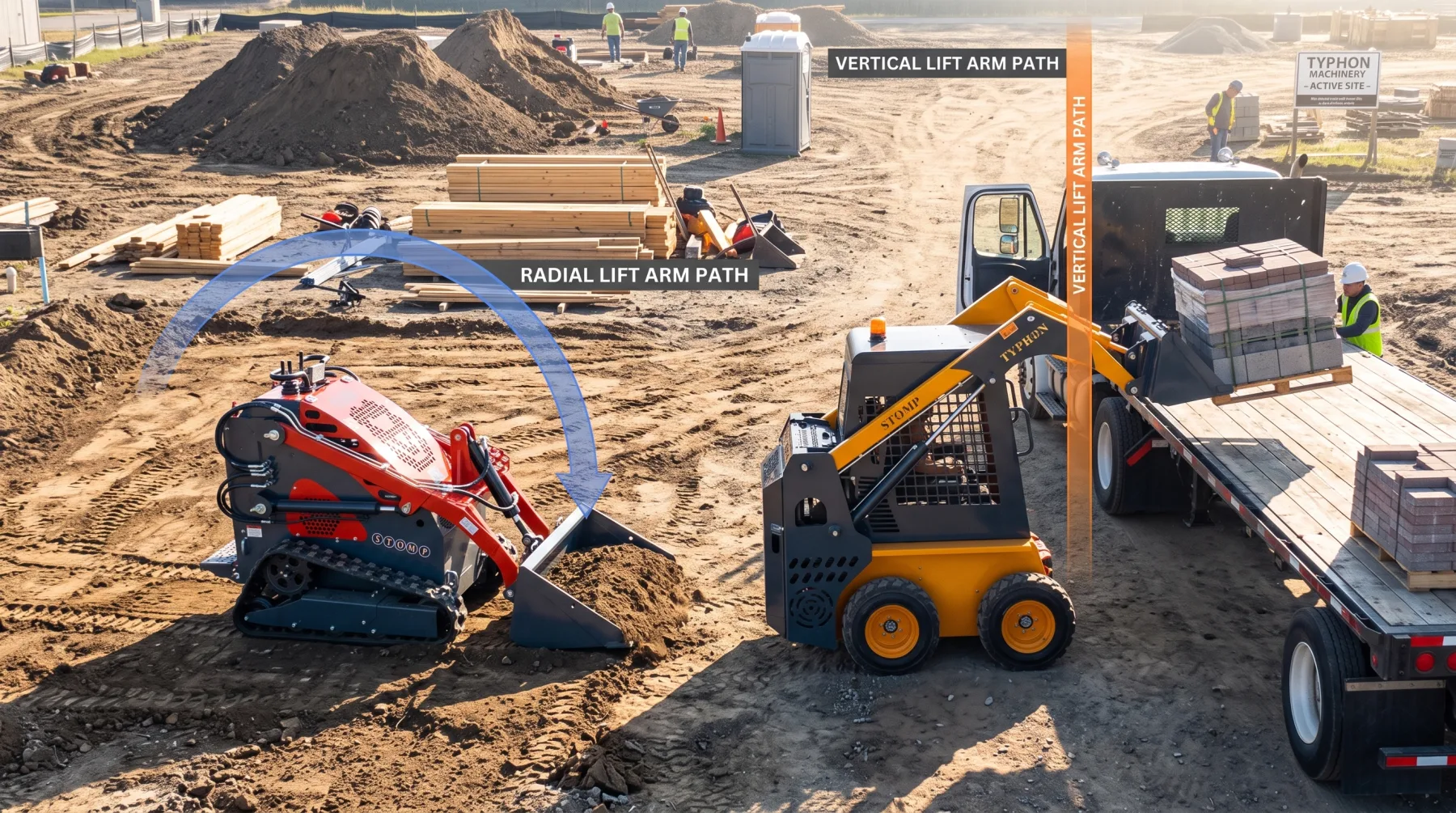
A radial lift system follows a curved path that brings the load closer to the machine during the lift cycle, while a vertical lift system moves the load upward and outward for greater reach at full height. These differences affect how easily you can dig, place materials, load trucks, and position attachments during everyday operations.
Radial Lift: The Curved Arc
A radial lift skid steer pivots its arms around a single point, so the bucket or attachment travels in a curved arc. As the arms rise, they swing outward at mid-height before curving back in toward the machine near the top. That means the machine reaches farthest right in the middle of its lift range, exactly where digging, grading, and groundwork happen.
This design keeps the geometry simple and rugged, with fewer moving parts to wear or maintain. The tradeoff shows up at full height, where the load pulls back toward the machine and reaches drops off. For work that lives close to the ground and out in front of the machine, that curved path plays right into the operator’s hands.
Vertical Lift: The Straight Path
A vertical lift skid steer uses a more complex linkage that guides the arms upward in a nearly straight line. The load stays closer to the machine throughout the lift and reaches its farthest point at full height, keeping the machine balanced and stable even with a heavy load raised high.
That straight path costs a little more in complexity and price, with extra linkage and pivot points to maintain. What you gain is confident, stable lifting at height and better reach over the side of a truck or into a hopper. When the job involves loading and stacking up high, that geometry earns its keep.
Takeaway: Radial lift reaches farthest at mid-height with a simple, rugged design, while vertical lift trades added complexity for stable, far-reaching lift at full height, so the arm’s path decides where each machine works best.
Where Radial Lift Excels
Radial lift machines are designed for tasks where digging, grading, and material handling happen close to the ground. Their curved lift path provides strong forward reach through the mid-range of the lifting cycle, making them effective for excavation, leveling, and attachment work. With a simpler design and reliable performance, radial lift skid steers are a practical choice for operators focused on ground-level productivity.
This lift design is especially useful on jobs where precise control and consistent contact with the work surface matter most. From preparing foundations to spreading material or working with ground-engaging attachments, radial lift models provide dependable performance without adding unnecessary complexity to everyday tasks.
Midrange Reach and Digging Power
The radial arm’s strength lands squarely in the middle of its travel, which is precisely where you dig, push, and pry. When you’re breaking ground, backfilling, or driving a bucket into a pile, that mid-height reach and the machine’s tendency to pull material back toward itself give you strong, controlled digging force right where you need it.
That same geometry helps with dumping and reaching over low obstacles like a foundation wall or a low trailer. The bucket extends out at mid-height without forcing the machine to creep closer, so you cover ground efficiently. For dig-heavy operations, radial lift delivers power and reaches exactly where the work lives.
Grading, Landscaping, and Groundwork
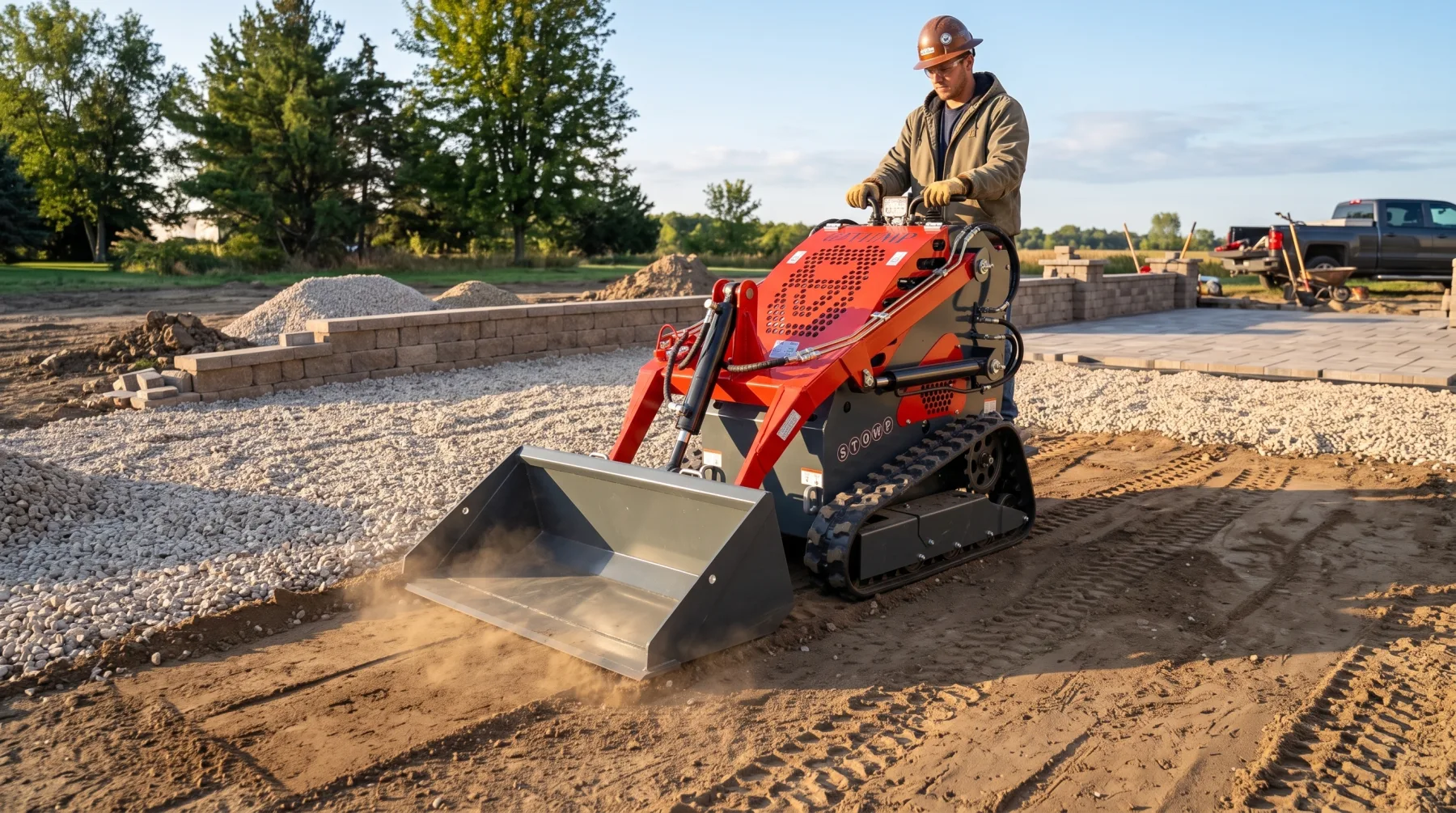
Grading rewards a machine that stays steady and predictable close to the ground, and radial lift fits that job cleanly. The arc keeps the attachment moving through a natural, sweeping path that helps operators feather cuts, spread material, and finish a surface smoothly without fighting the geometry.
Landscaping and site prep play to the same strengths. Leveling soil, spreading gravel, clearing brush, and running ground-level attachments all sit comfortably in the radial arm’s sweet spot. Add the lower purchase price and simpler upkeep, and radial lift becomes the practical choice for contractors whose work rarely climbs far off the deck.
Takeaway: Reach for a radial lift machine when your work centers on digging, grading, landscaping, and groundwork, where mid-height reach, strong digging force, and a simpler, more affordable build all pay off.
Where Vertical Lift Excels
Vertical lift machines are built for applications where lifting height and load placement are the priority. Their upward and outward lift path provides greater reach at full height, making them ideal for loading trucks, stacking materials, and handling pallets in demanding work environments.
This design helps operators move heavier loads with better control when working above ground level. Whether placing materials over sidewalls, reaching into truck beds, or organizing stock at a jobsite, vertical lift skid steers provide the reach and stability needed for efficient material handling.
Maximum Lift Height and Truck Loading
Loading trucks is where vertical lift truly separates itself. The straight path carries the load high while keeping it close and controlled, then reaches out at full height to clear the side of a dump truck or flatbed. Instead of nudging the machine forward and hoping the bucket clears the rail, you lift straight up and place the load cleanly over the bed.
That extra reach and stability at height save time and reduce spillage on every cycle. Filling hoppers, loading high-sided trailers, and dumping into containers all become smoother, safer tasks. For operations built around moving material up and out, vertical lift turns a daily struggle into a routine, repeatable motion.
Pallet Work and Material Handling
Handling pallets demands a machine that stays balanced with a heavy load raised high, and vertical lift is built for exactly that. Because the load stays close to the machine on the way up, the skid steer holds its stability as forks climb, letting operators place material onto racks, trailers, or elevated surfaces with confidence.
That capability makes vertical lift a natural fit for lumberyards, supply yards, and busy loading operations where forks see as much use as buckets. Setting a pallet onto a truck bed, stacking material at height, or feeding a work platform all lean on the reach and steadiness the vertical path provides. When lifting is the main event, this arm carries it.
Takeaway: Choose a vertical lift machine when your work centers on loading trucks, stacking pallets, and handling material at height, where maximum lift, extended reach, and stability under a raised load all matter most.
How Attachment Type and Job Mix Factor In
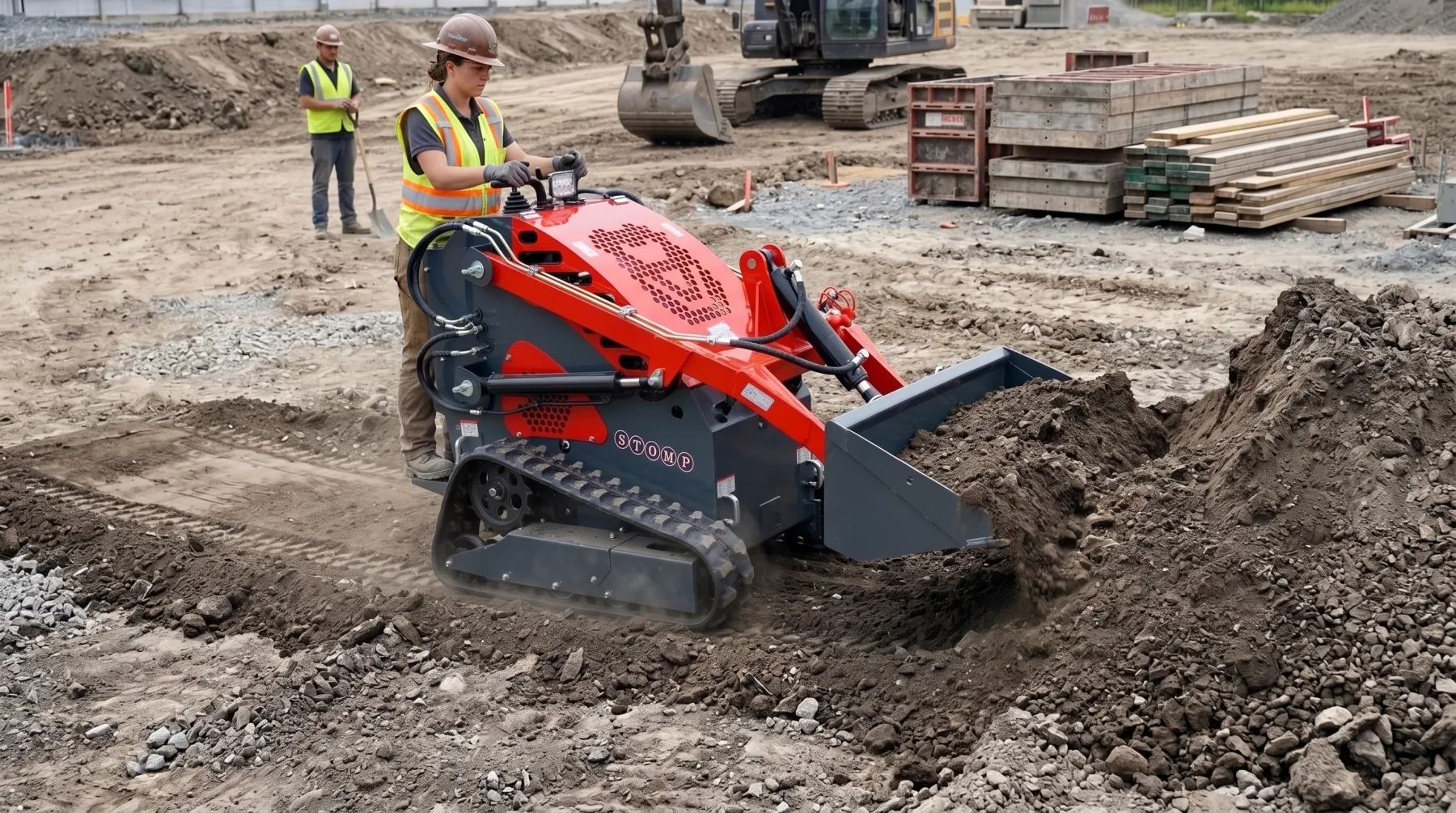
Lift path is only one part of the decision. The attachments you use and the tasks you perform most often play an equally important role in determining which skid steer fits your operation. A bucket, pallet fork, grapple, or other attachment may feel different depending on the machine’s lift pattern and working height.
Looking at your daily applications can reveal which design provides the better advantage. Whether your work focuses on digging, grading, loading, or material placement, matching the lift system to your most common tasks helps you get better performance from every attachment.
Matching Attachments to Lift Geometry
Different attachments favor different lift paths. Buckets, grapples, brush cutters, and augers spend most of their time at or near ground level, which plays directly to a radial machine’s mid-height strength. Pallet forks, on the other hand, thrive on a vertical machine, where the straight path keeps loads stable and reaches high without tipping the balance forward.
That doesn’t mean either machine refuses the other’s tools. A radial machine can run forks and a vertical machine can dig; they simply aren’t at their best doing it. Think about the attachments you use most, then let those tools guide you toward the lift design that handles them cleanly rather than clumsily.
Reading Your Real Job Mix
The smartest choice comes from an honest look at how you actually spend your hours. If most of your days involve digging, grading, and ground-level work with the occasional lift, a radial machine covers the bulk of your work and saves you money. If you’re loading trucks, stacking pallets, and lifting high on a regular basis, a vertical machine earns its higher price fast.
Avoid buying for the rare job. A contractor who loads a truck once a month shouldn’t pay for vertical lift they seldom use, and a yard that stacks pallets all day shouldn’t fight a radial arm at height. Match the machine to your everyday work, and the exceptions will sort themselves out with technique or a rented machine when needed.
Takeaway: Let your most-used attachments and your everyday job mix drive the decision, since the machine that handles your daily work cleanly beats the one that only shines on the jobs you rarely run.
Conclusion
Radial lift and vertical lift skid steers are designed for different priorities, so the right choice depends on the work you expect the machine to perform most often. If your projects involve excavation, grading, trench backfilling, or frequent attachment work close to the ground, a radial lift design can provide efficient performance. For operations that regularly load dump trucks, place pallets, or move heavy materials to higher positions, a vertical lift offers better reach and lifting capability where it matters most.
Instead of choosing based on lifting specifications alone, evaluate the tasks your skid steer will perform every day. Consider the height you need to reach, the materials you handle, the attachments you use, and the conditions on your jobsites. Matching the lift path to these real-world requirements helps improve productivity, reduce unnecessary operating costs, and ensure the machine delivers consistent performance throughout its service life.
Frequently Asked Questions
Can the same attachments be used on radial and vertical lift skid steers?
Yes, most attachments are compatible with both lift designs if they use the same coupler system. However, performance may vary depending on the machine’s lift path and hydraulic capabilities.
Which skid steer lift type is easier for beginners?
Both are easy to operate with proper training. Radial lift models often feel more natural for ground-level work, while vertical lift models may require practice when placing loads at higher positions.
Does jobsite size affect the choice between lift types?
Yes. Radial lift works well for digging and close-range tasks, while vertical lift is better for loading trucks, stacking materials, and jobs that require extra reach at height.