
Skid Steer Hydraulics: How Flow and Pressure Really Work
The hydraulic system is the muscle behind your skid steer, powering everything from the lift arms to the attachment on the front. Yet many operators run their machines for years without truly understanding how that power gets delivered. Two factors define what your hydraulics can do: flow and pressure. Get a handle on how these work together, and you can match attachments correctly, spot problems early, and get more productivity out of every machine in your fleet. Misunderstand them, and you risk underperforming attachments, frustrating slowdowns, and costly damage. This guide breaks down hydraulic flow and pressure in plain terms, explains how they relate to each other, and shows you what to watch for when something starts to go wrong. Whether you run the machine yourself or manage a crew, these fundamentals help you work smarter and protect your equipment.
Understanding Hydraulic Flow
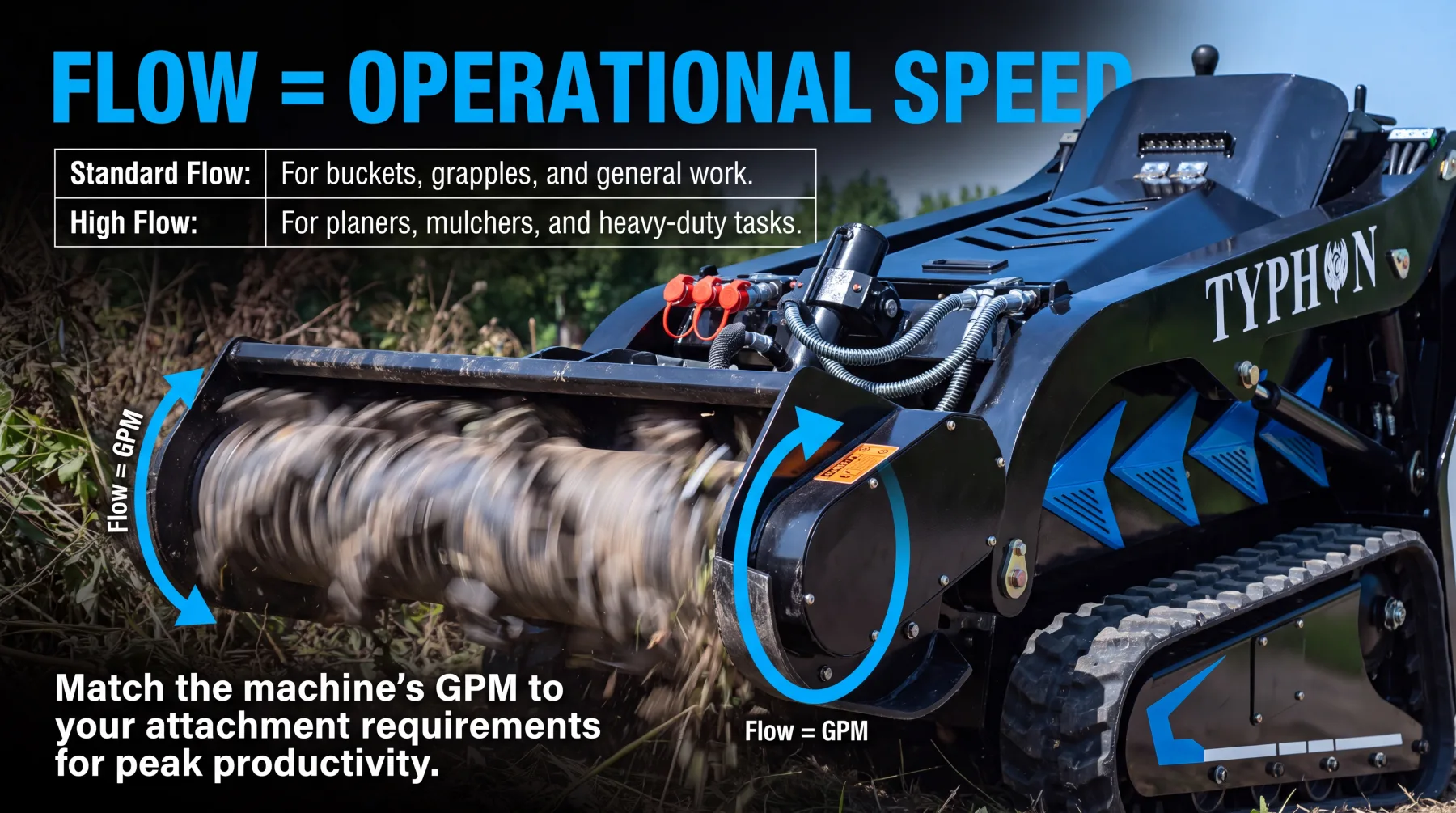
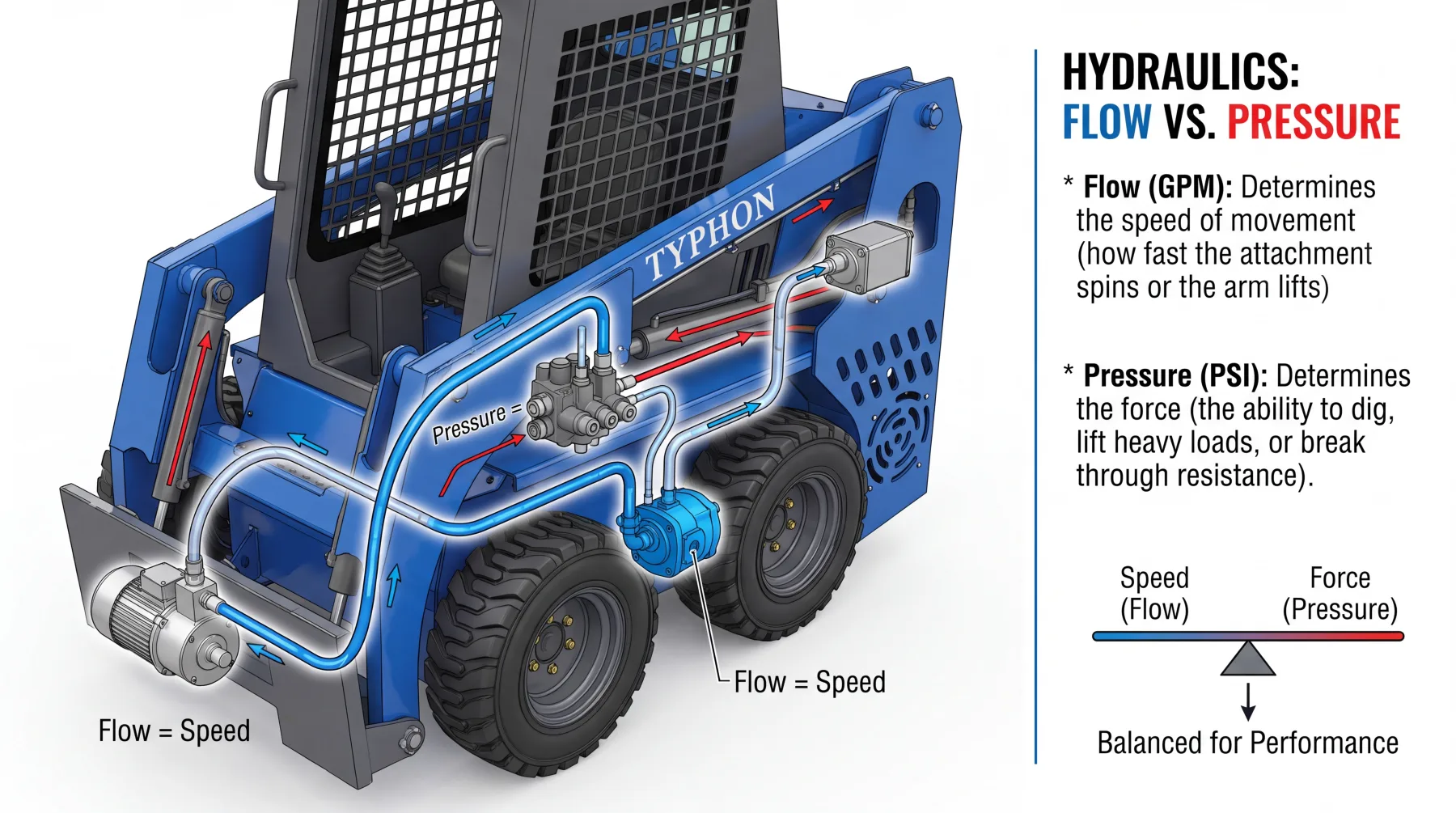
Hydraulic flow is the volume of fluid your skid steer’s pump moves through the system over time, usually measured in gallons per minute, or GPM. Think of flow as the speed of the work. The more fluid the system delivers to an attachment, the faster that attachment can run. A trencher chews through ground more quickly, a sweeper spins faster, and an auger drills at a higher rate when it receives the flow it was designed for. Flow does not determine how much force is available; it determines how fast the powered motion happens.
Skid steers typically come in two flow categories, and knowing which one you have is essential when choosing attachments. Standard flow handles most common tasks, while high flow delivers a greater volume to power demanding hydraulic attachments that simply cannot perform on standard flow alone. Matching the flow rating of an attachment to what your machine actually produces is the difference between strong performance and a tool that barely turns.
Several practical points are worth keeping in mind about flow:
Standard flow suits buckets, basic grapples, and lighter hydraulic tools
High flow powers cold planers, large mulchers, and heavy-duty rotary attachments
GPM ratings on attachments tell you the flow they need to perform correctly
Insufficient flow leaves an attachment sluggish and unable to reach its rated output
When you supply the right flow, attachments run at their intended speed and you get the productivity you paid for. Undersupply it, and the tool drags; oversupply it without the right setup, and you risk overheating or damage.
What to Know About Hydraulic Pressure
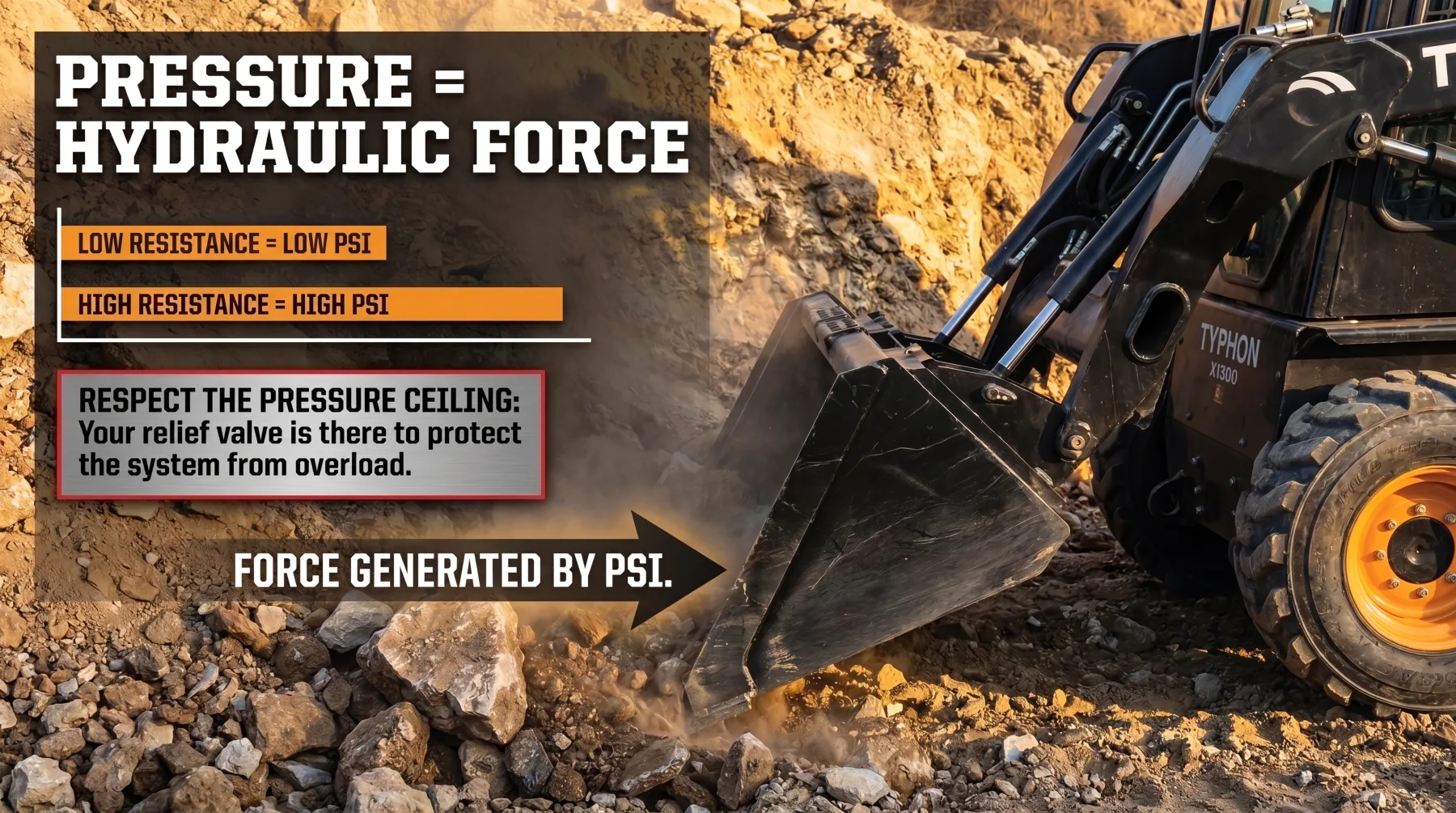
If flow controls speed, pressure controls force. Hydraulic pressure, measured in pounds per square inch, or PSI, is what gives your skid steer the muscle to lift heavy loads, push through resistance, and drive attachments that meet stubborn material. When an auger hits dense, rocky soil or a grapple clamps down on a heavy log, it is pressure that determines whether the machine powers through or stalls out. Without adequate pressure, even a fast-moving attachment cannot do meaningful work against real resistance.
Pressure builds in response to load. When an attachment meets little resistance, system pressure stays low. As resistance climbs, pressure rises to meet it, up to the limit set by the machine’s relief valve. That relief valve is a critical safety component, capping pressure at a safe maximum so the system does not damage itself when an attachment encounters more than it can handle. Understanding this helps explain why a machine works easily in soft conditions but labors hard in tough ones.
For operators and site managers, the key takeaway is that pressure ratings matter just as much as flow when evaluating what a machine can do. A skid steer with strong pressure capability handles demanding, high-resistance work better than one built only for light tasks. When you push an attachment into heavy material and the machine bogs down or trips the relief valve repeatedly, you are seeing the pressure ceiling in action. Knowing your machine’s pressure rating, and respecting it, keeps you from overworking the system and helps you choose attachments your hydraulics can genuinely drive.
The Relationship Between Flow and Pressure
Flow and pressure are often confused, but they are two distinct forces that work together to define what your hydraulics can accomplish. Flow sets the speed of an attachment, while pressure provides the force. You need both in the right balance, because one without the other leaves you short. A system with plenty of flow but little pressure spins an attachment quickly but cannot push it through resistance, while strong pressure with weak flow delivers force but moves far too slowly to be productive.
The combination of flow and pressure determines the actual hydraulic power available to do work. High flow paired with high pressure means an attachment can run fast and push hard at the same time, which is exactly what demanding tools like mulchers and cold planers require. This is why flow and pressure ratings always need to be considered together rather than in isolation. Looking at one number alone tells you only half the story about what a machine can really do.
This relationship also explains the trade-offs you feel during operation. When an attachment meets heavy resistance, the system shifts effort toward building pressure, and you may notice the action slow down as the machine works harder to maintain force. That is the natural interplay of the two forces responding to the load in front of them. For operators, recognizing this dynamic helps you read your machine and adjust your approach. For site managers comparing equipment, understanding that flow and pressure must be matched together leads to smarter purchasing and rental decisions that fit the real demands of the job.
Why Matching Attachments Matters
Every hydraulic attachment is engineered to operate within a specific range of flow and pressure, and matching that range to your skid steer is what separates strong performance from disappointment and damage. When you connect an attachment, its specifications tell you exactly what it needs to run correctly. Ignore those numbers, and you set yourself up for problems that cost time and money. The attachment may underperform, overheat, or fail prematurely, and in some cases the machine itself can suffer.
An attachment that demands more flow than your machine produces will run sluggishly and never reach its rated output, leaving you frustrated and behind schedule. On the other side, supplying an attachment with more flow or pressure than it was built to handle can overheat its motor, blow seals, or destroy components quickly. Neither situation is what you want, and both are entirely avoidable with a little attention to the specifications before you connect anything.
Keep these matching principles in mind when pairing attachments to a machine:
Check the attachment’s required GPM against your machine’s flow output
Confirm pressure requirements fall within your skid steer’s rated capability
Verify standard versus high flow before investing in demanding attachments
Use proper couplers and connections rated for the system’s pressure
Taking a few minutes to confirm compatibility protects both the attachment and the host machine while ensuring you get the productivity you expect. For site managers running multiple machines and a range of attachments, keeping clear records of flow and pressure specifications prevents costly mismatches in the field and helps crews grab the right combination every time.
Signs of Hydraulic Imbalance
A hydraulic system that is out of balance, whether from a mismatched attachment, a developing fault, or fluid problems, usually gives you warning signs before it fails outright. Learning to recognize these signals lets you catch trouble early, before a small issue turns into an expensive repair or unexpected downtime. The most common sign is an attachment that runs slower or weaker than it should, which often points to insufficient flow or pressure reaching the tool.
Overheating is another red flag worth taking seriously. When hydraulic fluid runs hotter than normal, it can mean the system is working against a mismatch, struggling with a restriction, or low on fluid. Excessive heat breaks down hydraulic fluid, damages seals, and accelerates wear throughout the system, so persistent overheating should never be ignored. Unusual noises, such as whining or knocking from the pump, can signal aeration, cavitation, or a component beginning to fail.
Watch for these warning signs during daily operation:
Sluggish or weak attachment performance that does not match the machine’s rating
Overheating fluid or a system that runs hotter than usual
Whining, knocking, or unusual pump noises that suggest air or wear
Jerky or erratic movements that point to pressure inconsistencies
Visible leaks at hoses, couplers, or fittings
Addressing these symptoms promptly protects your machine and keeps it productive. Check fluid levels and condition first, confirm the attachment matches the machine, and inspect for leaks or restrictions. For site managers, encouraging operators to report these signs early turns routine awareness into real savings by preventing breakdowns before they pull a machine off the job.
Conclusion
Understanding how flow and pressure work together gives you real control over your skid steer’s performance. Flow sets the speed of your attachments, pressure delivers the force, and the balance between them defines what the machine can truly accomplish. When you match attachments to your machine’s ratings, you get the productivity you paid for while protecting both the tool and the host equipment from damage. Just as important, knowing the warning signs of hydraulic imbalance lets you catch problems early, before they grow into costly repairs and downtime. Take time to learn your machine’s flow and pressure ratings, check attachment specifications before you connect anything, and stay alert to changes in performance during daily work. These habits cost little and reward you with reliable operation, longer equipment life, and fewer surprises on the job. Master the fundamentals of your hydraulics, and your skid steer will keep working hard, shift after shift.