
Skid Steer Lift Capacity Guide: What Size Do You Need for Pallets vs. Dirt?
Knowing your actual lifting requirements is the first step in purchasing the best skid steer. You may find it difficult to lift your heaviest materials if you get a machine that is too tiny, which will increase machine wear and waste time. On the other hand, if you get a machine that is too large, you will have spent thousands more than what is actually needed for your business. Understanding rated operating capacity, a figure that most purchasers misunderstand before signing any paperwork, is the first step towards striking the ideal balance.
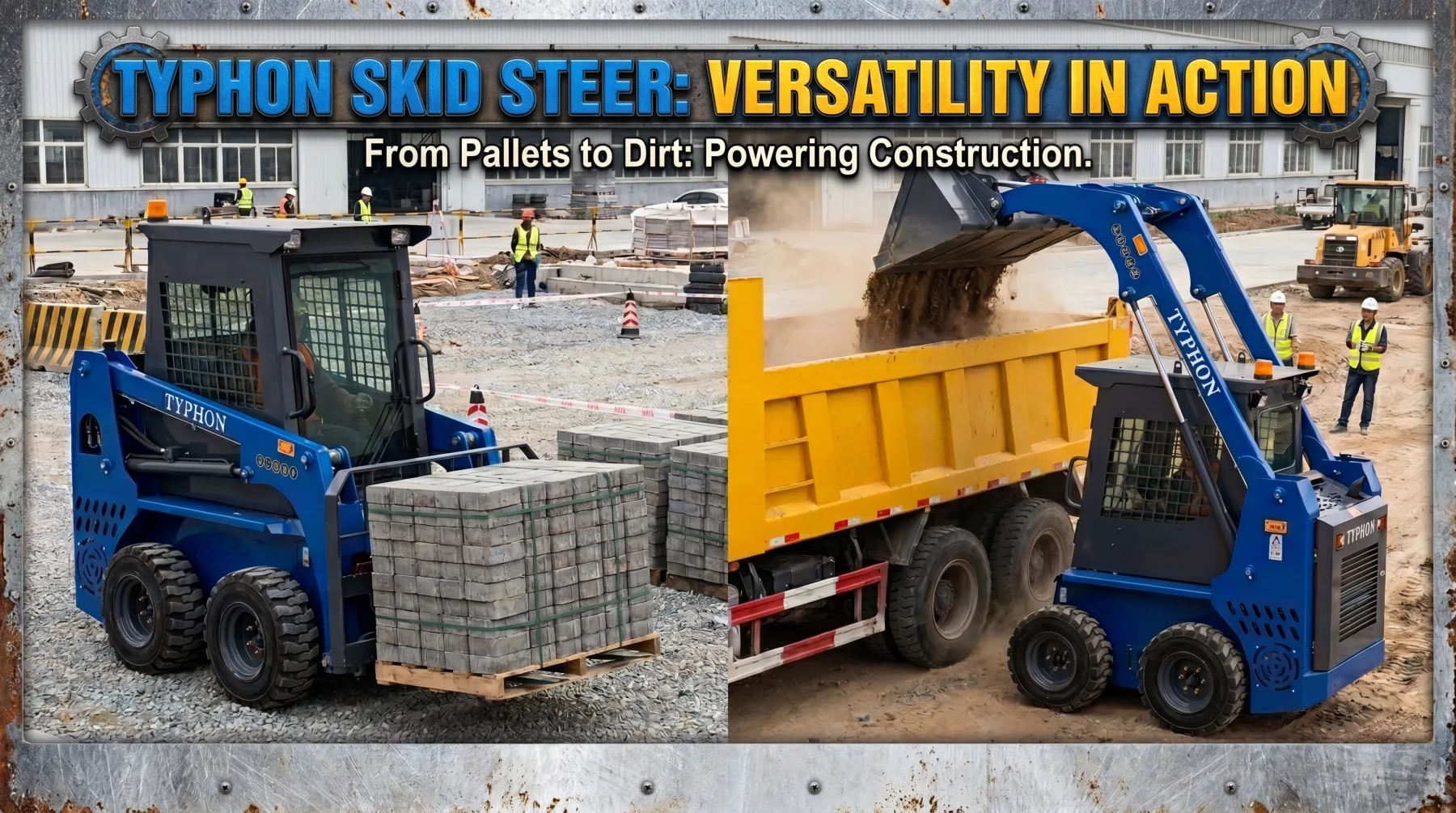
The lift capacity you need depends heavily on the specific application. Moving pallets of stone or pavers requires a machine that can handle consistent, dense, and potentially off-center loads safely. You need to account for the weight of the pallet itself plus the load, while also ensuring the machine remains stable on uneven ground.
Moving mulch, gravel, or dirt, on the other hand, requires different dynamics. You can frequently get away with a slightly lower capacity than you would need for heavy, pre-packaged goods because buckets are more flexible and easier to fill precisely. However, your reach and dump height become equally important as the raw lift weight if your job involves loading dump trucks. You can select a skid steer that fits your job and safeguards your profit by precisely specifying whether you are hauling large pallets or loose bulk goods.
What “Lift Capacity” Actually Means
Before you can choose the right machine, you need to understand two numbers every manufacturer publishes: tipping load and rated operating capacity. They sound similar, but they mean very different things, and confusing them is where trouble starts.
Tipping load is the weight at which the rear of the skid steer begins to lift off the ground when the load is raised and fully extended. In other words, it is the breaking point, representing the maximum weight before the machine starts to tip forward. You never want to operate at this number.
Rated operating capacity (ROC) is the figure you actually work with. For a standard skid steer, the ROC is 50 percent of the tipping load. So, a machine with a 4,000-pound tipping load carries a rated operating capacity of 2,000 pounds. That ROC is the safe, manufacturer-approved weight you can lift and move during normal operation.
How manufacturers calculate these specs is straightforward. Engineers test each machine by loading the bucket and measuring the exact point where the back end lifts. They factor in the machine weight, wheelbase, and center of gravity, then set the ROC at half that tipping point to build in a stability margin. It is worth noting that compact track loaders often carry a higher rated capacity, typically 35 percent of tipping load on tracks, because their wider footprint gives them greater stability.
When you read a spec sheet, the ROC is the number that matters for daily work. It already accounts for safety, so treat it as your real-world ceiling. Never view the tipping load as a goal, but rather as a danger zone to avoid at all costs.
Choosing the Right Size for Heavy Pallets
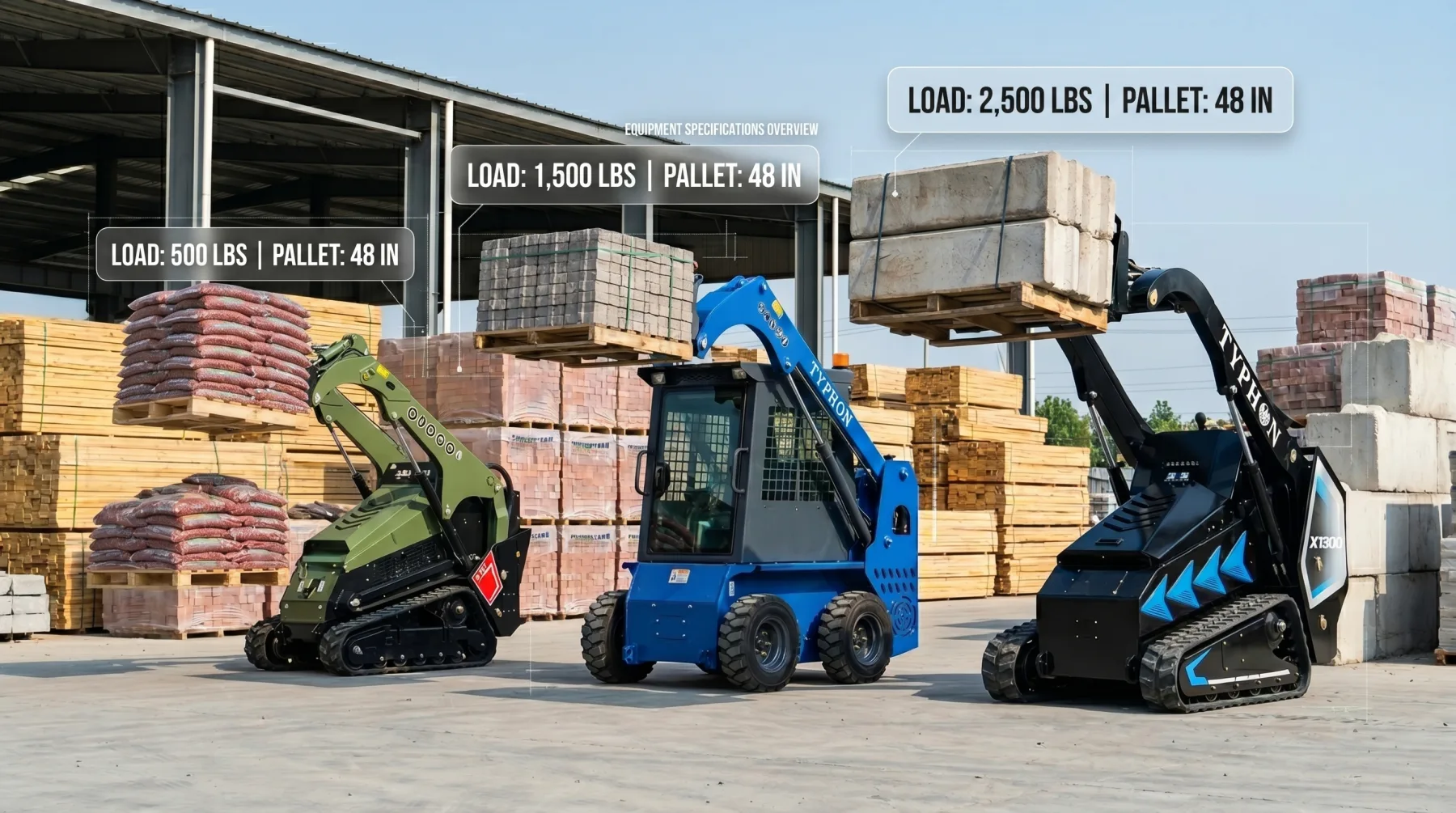
Pallet work looks simple until you actually weigh what is on the pallet. The same forks that handle one load with ease can be overwhelmed by another that looks nearly identical. The key is knowing your loads before you choose your machine.
Pallet weights vary enormously. A pallet of bagged mulch might weigh 1,000 pounds, while a pallet of landscape pavers can top 3,000 pounds. A pallet of concrete blocks or bagged cement can push well beyond that. The footprint looks the same on the forks, but the weight tells a completely different story.
Dense loads demand more capacity. This is where many operators get caught. Heavy, compact materials like concrete blocks, brick, stone, and bagged cement concentrate enormous weight into a small, stable load sitting right on your forks. Because that weight sits out front on extended forks, it puts maximum strain on your machine stability. A skid steer that comfortably lifts a light pallet can become dangerously front-heavy with a dense one.
Matching machine size to pallet work:
Small frame (1,300 to 1,750 lb ROC): Suits light pallets, bagged goods, and landscape supplies.
Medium frame (1,750 to 2,200 lb ROC): Handles most mixed pallet work, including pavers and lighter masonry.
Large frame (2,200 lb+ ROC): Built for heavy masonry, full pallets of block, brick, and dense building materials.
Before buying, weigh your heaviest typical pallet and make sure it falls comfortably within the machine rated operating capacity, not just under the tipping load. Choosing a machine that matches your heaviest common load ensures you can work quickly without risking your safety or damaging your equipment.
Why Moving Dirt is Different Than Lifting Pallets
A pallet is a known, fixed weight that sits neatly on your forks. Dirt is a different animal entirely. Loose material shifts, settles, and weighs far more than most operators expect, which is why a machine that handles pallets well can still struggle with a full bucket.
Loose material behaves unpredictably. When you scoop soil, gravel, or sand, the load shifts as you lift, drive, and dump. That movement changes your center of gravity on the fly, unlike a static pallet that stays put. A bucket heaped above the rim also carries far more weight than a level load, and it is easy to overfill without realizing it.
Material density is the hidden factor. This is what catches people off guard. The same bucket volume weighs wildly different amounts depending on what is in it. For example, dry sand or gravel is roughly 2,200 to 2,700 pounds per cubic yard, while topsoil is similar but becomes much heavier when wet. Wet soil or clay can exceed 3,000 pounds per cubic yard, and crushed stone sits in a similar heavy range.
Water makes everything worse. Wet material can weigh 20 to 30 percent more than the same volume dry, so a bucket of rain-soaked dirt can quietly push you past your rated capacity even when it looks routine. The practical lesson is this: do not assume a full bucket is a safe bucket. With dense or wet material, you may need to take smaller scoops to stay within your ROC, even if the bucket has room for more. Match your bucket size to your machine and your material, not just to how much it can physically hold.
How to Not Tip Over: The 50% Safety Rule
Stability is not a guess, and it is not a feeling. The industry built a clear standard to keep you safe, and it is one of the most important rules any skid steer operator can follow: operate at 50 percent of the tipping load.
As covered earlier, rated operating capacity for a wheeled skid steer is set at exactly 50 percent of the tipping load. That is not an arbitrary number. It builds in a safety margin so that normal lifting, driving over uneven ground, and minor load shifts will not pull the machine over. The other half of the tipping load is your buffer against the real-world conditions every job site throws at you.
Why does that margin matter? A skid steer does not tip only when sitting still. It tips when you drive across a slope, hit a rut, raise a load too fast, or carry a load too high. Each of those actions shifts weight and reduces stability. Operating at the ROC leaves enough margin to absorb those forces. Push toward the full tipping load, and even a small bump can put you on your nose.
How to apply it on the job:
Know both numbers: Check your machine tipping load and ROC in the operator manual and work to the ROC.
Carry loads low: Keep the bucket or forks as low as possible while traveling to keep your center of gravity down.
Slow down with a load: Smooth, deliberate movements prevent the weight shifts that lead to tipping.
Respect slopes: Travel with the heavy end pointed uphill and avoid driving across steep grades with a raised load.
Account for attachments: Heavy attachments eat into your usable capacity, so factor their weight into the equation.
The 50 percent rule is not about limiting what your machine can do. It is about ensuring it does the work safely, every single time.
How to Pick the Perfect Machine for Your Daily Jobs
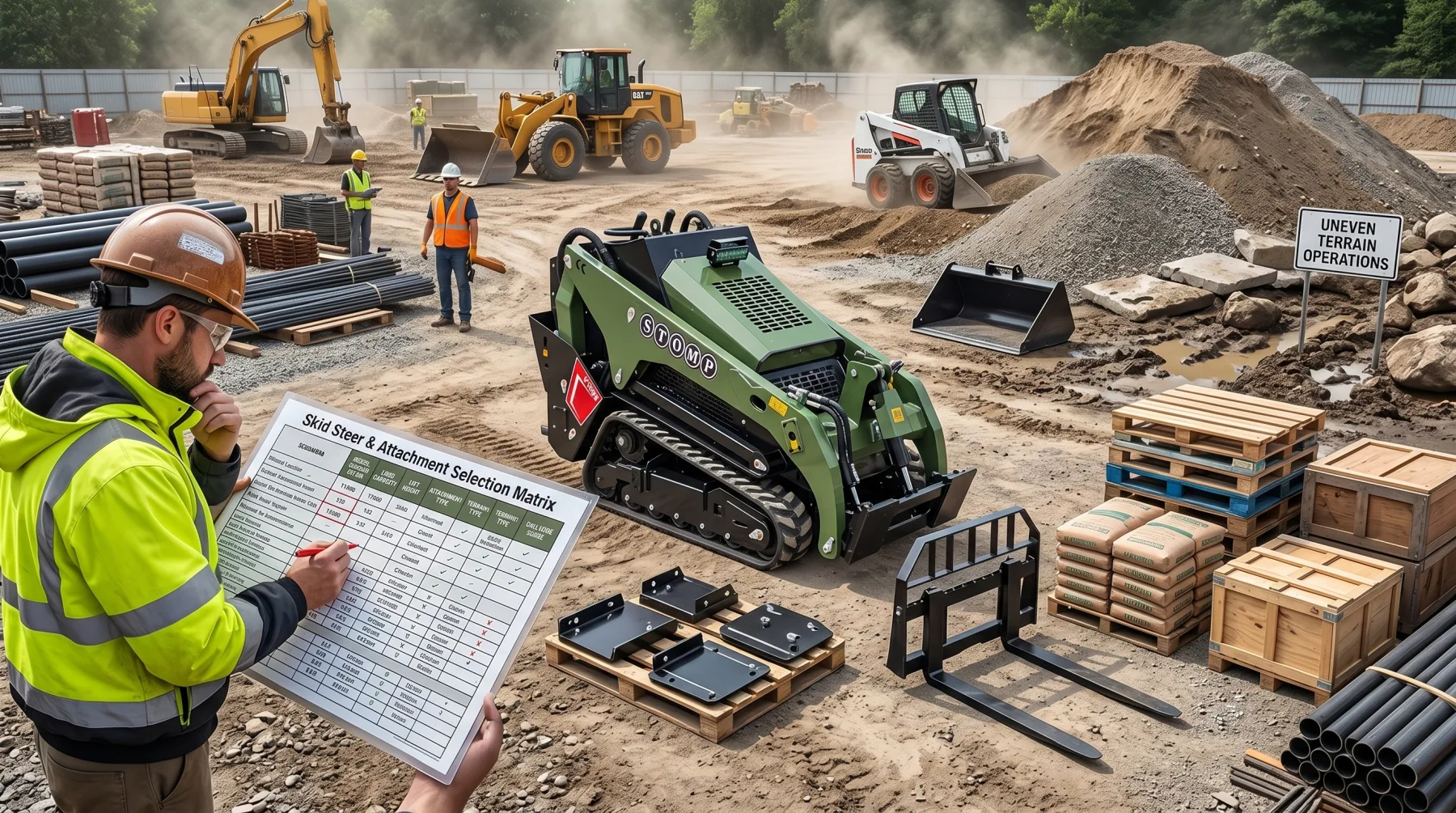
The smartest way to choose a skid steer is to size it around the work you do most, not the heaviest job you might face once a year. Match the machine to your daily reality, and it pays you back in productivity and reliability.
Use this checklist to guide your decision:
Identify your most common tasks: Is your work mostly pallets, mostly dirt, or a mix of both? Focus on what you do day in and day out, not just occasionally.
Weigh your heaviest regular loads: For pallets, weigh your heaviest typical pallet, especially dense masonry. For loose material, calculate a full bucket of your heaviest, wettest material.
Match those weights to rated operating capacity: Make sure your heaviest regular load sits comfortably within the ROC, not near the tipping load. Build in headroom for wet material and the occasional heavier job.
Factor in your attachments: Account for the weight of forks, grapples, augers, and other tools. Heavier attachments reduce the load capacity you have left.
Consider your terrain: Working on slopes or soft, uneven ground? Lean toward more capacity and consider a track loader for added stability. If you work on mostly flat, hard surfaces, a wheeled machine sized to your loads will serve you well.
Plan for growth, but do not overbuy: Choose enough capacity to cover your real work with margin to spare, but avoid paying for a machine far larger than your daily jobs demand.
Conclusion
The key to selecting the best skid steer is to accurately read the specifications and adhere to their limitations. It is crucial to keep in mind that the rated operational capacity is your safe working limit at 50% of the tipping load, which is your absolute breaking point. This buffer is intended to keep you stable and secure, so never mistake the two.
Keep in mind that material weight can be misleading. Dense masonry requires far more lifting effort than its modest footprint may imply, and pallet loads can vary greatly in weight depending on what is within. In a similar vein, loose dirt conceals significant weight that may suddenly shift while you’re moving, possibly surprising you. Rain-soaked soil will quickly drive you over your machine’s specified capability, so always keep moisture in mind.
Every successful, without incidents day on the job site is built around the 50 percent safety guideline. You may incorporate the required buffer to manage uneven terrain, abrupt stops, and load transfers without running the risk of tipping by continuously using this rule. Match your machine to your most common daily duties, keep your hefty attachments in mind, and always prefer stability over raw power. You get a partner that is both extremely efficient and safe when you scale your equipment to your actual workload.
https://youtu.be/hpkfW0pXN04?si=O6TeteMM3qqXvPZT