
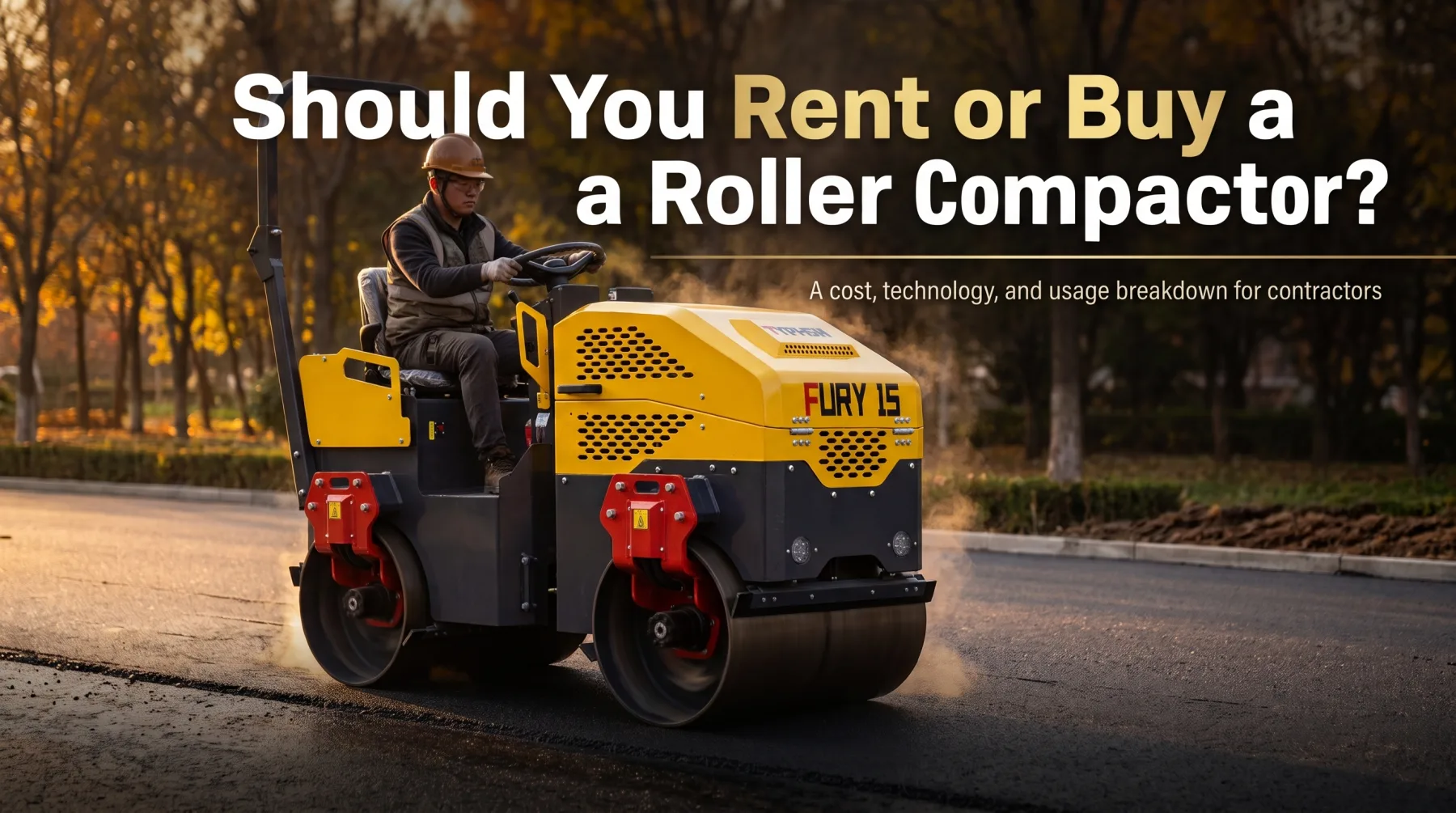
Should You Rent or Buy a Roller Compactor?
You’ve got a paving job starting Monday and a roller compactor in the rental yard with your name on it. The daily rate isn’t cheap, but writing one check feels easier than committing to a full purchase. Then you glance at your calendar and realize this is the fourth roller rental this quarter, and the fifth is already booked for next month. The invoices are stacking up, and a quiet question starts nagging at you: at what point does renting stop making sense and owning starts paying off?
That question trips up plenty of contractors, and getting it wrong costs real money either way. Rent when you should own, and you bleed cash on daily rates for a machine you use constantly. Buy when you should rent, and you tie up capital in equipment that sits idle between jobs. The right answer depends entirely on your work, your cash flow, and how honestly you assess both. This guide walks you through how to evaluate your job frequency and volume, how the true costs of renting and owning actually compare, how your job sites and machine needs factor in, and how to protect either choice for maximum value. By the end, you’ll know exactly which path fits your operation.
How to Evaluate Your Job Frequency and Volume
Understanding how often a roller compactor is used is the first step in deciding whether to rent or buy. Project frequency and workload have a greater impact on long-term costs than the initial price alone. If you’re still comparing equipment options, learning how to choose the right roller compactor can help you select a machine that fits your workload and project requirements.
Counting Your Real Usage
Start by looking back honestly at the last year. Add up how many days you rented a roller, how often compaction work showed up on your jobs, and how many days a machine actually turned drums on your sites. That real number, not your gut feeling, is the foundation of the whole decision.
A rough rule holds up across most operations. If you’re using a roller compactor only a handful of days a month or less, renting almost always wins. If it’s running most weeks, or you find yourself renting the same machine over and over, ownership starts making financial sense fast. The turning point is consistent, recurring use, not the occasional job.
Projecting Where Your Work Is Headed
Past usage tells half the story; the direction of your business tells the rest. If your compaction work is growing, more paving contracts, more site prep, more repeat clients, then buying positions allows you to take that work without scrambling for a rental every time. Growth toward steady compaction is a strong signal to own.
Be just as honest about uncertainty. If your workload swings unpredictably or compaction is a minor, occasional part of what you do, that variability favors renting, which lets you scale up only when a job demands it. Don’t buy for a future you’re not confident is coming, but don’t keep renting through steady, predictable demand either.
Weighing Availability and Control
Frequency isn’t only about cost. When you own the machine, it’s ready the moment a job starts, no calling around, no waiting in a rental yard, no discovering the size you need is booked out. For operations where timing is tight and delays cost you, that control has real value beyond the numbers.
Renting, on the other hand, frees you from storage, transport between jobs, and keeping a machine maintained during slow stretches. If your schedule has real gaps, that flexibility is a genuine benefit rather than a compromise. Match the availability you need to how tightly your jobs are scheduled.
Takeaway: Count your real usage days and project where your work is heading, because consistent, recurring compaction work with the need for on-demand availability points toward buying, while occasional or unpredictable use favors the flexibility of renting.
How the True Costs of Renting and Owning Compare
Once you understand how frequently a road roller is used, the next step is evaluating the total cost of renting versus owning. The purchase price or rental rate is only part of the equation, as maintenance, transportation, storage, fuel, depreciation, and downtime can significantly affect overall expenses. A thorough cost comparison helps determine whether a road roller is the more economical choice as a long-term investment or whether renting better matches your operational needs.
The Real Cost of Renting
Renting looks simple: a daily, weekly, or monthly rate, and you’re done. But the true cost adds up faster than the headline number suggests. Beyond the base rate, factor in delivery and pickup fees, fuel, any damage waivers or insurance, and the cost of your time spent arranging each rental. Those extras inflate every invoice.
The bigger hidden cost is cumulative. A rate that feels reasonable for one job becomes expensive when you’re paying it repeatedly across a busy season. Add up a year of rentals with all the fees included, and many contractors are startled to see the total approach, or exceed, what owning a machine would have cost. Frequent renting quietly funds a machine you’ll never own.
The Real Cost of Owning
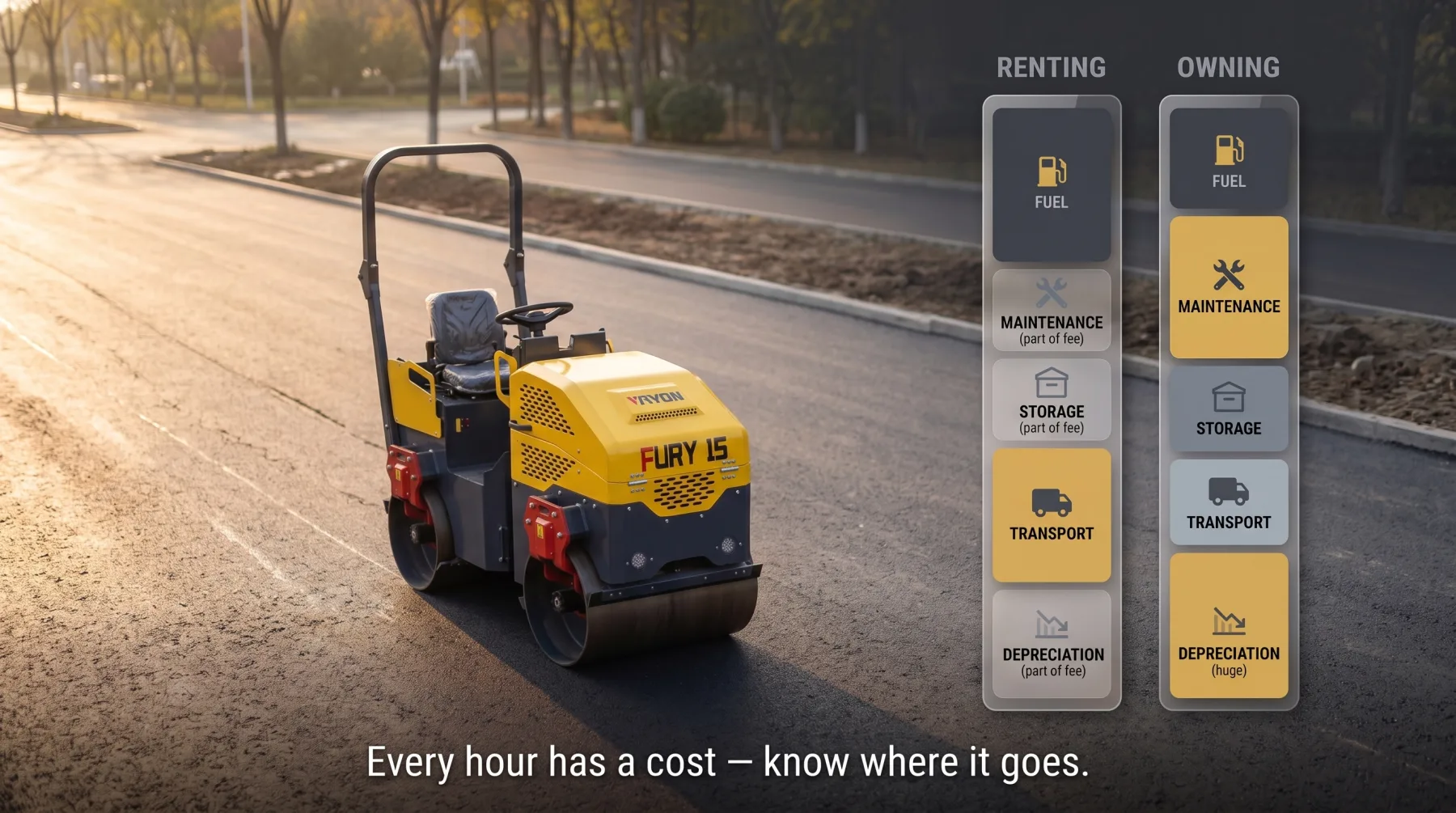
Buying carries an obvious upfront cost, whether you pay cash or finance, but that purchase price is just the entry point. Ownership brings ongoing costs that renting bundles away: maintenance and wear parts, fuel, storage between jobs, transport to and from sites, insurance, and the machine’s depreciation over time. Budget for all of them honestly.
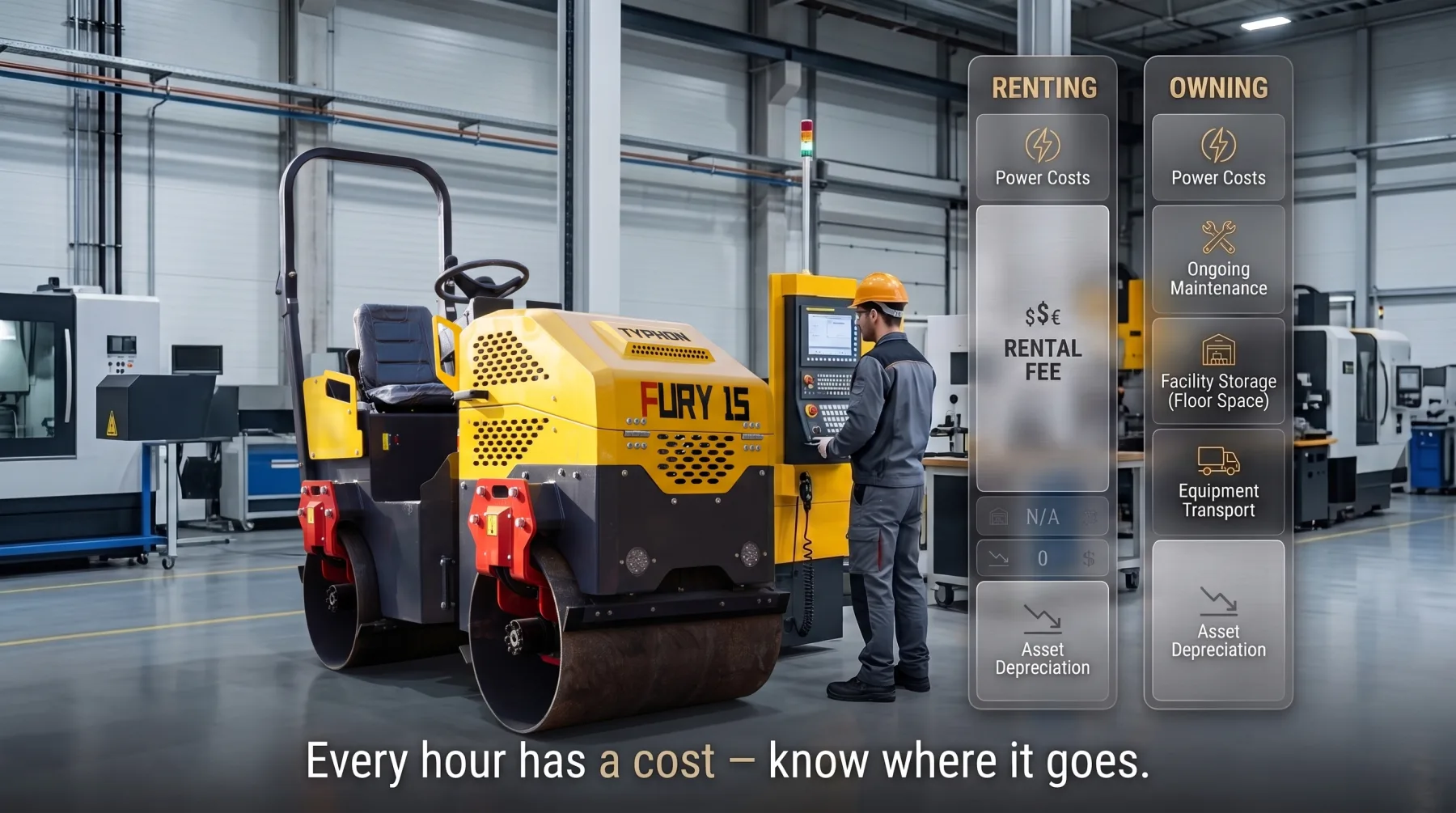
The offset is that ownership can earn its keep and hold value. A well-maintained roller retains resale value, spreads its cost across every job you run, and eliminates the per-day rental premium entirely once it’s paid off. Industry resources on equipment ownership cost analysis explain how to calculate a true cost-per-hour that accounts for every one of these factors. Run those numbers for your real usage, and the smarter choice usually becomes clear.
Finding Your Break-Even Point
The decision often comes down to a break-even calculation. Divide the full cost of owning a machine, including maintenance, storage, and depreciation, across its expected working life, and compare that cost per day against your all-in rental rate multiplied by your usage days. The point where they cross is your break-even.
Below that threshold, renting is cheaper and smarter. Above it, ownership saves you money on every additional day of use. This simple math cuts through the emotion of the decision and grounds it in your actual numbers, so run it with honest figures rather than optimistic ones. The break-even point is the clearest financial answer you’ll get.
Takeaway: Compare the all-in cost of renting, fees and time included, against the full cost of owning, maintenance and depreciation included, then find your break-even point, because the true numbers, not the sticker prices, reveal which path saves you money.
How Job Site Conditions and Machine Specs Factor Into the Decision
Cost isn’t the only thing that decides rent versus buy. The kind of work you do and the machine it demands shape the choice just as much. A roller that fits one contractor’s jobs perfectly may be the wrong tool for another, and that reality pulls the decision in different directions.
Matching the Machine to Your Work
If your jobs consistently call for the same type and size of roller, ownership makes more sense, because you buy one machine that fits your work and use it repeatedly. A contractor who compacts similar driveways, lots, and paving jobs week after week benefits from having exactly the right machine on hand every time.
But if your work varies widely, small compact rollers for tight residential jobs one week, larger machines for open commercial sites the next, renting lets you match the machine to each job without owning a whole fleet. Trying to cover every job with a single owned roller often means using the wrong size half the time. Variety in your work can tilt the decision toward renting.
Reading Your Job Site Demands
The conditions you work in affect the choice too. Consider what your typical sites demand:
Consistent site types favor owning a machine matched to them.
Widely varying site sizes and access favor renting the right tool per job.
Tight, confined sites may call for a compact roller you’d rather rent occasionally than own.
Large open sites run steadily may justify owning a bigger machine outright.
The specs that matter, compaction force, drum width, and vibration capability, should align with the material and lift thickness you handle regularly. When your work is predictable enough to name the exact machine you need, buying it removes the guesswork. When it isn’t, renting keeps you from being stuck with a machine that only fits some of your jobs.
Considering Technology and Downtime Risk
Roller compactor technology keeps advancing, and renting gives you access to newer machines without the risk of your owned equipment aging out. If staying on current models matters for your work, that’s a point in renting’s favor. Ownership means living with the machine you bought as the years pass.
Downtime risk cuts the other way. When you own the machine, a breakdown is your problem to fix, and it can stall a job while you arrange repair. With a rental, a failed machine is typically the rental company’s responsibility to swap out. Weigh how much a breakdown would cost your schedule against the control that ownership provides.
Takeaway: Owning makes sense when your jobs consistently demand the same machine, while renting fits varied work, confined or changing sites, and a need for current equipment, so let the machine your work actually requires help steer the decision.
How to Protect Your Purchase or Rental for Maximum Value
Whichever path you choose, the decision only pays off if you protect it. A poorly maintained purchase drains money, and a carelessly handled rental racks up fees and damage charges. Smart operators get the most from either choice by treating the machine right and reading the fine print.
Getting the Most From a Rental
If renting is your answer, protect yourself before the machine ever arrives. Confirm exactly what the rate includes, delivery, pickup, fuel policy, and damage terms, so there are no surprises on the invoice. Inspect the roller thoroughly at drop-off and document any existing damage with photos, since undocumented damage can land on your bill.
Use the rental efficiently, too. Schedule your compaction work so the machine isn’t sitting idle on the clock, and return it clean and on time to avoid extra charges. Read the agreement’s terms on maintenance and breakdowns so you know your responsibilities. A well-managed rental keeps the true cost close to the quoted rate rather than ballooning past it.
Protecting an Owned Machine
If you buy, maintenance is what turns the purchase into a lasting asset. A roller compactor rewards consistent care: check fluids and the drum daily, keep the vibration system serviced, grease the pivot points, and follow the manufacturer’s service intervals. These simple habits prevent the breakdowns that would otherwise strand you mid-job.
Good maintenance also helps preserve resale value, making it an important part of the overall return on ownership. Whether your machine features a lighter or heavier drum weight, regular inspections, proper servicing, and timely repairs help maintain consistent compaction performance and reduce long-term operating costs. Keeping accurate maintenance records also improves the machine’s value when it’s time to sell or trade in.
Buying Smart When You Own
When ownership is the right call, where and what you buy determines how well the decision pays off. Match the machine’s compaction force, drum width, and vibration capability to your actual work, and weigh build quality and dependable support alongside the price. A cheap machine that’s hard to service or source parts for costs more over its life than a well-built one backed by real support.
Buy from a source that stands behind the equipment. Confirm parts availability, warranty terms, and service access before you commit, since those are what keep an owned machine earning for years. When you’re ready to compare dependable options with transparent specs and support, you can browse the roller compactor store and match the right machine to your jobs. A well-chosen roller backed by solid support is an investment that pays back season after season.
Takeaway: Protect a rental by reading the terms, documenting condition, and using it efficiently, and protect a purchase with disciplined maintenance and a smart, well-supported buy, because the value of either choice depends on how well you handle it after the decision.
Conclusion
Whether renting or buying a roller compactor is the better choice depends on your workload, equipment usage, and long-term operating costs. Regular, high-volume compaction projects often justify ownership, while occasional or seasonal work may make renting the more cost-effective option. Compare the total cost of renting with the full cost of ownership, including maintenance, depreciation, storage, and transportation, to identify the most practical investment for your business. The right decision should be based on operational requirements, project frequency, and future growth rather than short-term expenses alone. If you need additional guidance, consult a trusted equipment specialist who can help evaluate your requirements and recommend a roller compactor that aligns with your applications and long-term objectives.
Frequently Asked Questions
How often do I need to use a roller compactor before buying makes sense?
There’s no single magic number, but a practical guideline is consistent, recurring use. If you’re renting only a few days a month or less, renting almost always costs less. Once a roller is running most weeks, or you find yourself renting the same machine repeatedly across a season, ownership usually becomes the cheaper path. Count your actual usage days over the past year and run a break-even calculation to confirm where you land.
Is renting a roller compactor really more expensive over time?
It can be, once you add everything up. The daily or weekly rate is only part of the cost, delivery, pickup, fuel, damage waivers, and your time arranging each rental all add to the total. For occasional use, those costs stay reasonable. But for frequent, recurring work, a full year of all-in rental costs often approaches or exceeds what owning a machine would have cost, without leaving you with an asset at the end.
What hidden costs come with owning a roller compactor?
Beyond the purchase price, budget for maintenance and wear parts, fuel, insurance, storage between jobs, and transport to and from sites. Depreciation is another real cost, though a well-maintained machine retains solid resale value. Factoring all of these into a true cost-per-hour gives you an accurate comparison against renting. Ownership pays off when your usage is high enough to spread these costs across many working days.
Should I rent if my jobs need different sizes of roller?
Often, yes. If your work varies between tight residential sites needing compact rollers and large open jobs needing bigger machines, renting lets you match the right tool to each job without owning a whole fleet. Trying to cover every job with one owned machine usually means using the wrong size part of the time. If your jobs consistently call for the same machine, though, owning that one roller makes more sense.
Can I rent a roller compactor first and buy it later?
Absolutely, and it’s often a smart approach. Renting lets you test how much you actually use a machine and confirm which size and specs fit your work before committing to a purchase. Track your rental frequency and costs over a season, and when the numbers cross your break-even point, you’ll have real data to justify buying, plus hands-on experience with the exact machine that suits your jobs.