
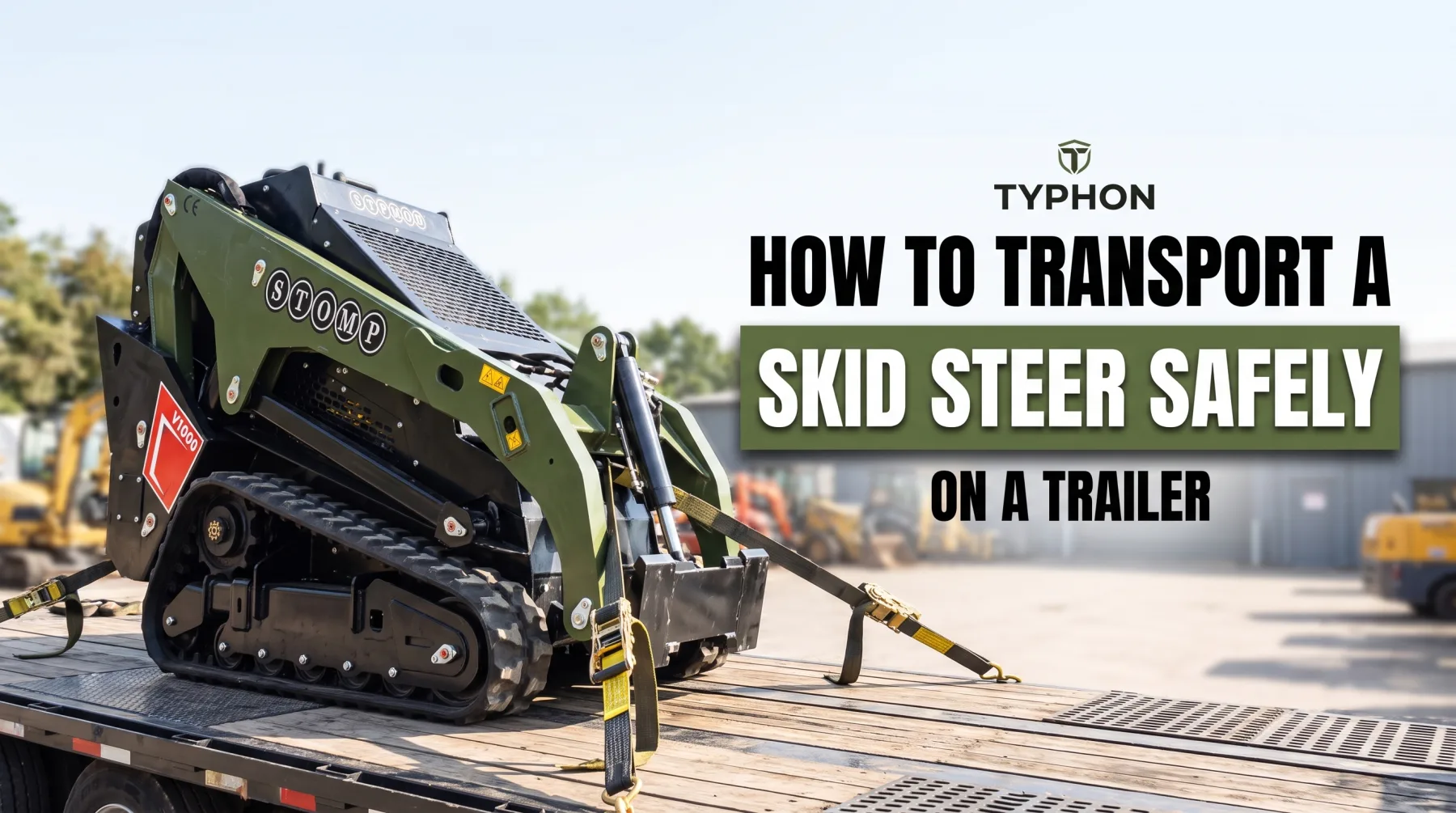
How to Transport a Skid Steer Safely on a Trailer
A contractor loads a skid steer onto a trailer in a hurry, throws two straps over it, and heads down the highway to the next job. Ten miles in, the machine shifts on a hard turn, the trailer sways, and he spends the rest of the drive white-knuckling the wheel and praying nothing lets go. He got lucky that day. Plenty of crews don’t. A loose or overloaded machine can slide, tip the trailer, or come off entirely, and the cost of that goes far beyond a repair bill. Hauling a skid steer safely is not complicated, but it does demand the right gear and a steady routine every single time. Get the trailer, the loading, and the tie-downs right, and the machine rides where you put it. Cut corners, and you gamble with your equipment, your crew, and everyone sharing the road. This guide walks you through the whole process in order, from picking a trailer that can carry the load to loading, chaining down, meeting the legal rules, and dodging the mistakes that put machines on the pavement. The biggest mistake many operators make is treating transportation as an afterthought. A skid steer may spend most of its working life digging, lifting, and moving material, but the short trip between jobs is where a lot of avoidable risks happen. A machine that is not properly matched to the trailer, loaded correctly, or secured with the right equipment can turn a simple drive into a dangerous situation within seconds. Beyond protecting the machine itself, a proper hauling routine helps prevent delays, road incidents, damaged equipment, and unexpected repair costs. Taking the extra time to inspect the setup, balance the load, and secure everything correctly creates a safer process that becomes faster and easier with every job.
Step 1: Pick a Trailer That Can Carry the Load
Everything starts with a trailer rated to handle your machine. Before you load anything, know your numbers. Check the operating weight of the skid steer plus any attachment, then match it against the trailer’s rated capacity with room to spare. A trailer that sits right at its limit leaves no margin for uneven ground or a heavy bucket, so build in a safety buffer rather than testing the edge. Deck size matters just as much as weight rating. The skid steer should sit fully on the deck with its tracks or tires inside the trailer’s width, never hanging over an edge. A ramp angle that is too steep for the machine also causes trouble during loading, so pick a trailer with ramps long enough to give the skid steer a gentle climb. When you match a machine to a trailer, confirming the trailer rating is the first thing to check, since everything downstream depends on it. When selecting a trailer, also consider how often you will transport the machine and the conditions you normally face. A trailer that works for a small skid steer on short local trips may not be the right choice for larger attachments, longer distances, or frequent hauling between jobsites. Features like strong tie-down points, durable ramps, proper suspension, and easy access can make loading faster and reduce wear on both the trailer and the machine. Investing in the right trailer setup from the beginning prevents transportation problems later and keeps your equipment moving safely from one job to the next.
Step 2: Load the Skid Steer the Right Way
Loading is where most accidents start, so slow down and set up before you drive on. Park the tow vehicle and trailer on firm, level ground, chock the trailer wheels, and clear the ramps of mud, ice, or loose debris. A stable, clean setup keeps the trailer from shifting the moment the machine’s weight rolls onto it. Drive the skid steer on slowly and straight up the center of the ramps. As a rule, load the machine so the heaviest end faces the front of the trailer, which usually means driving a loaded-bucket machine forward and reversing an empty one on. This keeps the weight sitting properly over the axles instead of dragging the rear of the tow vehicle around. Once the machine is positioned, lower the bucket or attachment flat to the deck, set the parking brake, and shut the engine down before you touch a single chain.
Step 3: Secure It With Chains and Binders
A skid steer is heavy, so straps alone will not cut it. Use rated transport chains and load binders at all four corners, anchored to the machine’s designated tie-down points and the trailer’s D-rings or rub rails. Each chain and binder should carry a working load limit suited to the machine, and the total tie-down capacity needs to meet the legal standard for the weight you are hauling. Skimping here is exactly what puts machines on the road. Angle the chains outward from each corner so the machine is pulled down and held against forward, backward, and sideways movement. Tighten the binders until there is no slack, then confirm the machine cannot rock or shift by hand. Any attachment, like a bucket or auger, gets its own separate tie-down rather than riding loose. For the finer points of chain ratings and anchor angles, following a clear keeps you from guessing. Federal cargo securement rules spell out exactly how many tie-downs heavy equipment needs, and they are worth reviewing before your first haul.
Step 4: Meet the Legal Transport Requirements
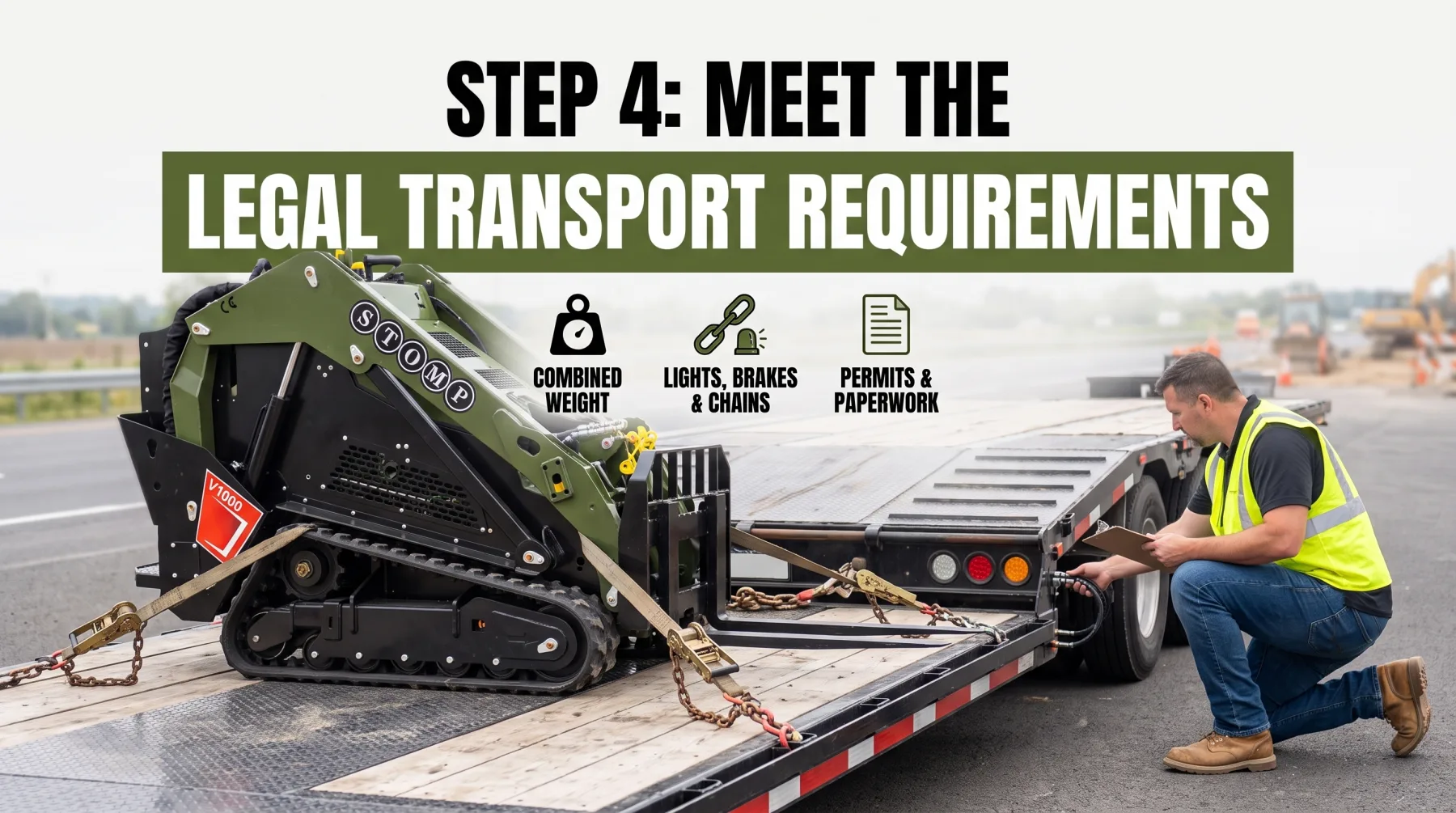
Hauling equipment brings rules that protect you as much as everyone else on the road. Know your combined weight, since a loaded trailer can push your rig into a class that requires a commercial license, registration, or a permit. Check your trailer’s lights, brakes, and safety chains before every trip, and make sure the load does not exceed legal width or height limits for your route. Requirements vary from state to state, so what flies in one place may not in the next when you cross a line. Oversized loads may need flags, signs, or a permit, and trailer brakes are mandatory above certain weights. Keeping your paperwork, plates, and inspections current saves you from fines and roadside delays. Following and confirming your state’s rules before you roll keeps a routine haul from turning into a violation. A safe hauling process is not only about avoiding penalties; it also protects your equipment, your schedule, and everyone around you. Before each trip, take a few minutes to walk around the entire setup and confirm the machine is secured correctly, the trailer is in good condition, and the towing vehicle can handle the load. Staying ahead of weight limits, equipment requirements, and route restrictions helps prevent unexpected stops, delays, or dangerous situations while moving between jobsites. A properly prepared haul is faster, safer, and far less stressful from the moment you leave the yard until the machine arrives ready to work.
Step 5: Steer Clear of the Common Mistakes
Most transport failures come down to a handful of avoidable errors, and knowing them helps you catch them. The biggest is under-securing the machine, whether that means too few tie-downs, straps instead of rated chains, or binders left with slack that lets the machine creep. Another is poor weight distribution, where loading the machine too far back sways the trailer or lifts the tow vehicle’s steering light. Rushing the load is its own hazard. Driving on fast, skipping the wheel chocks, or loading on soft or sloped ground all invite a shift or a tip. Forgetting to secure the attachment, leaving the bucket raised, or neglecting a quick check of lights and tire pressure round out the list. A simple habit of walking the load before you pull out catches nearly all of these, and workplace safety guidance reinforces why that final check matters. Stop once a few miles down the road to recheck the chains too, since they can loosen as the machine settles.
Conclusion
Transporting a skid steer safely comes down to building a consistent routine and following the same steps every time the machine leaves the jobsite. Start with a trailer that is properly rated for the skid steer, attachments, and additional equipment you are carrying, then load the machine on firm, level ground while keeping the weight balanced correctly over the axles. Secure the skid steer with properly rated chains, binders, and tie-down points, and make sure attachments are lowered and secured so nothing can shift during transport. Before driving, inspect the hitch, tires, brakes, lights, and all connection points to confirm the entire setup is ready for the road. Follow the weight limits and legal requirements for your area, and take a few minutes to recheck the load after traveling a short distance. Most hauling problems happen because operators rush or assume a short trip does not require proper preparation. By treating transportation as seriously as the work itself, you protect your equipment, reduce downtime, and make sure your skid steer arrives safely and ready to perform on every jobsite.
Frequently Asked Questions
How many tie-downs do I need to transport a skid steer?
Use a minimum of four rated tie-downs, such as chains and binders, secured at the proper points on the machine. The combined working load limit must be strong enough to meet transport requirements for the skid steer’s weight.
Should I load a skid steer forward or backward on a trailer?
Load the skid steer with the heaviest end toward the front of the trailer to maintain proper weight balance. In most cases, a machine with a loaded bucket is driven forward onto the trailer to keep weight positioned correctly over the axles.
Do I need a special license to haul a skid steer on a trailer?
It depends on the combined weight of your truck, trailer, skid steer, and attachments. Heavier setups may require a commercial license or permit, so always check your local transportation rules before hauling.
Can I transport a skid steer with the attachment installed?
Yes, but the attachment must be secured properly and included in the total trailer weight calculation. Lower it safely and make sure it cannot move during transport.
How often should I check the tie-downs during transport?
Inspect the tie-downs before leaving and recheck them after the first few miles. Long trips may require additional checks to make sure chains and binders have not loosened.