
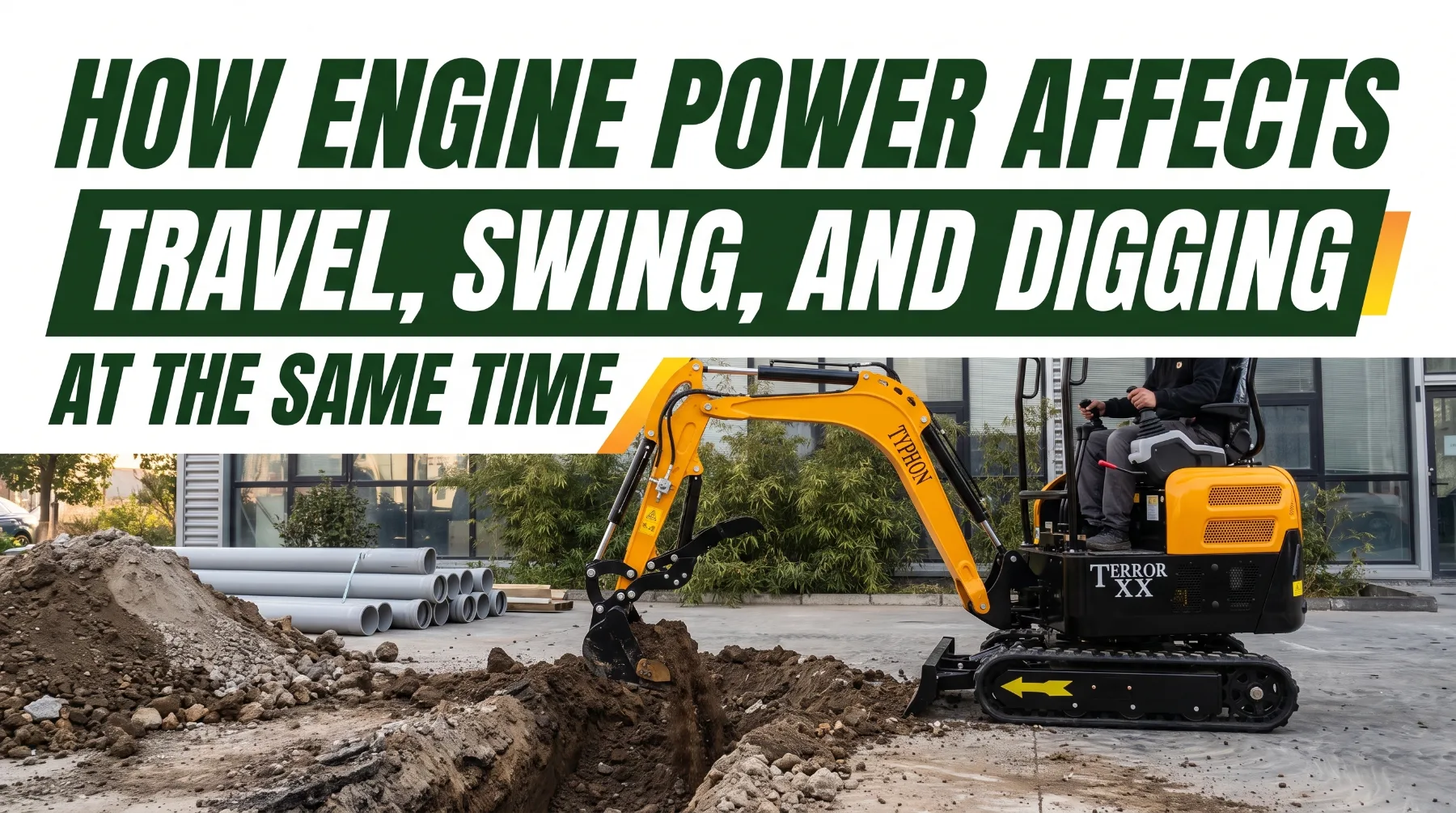
How Engine Power Affects Travel, Swing, and Digging at the Same Time
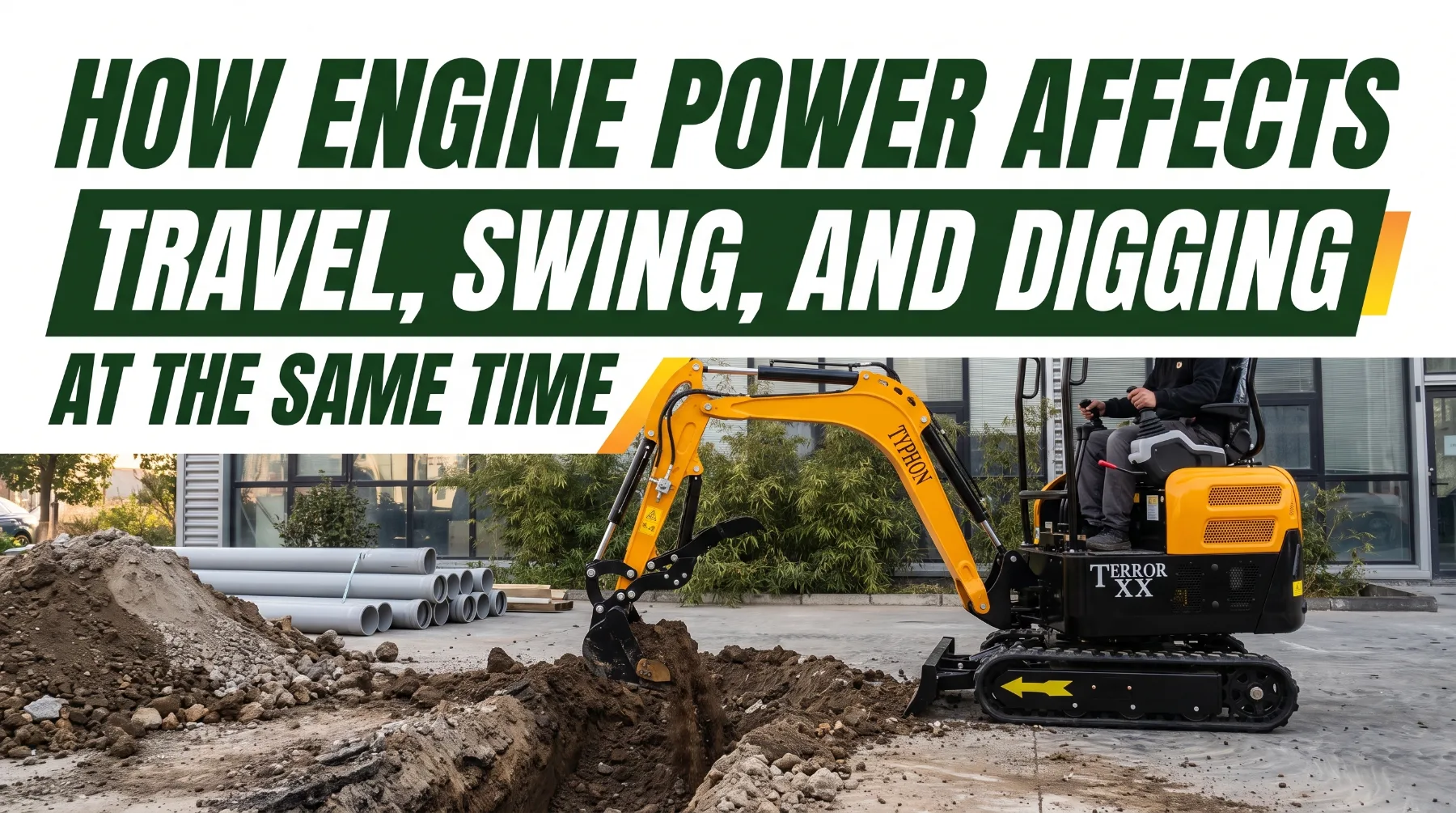
Mini excavator performance is shaped by more than digging depth, bucket capacity, or operating weight. The engine and hydraulic system have to support several machine functions as the work progresses. Digging, swinging, traveling, and repositioning can occur within the same work cycle, meaning the power source is often dealing with overlapping demands rather than a single movement at a time.
When these functions operate together, engine capacity becomes especially important. Insufficient power can lead to slower travel, weaker swing response, reduced digging performance, or greater strain on the machine. Understanding how engine output is shared across multiple functions helps explain differences in real-world productivity, fuel use, and component wear. This guide examines simultaneous machine operation and how to select engine power that suits demanding multi-function work.
How One Engine Powers All Three Functions
A mini excavator does not move, rotate, or dig through direct engine power. Instead, the engine drives a hydraulic pump, which pressurizes fluid and distributes it throughout the machine’s working systems. Travel motors turn the tracks, the swing motor rotates the upper structure, and hydraulic cylinders move the boom, arm, and bucket during excavation. Because these functions rely on the same hydraulic supply, the engine must provide enough power to support them when they operate at the same time.
Two key specifications determine what the hydraulic system can deliver: flow and pressure. Flow, measured in gallons per minute (GPM), influences how quickly hydraulic motors and cylinders can operate, while pressure, measured in PSI, determines the force available to overcome resistance. The engine must provide enough mechanical power for the pump to maintain the required combination of flow and pressure, especially when several functions are active simultaneously.
This becomes important during a typical digging cycle. The excavator may be filling the bucket while the upper structure swings toward the spoil pile and the tracks reposition the machine for the next pass. Each function adds demand to the hydraulic system, so the available engine output has to cover the combined load. A machine with sufficient power reserve can maintain smoother movement, stronger response, and more consistent cycle times. If the power source is operating close to its limit, the hydraulic system may struggle to maintain performance across all functions, causing travel speed, swing response, or digging force to decline.
What Happens When the Engine Can’t Meet Combined Demand
An underpowered engine becomes noticeable when multiple functions operate simultaneously under load. If combined hydraulic demand exceeds available output, engine speed can drop, reducing pump performance and causing active functions to lose speed, force, or both. This can appear as slower swing and travel when moving a loaded bucket, reduced breakout force when digging into firm soil, longer dig-swing-dump cycles, and delayed response when several controls are engaged together. These symptoms all point to the same limitation: the power source cannot provide sufficient output to maintain full hydraulic performance across multiple functions at the same time.
The takeaway: smooth single-function performance can hide a power shortfall. It’s the combined demand that exposes a marginal engine, and that’s exactly when most real work happens.
Combined Operation in the Real World
A mini excavator’s productivity lives in the overlap. Watch a skilled operator, and you’ll rarely see one function finish before the next begins. The movements blend, and the machine’s engine carries all of them together.
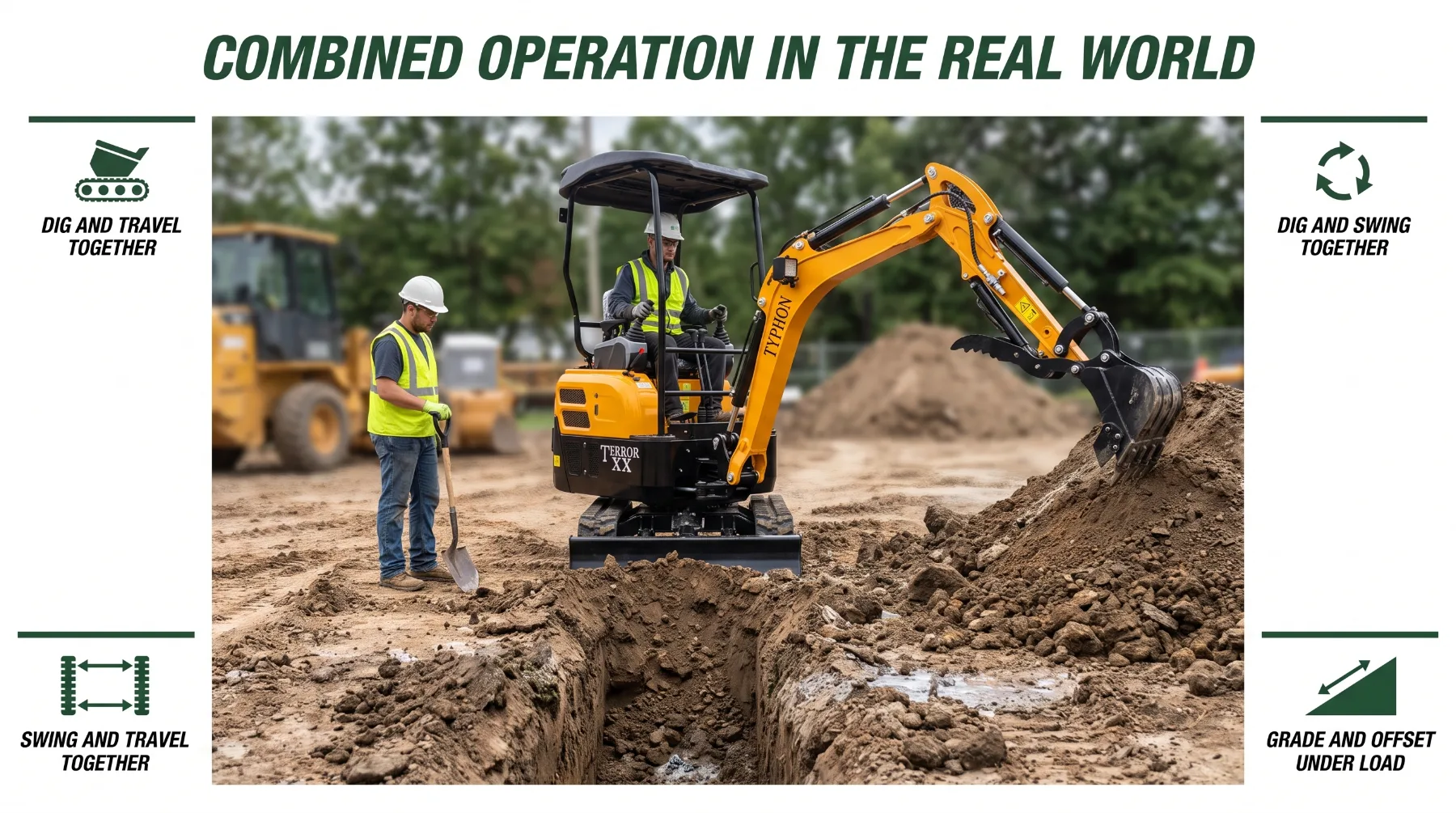
Consider a standard trenching cycle:
- Dig and travel: The operator crowds the bucket through soil while tracking forward. A wider rubber track width spreads the machine’s weight over a larger contact area, reducing ground pressure, but the added contact area can also increase rolling resistance and travel demand.
- Dig and swing: As the bucket fills, the upper structure swings toward the spoil pile while the undercarriage remains planted. Lower ground pressure from wider tracks can improve stability on soft ground, while the engine continues supplying hydraulic power for both digging and swing functions.
- Swing and travel: The loaded bucket swings out while the machine repositions for the next pass. Track width affects how efficiently the machine transfers engine power into the ground, especially when turning or traveling with a loaded attachment.
- Grade and offset: Blade work, side-slope travel, or an offset boom adds resistance along a wall or edge. Wider rubber tracks can improve flotation and reduce ground pressure, but increased track contact can raise rolling and turning resistance, making the engine work harder under certain conditions.
Each of these pairs two or three power draws into a single moment. Swinging a full bucket is demanding on its own; do it while the tracks are moving and the engine faces a compound load. An engine with ample power holds full swing speed and full travel speed together, keeping the cycle tight. A marginal one forces the operator to pause between functions, waiting for the engine to recover, and every pause stretches the shift.
The Fuel and Wear Cost of Combined Strain
An engine operating near its maximum output during multi-function work can consume fuel less efficiently. When high loads are sustained for long periods, the engine may use more diesel for the same amount of material moved than an adequately powered engine operating within a more comfortable range. Across a full season of production digging, that difference can add significantly to operating costs.
Heat creates another source of inefficiency. A heavily loaded engine generates more heat, while the hydraulic system may also operate at higher temperatures as travel, swing, and digging functions demand power at the same time. Excessive hydraulic fluid temperature can reduce efficiency and accelerate fluid degradation, making it harder for the system to maintain consistent performance under load.
Chronic combined demand can also increase wear on several major components. The hydraulic pump may spend more time operating near maximum output, while seals and hoses face greater exposure to heat and pressure fluctuations. The cooling system must remove additional heat, increasing its workload, and the engine itself can experience greater long-term stress when it repeatedly operates close to its limit.
The overall effect is straightforward: an engine properly matched to multi-function work can maintain performance with less thermal and mechanical stress, while an undersized engine may turn a small difference in rated power into higher fuel consumption, faster component wear, and increased maintenance costs.
How to Match Engine Power to Multi-Function Work
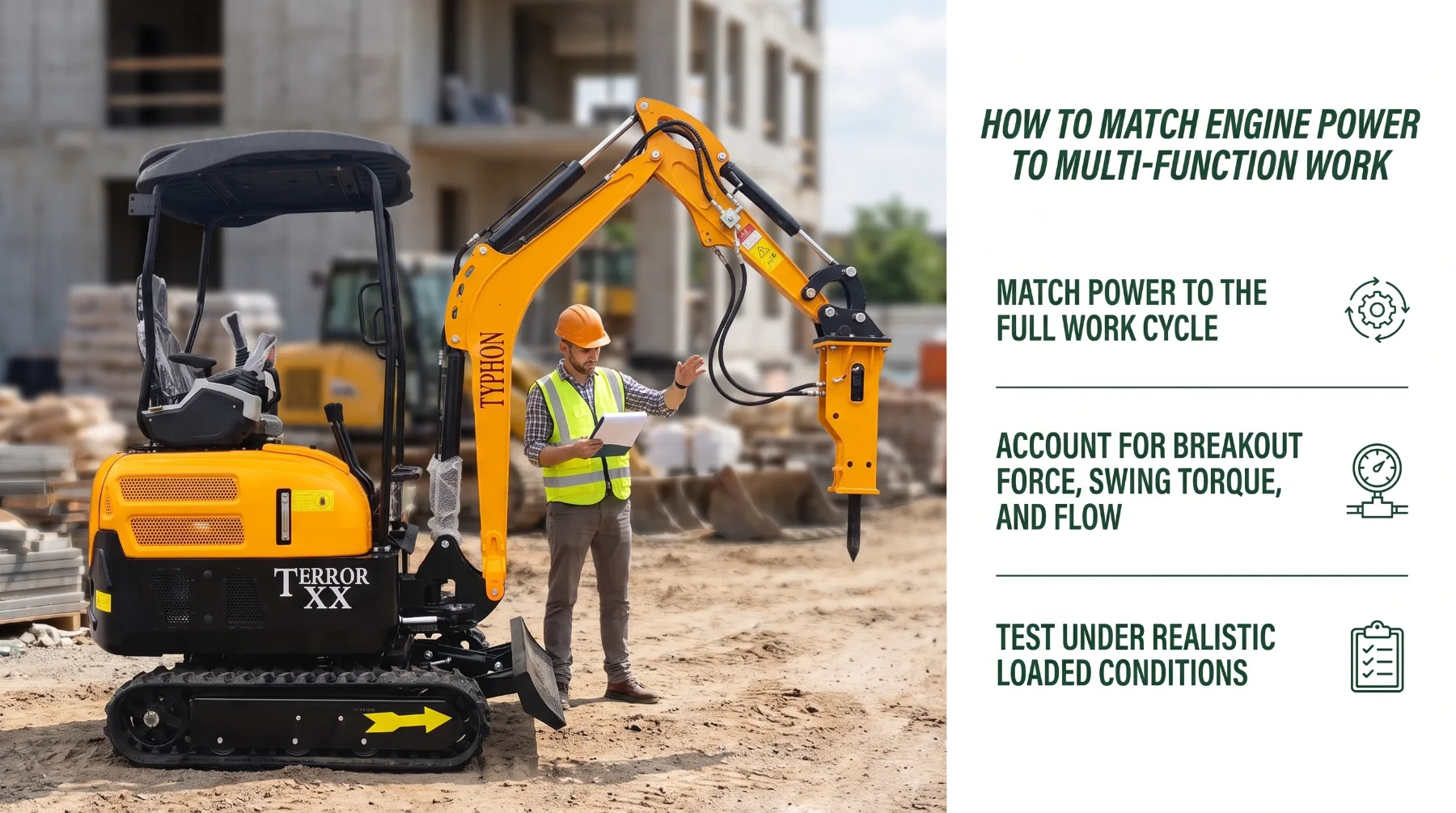
Choosing the right machine starts with understanding the actual work cycle, not just individual specifications. Match engine power to the combined demands of digging, swinging, traveling, grading, and repositioning. Continuous multi-function work requires more power reserve than occasional single-function digging.
Look beyond dig depth by considering breakout force, swing torque, travel speed, hydraulic flow, and pressure together. Attachments such as breakers and augers can add further hydraulic demand, making sufficient engine capacity even more important.
Duty cycle also matters. Full-shift production work places greater demands on the engine, hydraulics, and cooling system than light intermittent use. The best way to confirm the match is to test the machine under realistic conditions, such as digging with a loaded bucket while swinging and tracking. If it maintains speed and force across these functions, the engine is better suited to the job.
Conclusion
Performance starts with how effectively the power source supports travel, swing, and digging through the shared hydraulic system. When sufficient output is available, the excavator can perform these functions together while maintaining hydraulic speed, digging force, and consistent cycle times. When capacity is limited, multiple functions compete for the same available power, leading to slower travel, reduced swing response, weaker digging performance, and longer work cycles. These limitations become especially noticeable when operating in firm soil, moving a loaded bucket, or repositioning while another hydraulic function is active. Before buying, evaluate breakout force, swing torque, travel speed, auxiliary hydraulic flow, and hydraulic pressure as a complete system rather than judging performance from a single specification. The machine should also be assessed under realistic combined loads to determine whether it can maintain performance when several functions operate at once. Matching the power source and hydraulic capacity to the actual work cycle helps maintain productivity, reduce unnecessary strain on pumps and other components, improve operating efficiency, and support longer service life.
Frequently Asked Questions
Why does my mini excavator slow down when I swing a loaded bucket while tracking forward?
Swinging and traveling both draw on the same engine and hydraulic supply. When you combine them, the demand adds up, and if the engine lacks the reserve to feed both at full output, its speed sags and pump pressure drops. Swing and travel then slow together, even though each might feel strong on its own. Consistent slowdown during combined movements is a strong sign the engine is underpowered for your real work.
Why does my machine feel strong digging alone but sluggish during a full cycle?
Single-function digging draws on only part of the engine’s output, so a marginal engine can still feel capable. A full cycle pairs digging with swinging, traveling, and sometimes grading, and those overlapping demands stack on one hydraulic system. When combined demand exceeds what the engine can deliver, every function loses speed or force. The performance gap between one function and a full cycle is the clearest way to spot a power shortfall.
Can running combined functions increase my fuel and repair costs over time?
Yes. An engine held near its ceiling during multi-function work burns more diesel per cubic yard moved and runs hotter, pushing hydraulic fluid past its efficient temperature range. That heat degrades the fluid, wears the pump and seals early, and strains the cooling system. A small power shortfall compounds into higher fuel bills and faster hydraulic wear across the machine’s service life, on top of the productivity lost to slower cycles.