
Top-Rated Skid Steer Picks for Everyday Job Sites
A landscaping crew leader walks a rental yard looking for a skid steer to handle a full slate of daily jobs, from moving mulch and grading beds to setting pallets of pavers. The salesman steers him toward the biggest machine on the lot, all horsepower and lift capacity, and he bites, figuring more muscle can’t hurt. Three days later that oversized unit has rutted two finished lawns, barely squeezed onto his trailer, and burned twice the fuel his work actually needed. The machine wasn’t broken or badly built. It simply didn’t fit the everyday jobs it was bought to do, and matching a skid steer to real daily work turns out to matter far more than chasing the biggest number on the spec sheet.
Picking a skid steer for everyday job sites comes down to matching frame size, capacity, and drive type to the work you actually repeat week after week. A machine that’s too small stalls on heavy loads, while one that’s too big wastes fuel, ruts finished ground, and fights to fit tight spaces. This guide breaks down what makes a skid steer worth its keep on daily jobs, the standout picks across compact, mid, and large frames, the specs that separate a good fit from a poor one, and how to weigh buying against renting. Here’s how to choose a machine that earns its place on the trailer.
What Makes a Machine Worth Its Daily Keep
Reliability tops the list of traits that separate an everyday workhorse from a machine that sits in the shop. A skid steer earning daily use needs a proven engine, a sturdy frame, and a service network that keeps parts and support within reach, because downtime on a working machine costs more than the rental or purchase ever did. Dependability is the quiet spec that pays back every single shift.
Versatility earns a machine its spot next. The best everyday units run a wide range of quick-attach tools through their auxiliary hydraulics, so one machine handles buckets, forks, augers, grapples, and more as the work shifts. Flexibility like that lets a single skid steer cover jobs that would otherwise demand several pieces of equipment.
Fit to the work seals the choice. A machine that matches your typical loads, your tightest access, and the surfaces you cross most keeps you productive without wasting capacity or damaging finished ground. Right-sizing beats overbuying every time daily work is the goal.
Key takeaway: An everyday skid steer rewards reliability, versatility, and a genuine fit to your daily jobs. Chase those three traits before you chase raw power, and the machine earns its keep shift after shift.
Compact Picks for Tight and Turf-Sensitive Work
Small-frame skid steers shine where space is tight and the ground won’t forgive a heavy footprint. Rated roughly under 1,750 pounds of operating capacity, these compact machines slip through standard gates, maneuver in backyards, and cross finished lawns and pavers without rutting them. Residential landscaping, hardscape work, and interior demolition all reward a machine built small on purpose.
Stand-on and small wheeled or tracked models lead this class. Compact stand-on units measuring around 36 inches wide fit through gates a full-size machine can never approach, while small tracked models spread their weight to protect soft or delicate surfaces. Both trade raw lifting muscle for access and a gentle footprint that finished-site work demands.
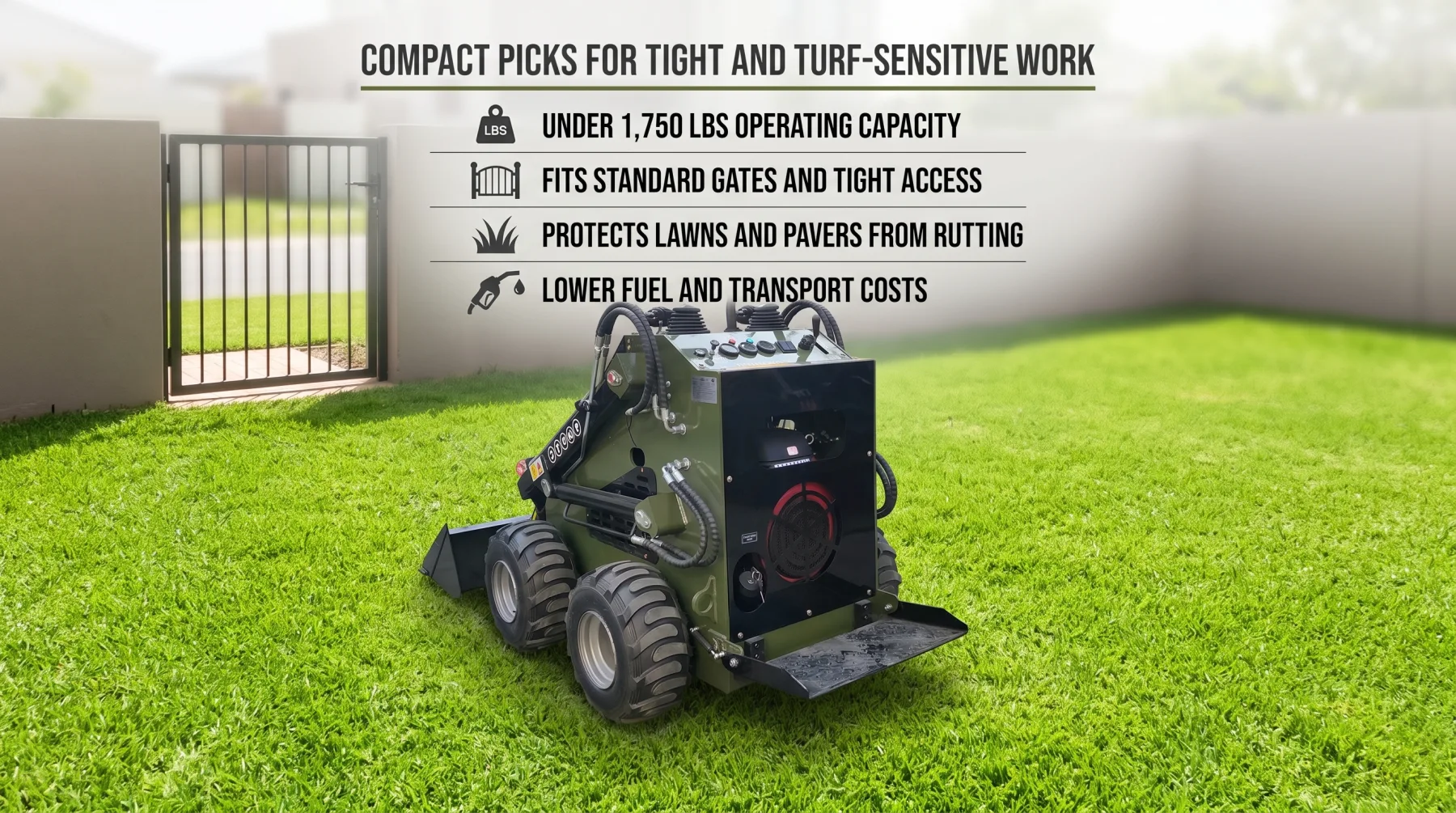
Fuel and transport sweeten the compact case. These machines sip fuel, ride on lighter trailers behind ordinary tow vehicles, and cost less to buy and store, so their running costs stay lean across a busy season. Lower overhead makes them easy to justify for crews working tight, turf-sensitive jobs day in and day out.
Key takeaway: Compact skid steers win on access, light footprint, and low running costs. Choose one when gates, finished surfaces, and tight quarters define your everyday work more than heavy lifting does.
Mid-Frame Picks for All-Around Daily Duty
Mid-frame skid steers hit the sweet spot most general contractors settle into, balancing power against maneuverability. Rated roughly between 1,750 and 2,200 pounds of operating capacity with engines in the 60-to-75 horsepower range, these machines handle the widest slice of everyday work without the bulk of a large frame.
Standard-frame vertical-lift models anchor the category. A mid-size machine with a vertical lift path reaches higher and farther for loading trucks and stacking pallets while still turning easily on a typical jobsite. Grading, loading, digging, and material handling all fall comfortably within its range.
Hydraulic capability rounds out the appeal. Many mid-frame units offer optional high-flow hydraulics to power demanding attachments like mulchers, cold planers, and large augers. Keeping the hydraulic oil clean and at the proper level is just as important, since contaminated or low hydraulic oil can reduce attachment performance, slow cycle times, and increase wear on the hydraulic system.
Key takeaway: Mid-frame skid steers deliver the best all-around balance for daily use. Combined with proper hydraulic oil maintenance, they provide reliable performance for loading, grading, and attachment work across a wide range of jobs.
Large-Frame Picks for Heavy, High-Volume Work
Large-frame skid steers bring the muscle when everyday work means heavy loads and high volume. Rated above roughly 2,200 pounds of operating capacity with engines pushing 75 to 100 horsepower or more, these machines lift, push, and carry loads that would strain a smaller unit all day long. Demanding jobs reward the extra power this class delivers.
High-capacity vertical-lift models lead the way here. A large machine with a tall vertical lift loads high-sided trucks, handles big pallets of block or brick, and moves large volumes of material fast across open sites. Land clearing, heavy grading, and steady loading all play to these strengths.
Traction and high flow complete the package. Large-frame units carry the weight to plant themselves for hard pushing and loaded slope work, and most offer high-flow hydraulics standard, so power-hungry attachments run at full performance. That combination suits crews whose daily work genuinely demands the muscle rather than just wanting it.
Key takeaway: Large-frame skid steers earn their place on heavy, high-volume, open-site work. Choose this class only when your daily loads and material volume truly justify the size, fuel, and transport it demands.
Specs That Separate a Good Fit From a Poor One
Numbers decide whether a skid steer suits your work, so compare the specs that matter before you commit to any frame size. Reading these figures against your real daily jobs keeps you from overbuying muscle or under-buying capability. Run through these before you choose:
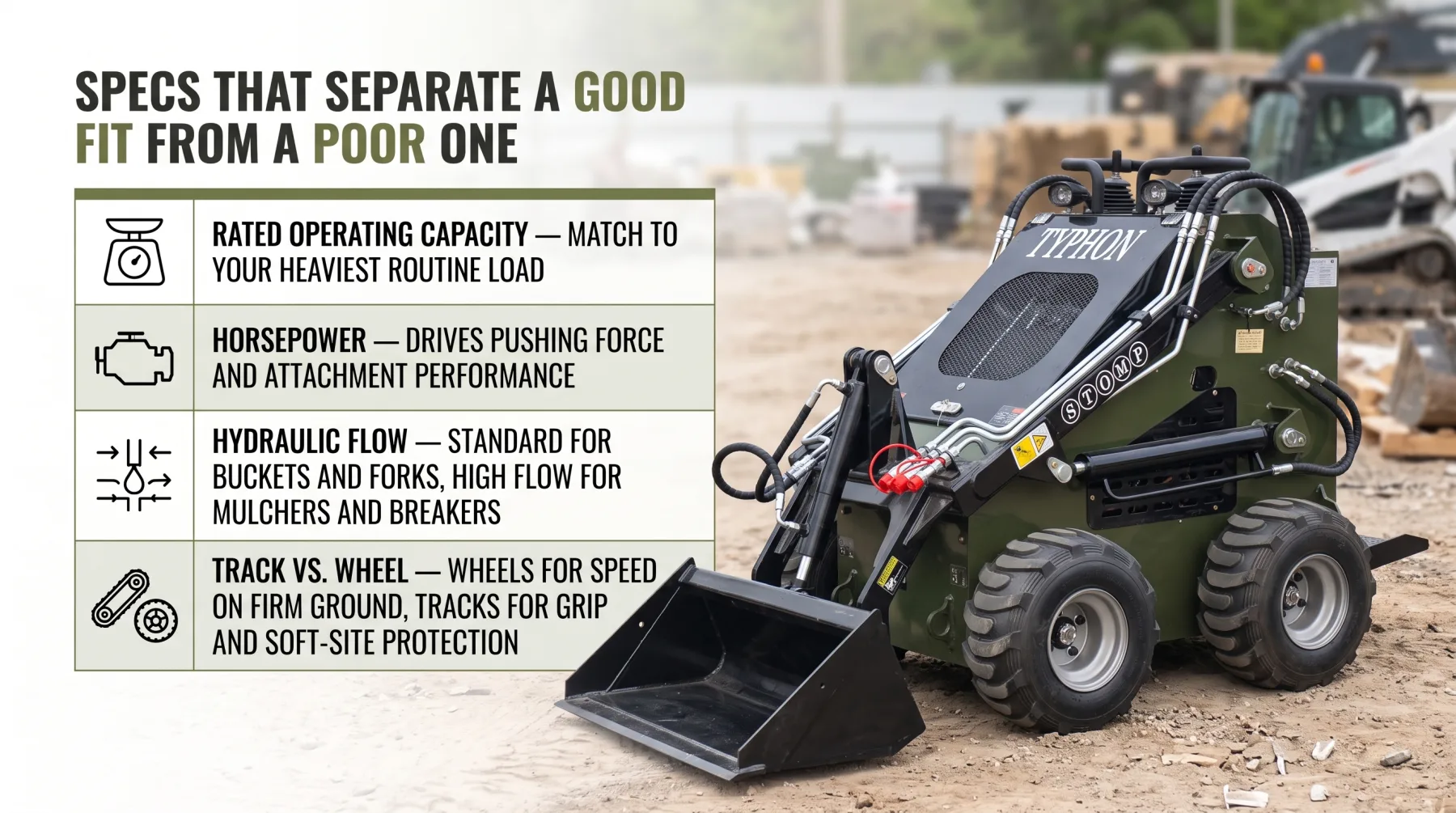
Track and wheel choice deserves extra thought, since it shapes daily performance as much as any number. Consider a crew splitting time between paved commercial lots and soft residential yards; a tracked machine spares the lawns but wears faster and costs more on pavement, so the surfaces you cross most should steer the decision.
Key takeaway: Compare operating capacity, horsepower, hydraulic flow, and drive type against your real daily work. Let the specs match the job rather than chasing the biggest figure on the sheet.
Weighing Whether to Buy or Rent
Cost is where the buy-versus-rent question earns real attention, and usage frequency settles most of it. Steady, year-round skid steer work usually justifies owning a machine outright, since it stands ready on your schedule without a rental fee for every job. Occasional or seasonal use often favors renting, which spares you the purchase price, storage, and maintenance of a machine that mostly sits idle.
Ownership carries costs beyond the sticker. Buying means budgeting for maintenance, repairs, insurance, storage, and transport, all of which add up over a machine’s life, so the true cost of owning runs well past the purchase price. Factoring those into the math keeps an ownership decision honest.
Renting flexibility answers changing needs neatly. A rental lets you match the exact frame size and attachments to each job, so you run a compact machine on a tight residential site one week and a large-frame unit on an open commercial pad the next, never owning more machine than a given job requires. That adaptability often beats ownership for crews whose work varies widely.
Key takeaway: Own a skid steer when steady daily work justifies it, and rent when use is occasional or your jobs vary widely. Weigh the full cost of ownership against how often the machine will actually earn its keep.
Conclusion
Choosing a top-rated skid steer for everyday job sites starts with honesty about the work you repeat most. Prioritize reliability, versatility, and a genuine fit to your daily loads and surfaces over raw power, then match the frame size to that work: compact machines for tight, turf-sensitive jobs, mid-frame units for all-around daily duty, and large frames only when heavy, high-volume work truly demands them. Compare operating capacity, horsepower, hydraulic flow, and track-versus-wheel drive against your real jobs rather than chasing the biggest number, and weigh the full cost of ownership against how often the machine will actually earn its keep before you buy or rent. Measure your tightest access, picture your heaviest routine load, and let those two realities guide the pick. Get the match right, and one well-chosen machine handles the daily work that keeps your jobs moving. When you’re ready to put a dependable skid steer matched to your everyday work to the test, reach out to a trusted equipment specialist who can pair a reliable machine with the results your projects depend on.
Frequently Asked Questions
What size skid steer is best for everyday job sites?
It depends on the work you repeat most. Compact machines rated under about 1,750 pounds suit tight, turf-sensitive residential and hardscape jobs, mid-frame units rated 1,750 to 2,200 pounds with 60 to 75 horsepower cover the widest range of general daily work, and large frames above 2,200 pounds fit heavy, high-volume open-site jobs. Match the frame to your typical loads and tightest access rather than buying the biggest machine available.
Should I choose a track or wheel skid steer for daily use?
Match the drive type to the surfaces you cross most. Wheeled machines move fast on firm, paved ground, cost less to run, and wear slower, making them ideal for commercial lots and hard surfaces. Tracked machines grip soft, muddy, or sloped sites and spread their weight to protect finished lawns and pavers, but they cost more to operate and wear faster on pavement. Let your most common ground conditions decide.
Is it better to buy or rent a skid steer?
Frequency of use settles most of the decision. Steady, year-round work usually justifies buying, since an owned machine is always ready without a per-job rental fee, though you’ll also budget for maintenance, insurance, storage, and transport. Occasional or seasonal use, or work that varies widely in size and attachments, often favors renting, which lets you match the exact machine to each job without owning more than you need.