
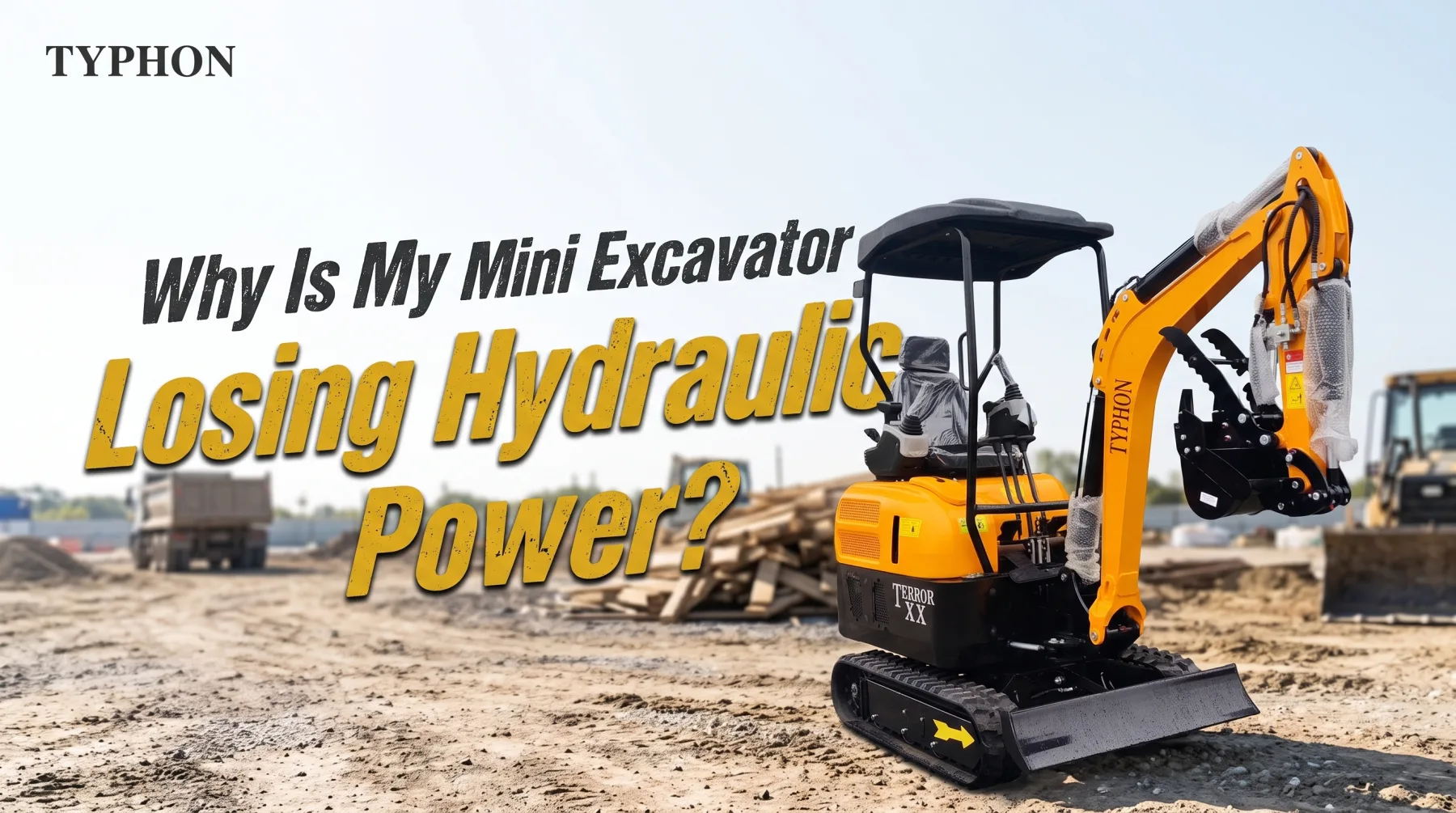
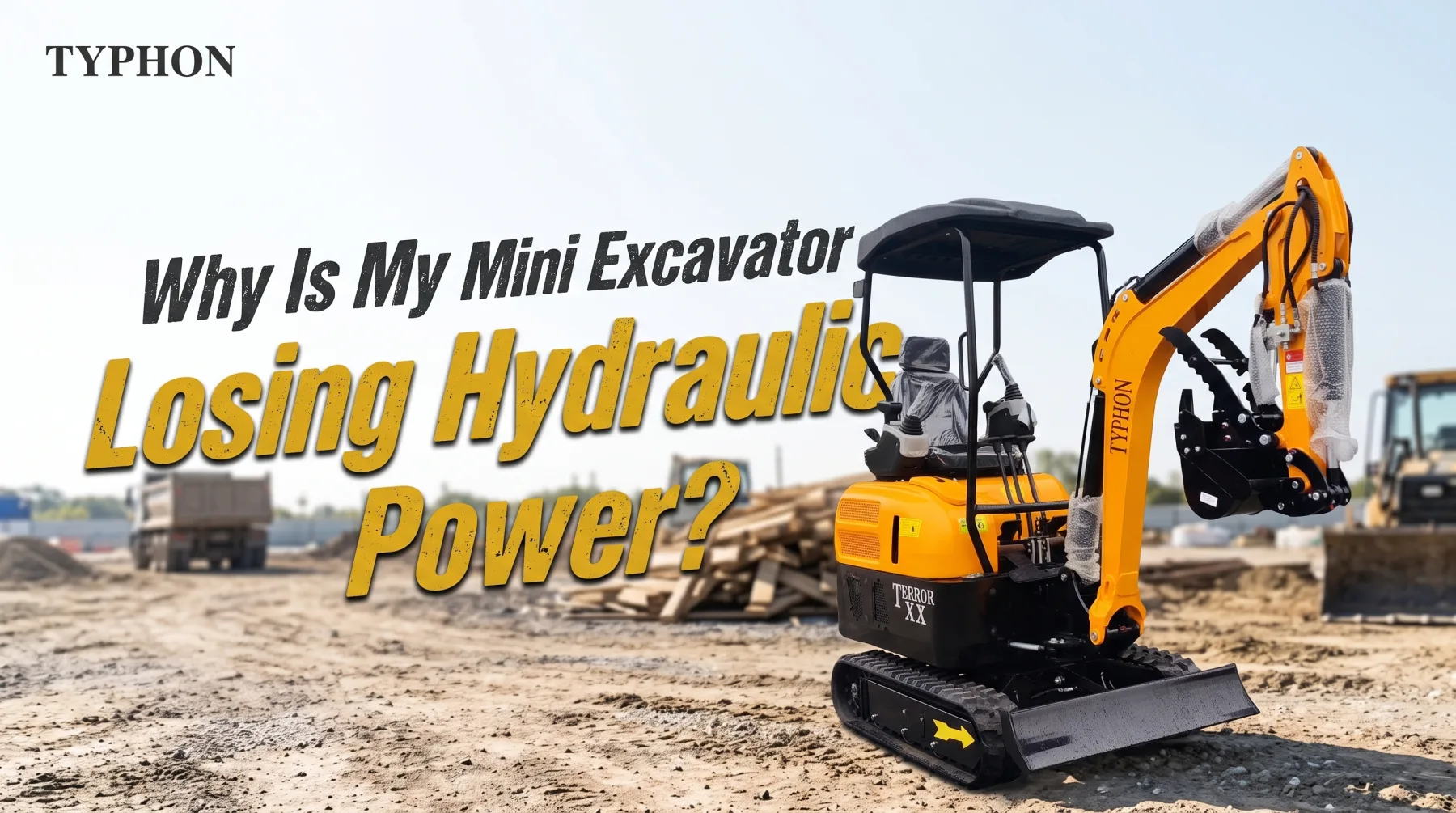
Why Is My Mini Excavator Losing Hydraulic Power?
An operator is halfway through digging a footing when the boom starts moving like it’s stuck in mud. The bucket curls slow, the arm hesitates, and lifting a load that felt easy this morning now takes twice as long. Nothing broke, no warning light came on, but the machine just doesn’t have the muscle it did yesterday. That slow fade in power is one of the most common headaches on a mini excavator, and it almost always traces back to the hydraulic system. Hydraulic power is what makes a compact excavator dig, lift, and swing. When that power drops off, the whole machine slows down and your day slows with it. The good news is that most causes are common, predictable, and fixable once you know where to look. This guide walks through the usual suspects behind hydraulic power loss, from low fluid to a worn pump, so you can spot the problem early and get the machine back to full strength. The key is catching hydraulic problems before they turn into major downtime. A mini excavator can continue working even when the hydraulic system is slowly losing efficiency, but forcing it to operate under poor conditions can increase wear on expensive components. By understanding the signs of reduced hydraulic performance and checking the system regularly, operators can often find small issues before they become costly repairs. A quick inspection of fluid levels, filters, connections, and overall machine response can make the difference between a short adjustment and a full breakdown.
Low Hydraulic Fluid
Start with the simplest cause, because it is also one of the most common reasons a mini excavator loses hydraulic power. The hydraulic system depends on the correct fluid level to create pressure and deliver smooth movement to the boom, arm, bucket, and swing functions. When the fluid level drops too low, the pump can begin pulling air into the system along with the oil. Air in the hydraulic circuit reduces efficiency, causes inconsistent pressure, and can make the machine feel slow, weak, or jerky, especially after the system heats up during long work cycles. Check the hydraulic reservoir with the machine parked on level ground and the attachment lowered, following the inspection procedure in your operator’s manual. If the level is low, add the correct hydraulic fluid recommended by the manufacturer and avoid mixing different fluid types unless approved. More importantly, find out why the level dropped in the first place. Hydraulic oil does not get used up during normal operation, so a low reservoir often points to a leak, damaged hose, loose fitting, or worn seal that needs attention. Confirming the correct fluid type and maintaining the proper level helps protect the pump and keeps the system working at full strength.
Dirty or Clogged Filters
Hydraulic filters play a critical role by removing dirt, metal particles, and other contaminants before they reach sensitive components like the pump, valves, and cylinders. Over time, these filters collect debris and become restricted, reducing the amount of clean fluid that can move through the system. When flow becomes limited, the excavator may feel sluggish, respond slowly, or lose power when performing demanding tasks because the hydraulic system cannot maintain the pressure it needs. A clogged filter is often overlooked because the machine may continue working while performance gradually declines. Hydraulic filters are maintenance items that should be replaced according to the manufacturer’s service schedule rather than waiting until a problem appears. If your excavator is losing power and the fluid level is correct, checking the filter is one of the first troubleshooting steps to take. A simple filter replacement can restore proper flow and prevent contaminated fluid from damaging expensive components like the hydraulic pump and control valves. Keeping the filtration system clean is one of the easiest ways to maintain consistent hydraulic performance.
Worn Hydraulic Pump
The hydraulic pump is the heart of the entire system. It creates the pressure and flow needed to power every movement, from lifting the boom and curling the bucket to swinging the house and driving the machine. When the pump begins to wear, the system can no longer deliver the same force it once did, causing a gradual loss of performance across multiple functions. Operators often notice slower cycle times, weaker lifting ability, and a machine that struggles more under load. A worn pump may also produce unusual whining, grinding, or groaning sounds as it works harder to maintain pressure. Pump wear usually develops from normal operating hours, poor maintenance, contaminated fluid, or running the machine under heavy loads without proper care. Unlike low fluid levels or simple filter issues, a worn pump will not recover after adding oil or replacing a small component. A hydraulic pressure test compared against the manufacturer’s specifications is the best way to confirm whether the pump is still producing the correct output. Because the pump controls the performance of the entire hydraulic system, repairs should usually be handled by a qualified technician to prevent further damage and restore proper operation.
Hydraulic Cylinder Seal Leaks
The hydraulic cylinders that control the boom, arm, and bucket depend on strong internal seals to hold pressure and convert hydraulic power into movement. When those seals become worn, damaged, or cracked, hydraulic fluid can leak past the seal instead of pushing the piston with full force. This reduces the cylinder’s ability to lift, hold, and control loads, leading to slow movement, drifting attachments, or difficulty keeping the bucket or boom in position. Common signs of a cylinder seal problem include hydraulic oil around the cylinder rod, wet spots near the cylinder body, or an attachment that slowly drops when the controls are released. Small leaks may seem minor at first, but continuing to operate with damaged seals can allow contamination into the system and increase wear on other components. Inspect cylinders regularly, repair leaks early, and replace worn seals before the problem affects productivity or leads to more expensive hydraulic repairs.
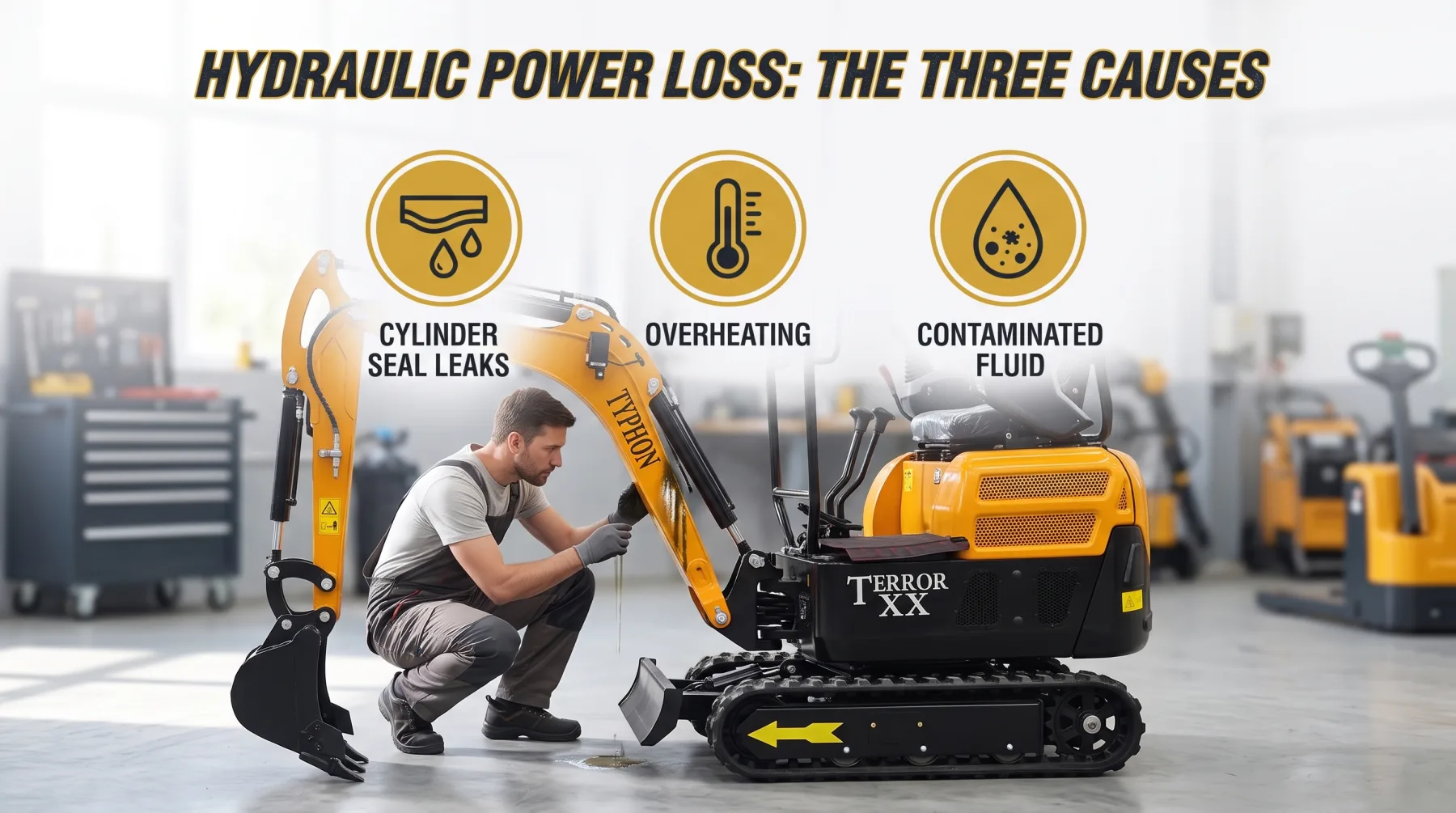
Seal leaks tend to get worse over time, so catching them early saves you both fluid and power. Look for oily film, drips, or a rod that stays wet after use. Reseal the cylinder before the leak grows into a bigger repair, and check the rod for scoring or pitting while you’re in there, since a damaged rod will chew through new seals fast.
Overheating
Hydraulic fluid works best within a specific temperature range. When it runs too hot, the oil becomes thinner and loses its ability to build and maintain consistent pressure, which directly affects the power and response of the machine. This often appears as a gradual loss of performance: the excavator feels strong when it first starts working, but after several hours the boom slows down, the bucket struggles to curl, and hydraulic functions become noticeably weaker. A system that fades as the day goes on is often dealing with excessive heat. Overheating can come from several sources, including low hydraulic fluid levels, a dirty oil cooler, blocked cooling fins, a stuck relief valve, restricted airflow, or simply pushing the machine beyond what the conditions allow. Hot weather, heavy digging cycles, and continuous high-pressure work can all increase hydraulic temperatures. Keep the cooler and surrounding areas clean, check fluid levels regularly, monitor temperature warnings, and allow the machine to cool down when temperatures climb too high. Running a hydraulic system hot does more than reduce power in the moment; it accelerates fluid breakdown, increases wear on seals and components, and can shorten the life of the entire system.
Contaminated Fluid
Clean hydraulic fluid is the foundation of a healthy hydraulic system. As the fluid circulates through the pump, valves, and cylinders, it must remain free of dirt, water, and metal particles that can damage precision components. Contaminated oil loses its ability to protect internal parts and can create problems such as slow movement, inconsistent operation, unusual noises, and reduced hydraulic strength. In severe cases, contamination can damage expensive components like the hydraulic pump and control valves.
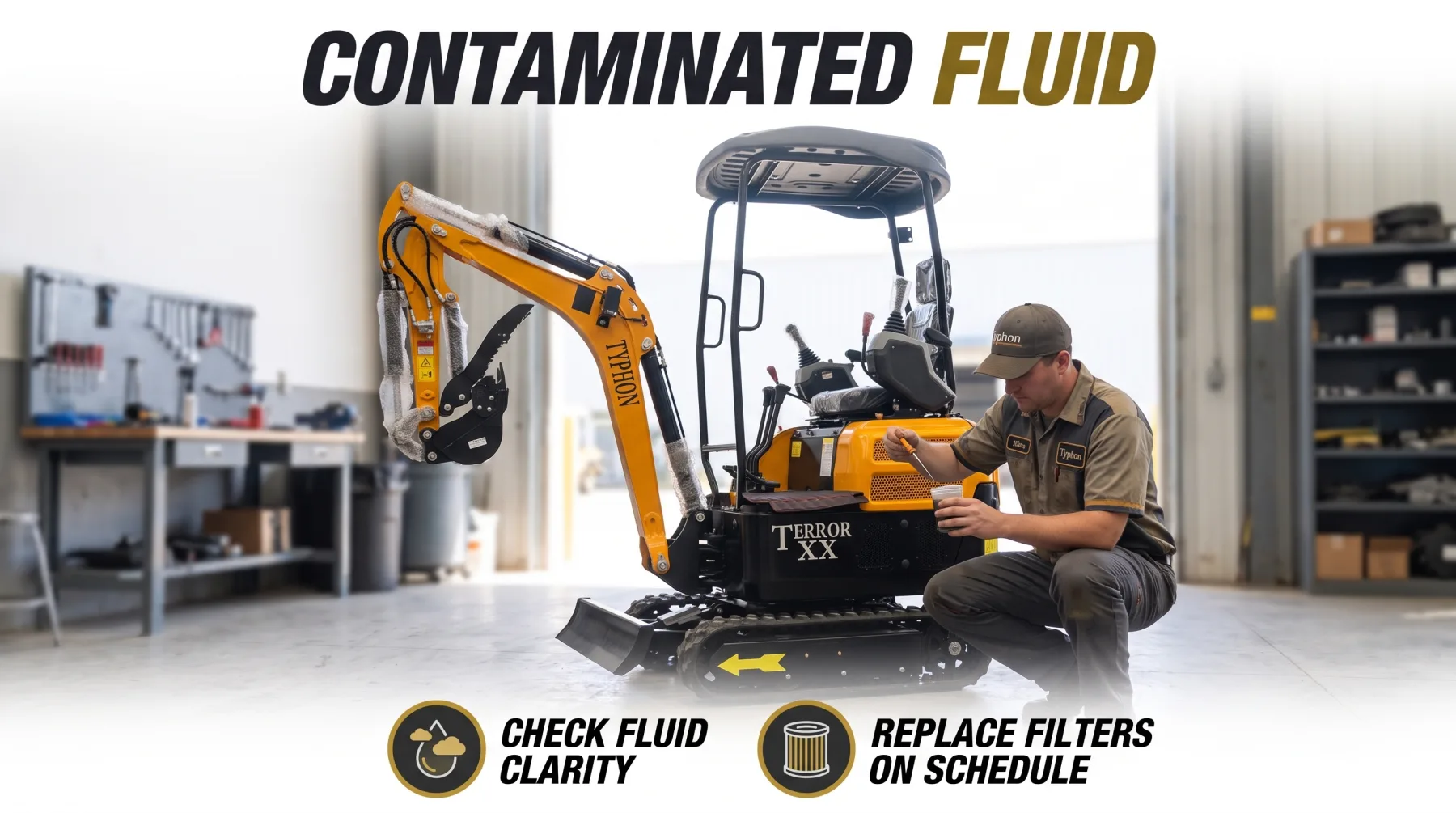
Contamination often enters through poor service practices, damaged seals, a loose fill cap, dirty storage containers, or failing filters that allow particles to pass through the system. Hydraulic fluid that appears cloudy, milky, unusually dark, or gritty is a warning sign that something is wrong. Inspect the oil regularly, replace filters on schedule, keep service areas clean, and always use the correct hydraulic fluid recommended for the machine. Catching contaminated fluid early can prevent major repairs and keep your mini excavator operating with the smooth, reliable power it was designed to deliver.
Conclusion
When a mini excavator loses hydraulic power, the cause is usually one of a handful of common, fixable problems. Start with the easy checks: fluid level and filters, since a low reservoir or clogged filter accounts for a huge share of power complaints. From there, move to seal leaks in the cylinders, overheating that thins the fluid, and contamination that quietly wears the system down. A worn pump sits at the serious end, showing up as a steady loss across every function. The key is catching these early, because a small issue left alone turns into an expensive one. Stay on top of your maintenance schedule, watch for slow or weak movement, and follow safe service practices whenever you work on a pressurized system. When the problem runs deeper than a routine fix, reach out to a trusted equipment specialist who can diagnose the system and pair reliable repairs with the results your projects depend on.
Frequently Asked Questions
What is the most common reason a mini excavator loses hydraulic power?
Low hydraulic fluid and clogged filters are the most common causes, since both starve the system of the flow it needs to build full pressure and move the boom, arm, and bucket.
Why does my mini excavator lose power only after it warms up?
That usually points to overheating or a low fluid level, because hot fluid thins out and loses pressure, so the machine feels strong cold but weakens as it runs.
Can I fix a hydraulic power loss myself?
Simple fixes like topping off fluid or changing a filter are easy to handle, but a worn pump, cylinder reseal, or pressure test is best left to a qualified technician.