
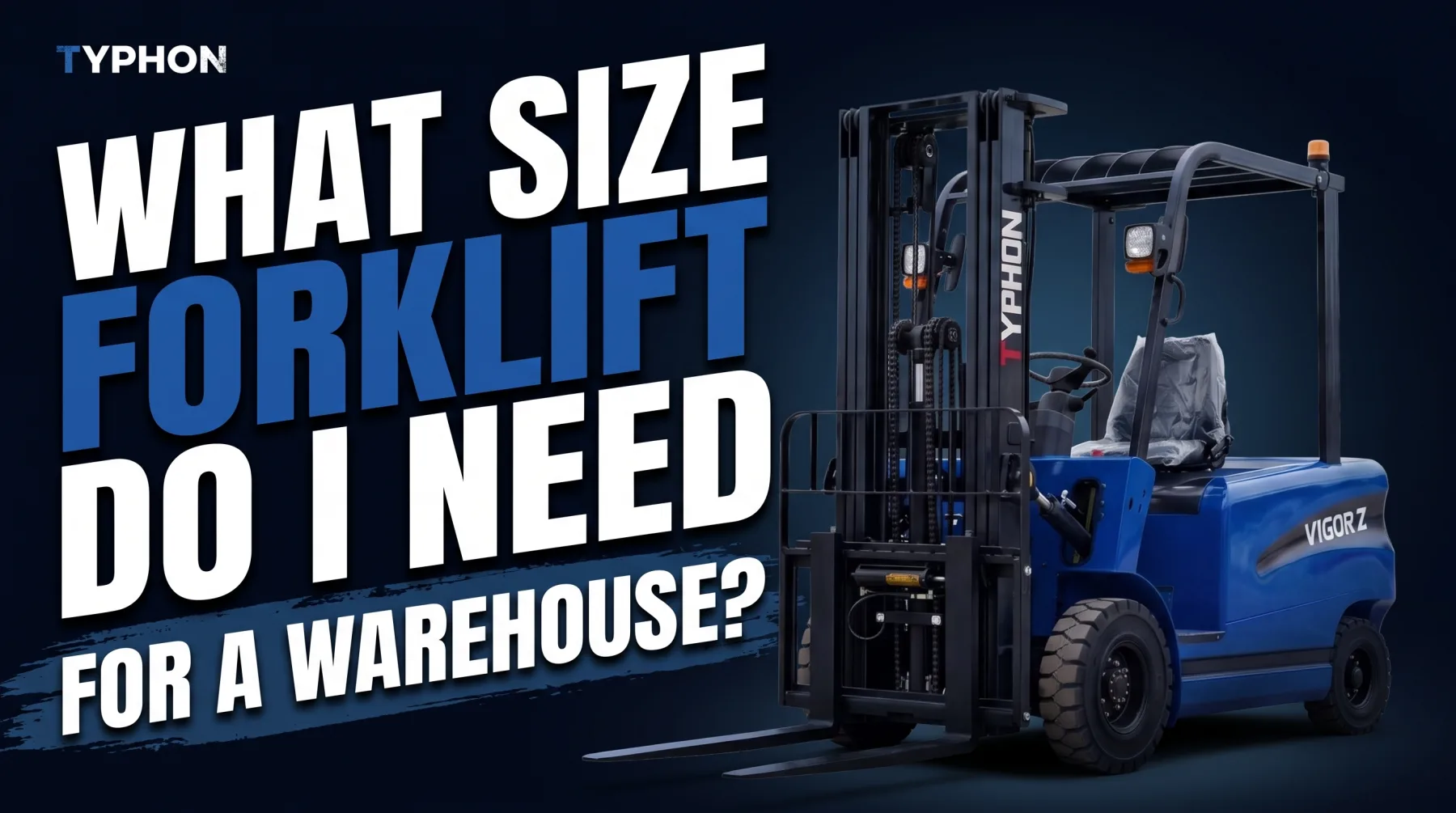
What Size Forklift Do I Need for a Warehouse?
You order a forklift based on a spec sheet and a gut feeling, and it arrives looking capable enough. Then reality sets in. The mast won’t reach your top rack level, so the highest pallet positions sit empty while you scramble for a taller machine. The turning radius is too wide for your narrowest aisle, forcing three-point turns that slow every put-away. And when a heavier-than-usual pallet comes off the truck, the machine strains at the edge of its capacity. One purchase, three mismatches, and a warehouse that runs slower than it should every single shift. Many warehouse problems don’t start with the inventory or the staff. They start with a forklift that doesn’t fit the job. A machine that’s undersized creates bottlenecks and limits storage potential, while an oversized forklift costs more to own and operate without adding real value. The ideal forklift is built around your operation, from the loads you lift and the height you reach to the aisles you navigate and the volume you move every day. Understanding these factors is the key to finding a forklift that delivers long-term efficiency and performance.
Start With the Loads You Actually Lift
Picking the right size begins with the one number that anchors everything else: how much weight the forklift has to move. Get this wrong and no other spec can save you, because a machine that can’t safely lift your loads is a bottleneck from day one. Weight sets the foundation for every choice that follows.
Sizing to Your Heaviest Routine Load
The first rule is to size for your heaviest regular load, not your average one. Add up the weight of a full pallet including its product and the pallet itself, then check that against the machine’s rated load capacity. A forklift that comfortably handles your typical pallet but strains on your heaviest one will wear out fast and struggle when it matters most. Be honest about the outliers you handle often. If dense products, bulk materials, or double-stacked pallets show up weekly, that’s your real target weight. Occasional one-off heavy loads can be planned around, but anything routine has to sit well within the machine’s rating, with margin to spare rather than at the ragged edge.
How Capacity Drops With Height and Reach
Here’s the detail that catches buyers off guard: a forklift’s capacity isn’t a fixed number. It drops as the load rises up the mast and as the load’s center of gravity moves forward on the forks. A machine rated to lift a certain weight at ground level may carry noticeably less at the top of a tall rack. This is why the load center rating matters as much as the headline capacity. Read the machine’s load chart, which shows how much it can safely carry at different heights and load centers, and confirm it still handles your heaviest pallet at your top storage level. A forklift that lifts your load on the floor but not on the top beam isn’t sized correctly. Takeaway: Size the forklift to your heaviest routine load with margin to spare, and confirm on the load chart that it still carries that weight at your highest rack level, because capacity that fades with height is capacity you can’t count on.
Match Lift Height to Your Racking
The decision hinges next on how high your product has to go. A forklift that can’t reach your top rack position leaves prime storage sitting empty, and a warehouse pays for every cubic foot it can’t use. Lift height directly shapes how much you can store in the space you already have.
Measuring True Working Height
Start by measuring the height of your highest storage position, from the floor to the top beam where the pallet rests. Add enough clearance to place and retrieve loads safely, then verify that the forklift’s maximum fork height exceeds this requirement with room to spare instead of only just reaching it. Lift height isn’t the only specification worth checking. Hydraulic flow also plays an important role in lifting performance, especially if your operation uses hydraulic attachments such as fork positioners, clamps, or rotators. A forklift with sufficient hydraulic flow helps these attachments respond smoothly and efficiently while maintaining consistent lifting performance throughout the workday. Don’t focus only on today’s warehouse layout. If you plan to install taller racking or expand your storage capacity in the future, account for that additional lift height now. Investing in a forklift that only meets your current requirements could limit future growth and lead to an expensive replacement sooner than expected.
Mast Type and Overhead Clearance
Lift height comes with a trade-off that’s easy to miss: the mast’s collapsed height. When the mast is lowered, it still has to clear your doorways, low ceiling sections, trailer openings, and any overhead obstructions. A tall-reaching mast that won’t fit under your dock door or through a low bay is the wrong choice no matter how high it climbs.
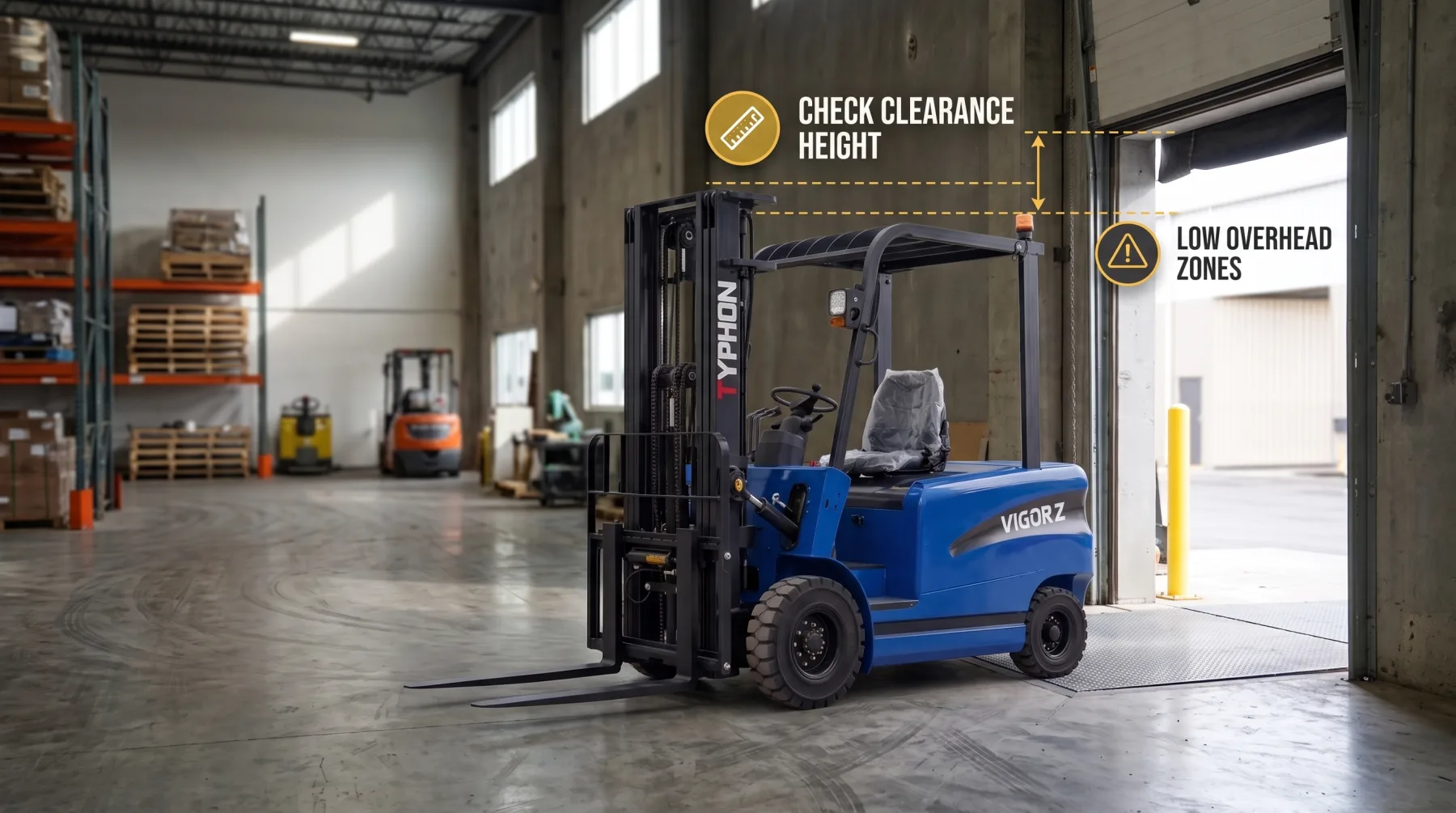
This is where forklift mast height options matter. Multi-stage masts reach high while collapsing shorter, and free-lift features let the forks rise before the mast extends, which helps in low-clearance spots like trailers. Match the mast configuration to both your top rack level and your lowest overhead obstruction, so the machine works everywhere your product travels. Takeaway: Match the forklift’s lift height to your highest storage position with clearance to spare, and confirm the collapsed mast clears your doorways and low areas, so the machine reaches every level without getting stuck on the way.
Size for the Space You Maneuver In
At the heart of this choice sits a factor buyers often underestimate: how the forklift moves through your building. A machine that lifts and carries perfectly but can’t turn cleanly in your aisles will slow every put-away and retrieval. In a busy warehouse, maneuverability is productivity.
Aisle Width and Turning Radius
Measure your aisles at their narrowest, then compare that against the forklift’s turning radius and the space it needs to swing a load into a rack. A machine too large for your aisles forces awkward multi-point turns, wastes seconds on every cycle, and raises the risk of clipping racking or product. Your warehouse aisle clearance often dictates the entire class of forklift you can run. Wide aisles accommodate standard counterbalance machines, while narrow aisles call for specialized designs like reach trucks or narrow-aisle models built to turn and stack in tight spaces. If your racking layout is fixed, let the aisle width narrow your options before you look at anything else.
Footprint, Height, and Overall Fit
Beyond turning, weigh the machine’s whole footprint against your building. Its length and width determine how it navigates intersections, dock areas, and staging zones, while its overall dimensions decide whether it fits comfortably in the flow of foot and equipment traffic. A compact machine in a tight warehouse often outperforms a larger one that’s constantly negotiating space. Consider this: if your operation runs mostly in confined interior space with standard racking, a nimble machine with a tight turning radius earns its keep on every trip. But if you work wide-open floors and load trucks in a spacious yard, a larger machine’s footprint costs you nothing and its added capacity may serve you well. Match the machine’s size to how your space actually flows. Takeaway: Size the forklift to your narrowest aisles and overall building layout, letting turning radius and footprint guide the machine class, because a lift that maneuvers cleanly through your space beats a bigger one that fights it on every cycle.
Weigh Throughput, Environment, and Power
Four factors shape a complete sizing decision, and the last one ties capacity, height, and space to how hard the machine works and where. A forklift sized right for a single pallet may still fall short if it can’t keep pace with your volume or suit your environment. This is where the choice becomes an operational fit, not just a physical one.
Matching the Machine to Your Volume
Think about how many loads the forklift moves in a shift and how continuously it runs. A machine that handles occasional put-aways can be lighter-duty, while one running back-to-back cycles all day needs the durability, power, and endurance to sustain that pace without overheating or wearing out early. Undersizing here shows up as breakdowns and slow cycles during your busiest hours. Balance capability against efficiency, too. A machine sized well beyond your real throughput burns more energy and costs more to run than your workload justifies, while an undersized one bottlenecks the whole operation. The right fit carries your peak volume comfortably without paying for capacity you’ll rarely touch.
Indoor Environment and Power Source
Where the forklift works shapes which power source fits. Enclosed warehouses favor electric machines, which run clean and quiet without exhaust, keeping the air breathable in tight indoor spaces. Their compact builds and tight turning also suit narrow aisles, which is why electric models dominate pure indoor operations.
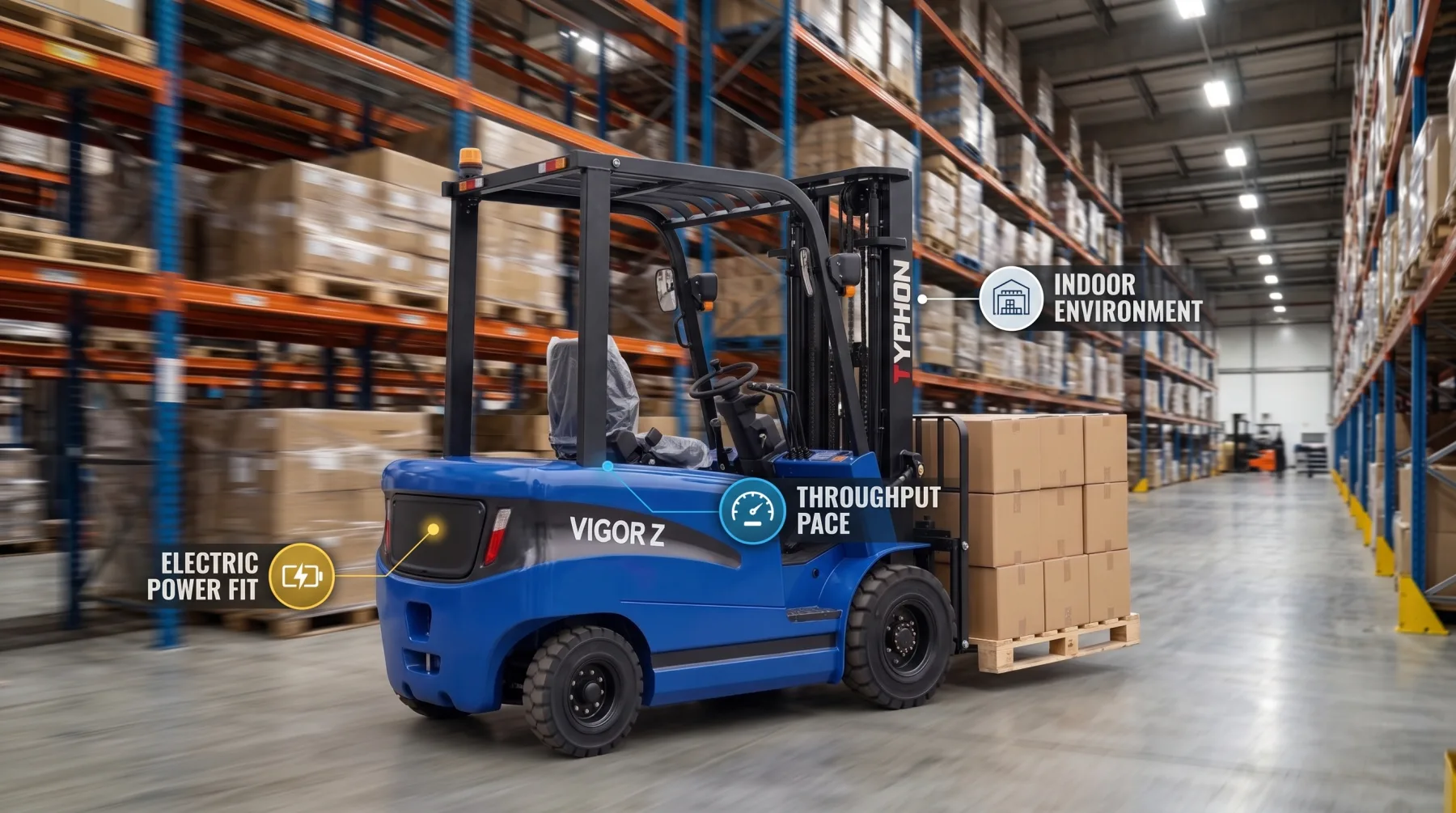
If your work spills outdoors onto pavement or rough ground, or demands sustained heavy lifting, an internal-combustion machine running on LP gas may serve better, though it needs ventilation indoors. Weigh your dominant environment first, then choose the power source and tire type that keep the machine productive wherever it spends most of its hours.
Leaving Room to Grow
Finally, size with one eye on where your operation is headed. If your volume is climbing, your racking is going taller, or you’re adding SKUs and heavier products, a machine sized only for today will feel cramped within a season. Building in a sensible margin on capacity and height protects you from replacing equipment prematurely. Balance that foresight against overbuying. You don’t need to size for a warehouse you might have in five years, but matching the machine to your realistic near-term growth is smart planning. A forklift that fits both today’s work and tomorrow’s plans is an investment that keeps paying off rather than one you outgrow. Takeaway: Match the forklift to your throughput, environment, and power needs while leaving sensible room to grow, so the machine keeps pace with your busiest shifts and suits your space without capping where your operation is headed.
Frequently Asked Questions
How do I calculate what capacity forklift I need?
Add up the total weight of your heaviest routine load, including the product and the pallet, then choose a forklift whose rated capacity comfortably exceeds it with margin to spare. Critically, check the machine’s load chart to confirm it still carries that weight at your highest storage height and at your load’s center of gravity, since capacity drops as loads rise and shift forward. Size to your heaviest regular load, not your average one.
Does forklift capacity really change with lift height?
Yes. A forklift’s capacity is highest at ground level and decreases as the load rises up the mast and as the load center moves forward on the forks. A machine rated to lift a given weight on the floor may safely carry noticeably less at the top of a tall rack. Always read the load chart and confirm the machine handles your heaviest pallet at your highest storage level, not just at ground height.
Should I choose an electric or gas forklift for indoor warehouse use?
For enclosed indoor warehouses, electric forklifts are usually the better fit. They run clean and quiet with no exhaust, keeping indoor air breathable, and their compact frames and tight turning suit narrow aisles. Internal-combustion machines on LP gas make more sense when work extends outdoors onto pavement or rough ground, or demands sustained heavy lifting, though they require ventilation indoors. Match the power source to your dominant working environment.
Conclusion
Sizing a warehouse forklift correctly means matching four things to how your operation actually runs: the heaviest load you lift with margin to spare, the top rack height your mast must reach while still clearing your doorways, the narrowest aisle your machine has to turn in, and the throughput, environment, and growth that shape how hard and where it works — so before you commit, measure your real loads and heights, walk your tightest spaces with a tape in hand, confirm the load chart holds at your top beam, and leave sensible room to grow, then reach out to a trusted equipment specialist who can pair the right-sized machine with the dependable performance your warehouse depends on every shift.