
Why Arm Rest Design Matters on a Mini Excavator
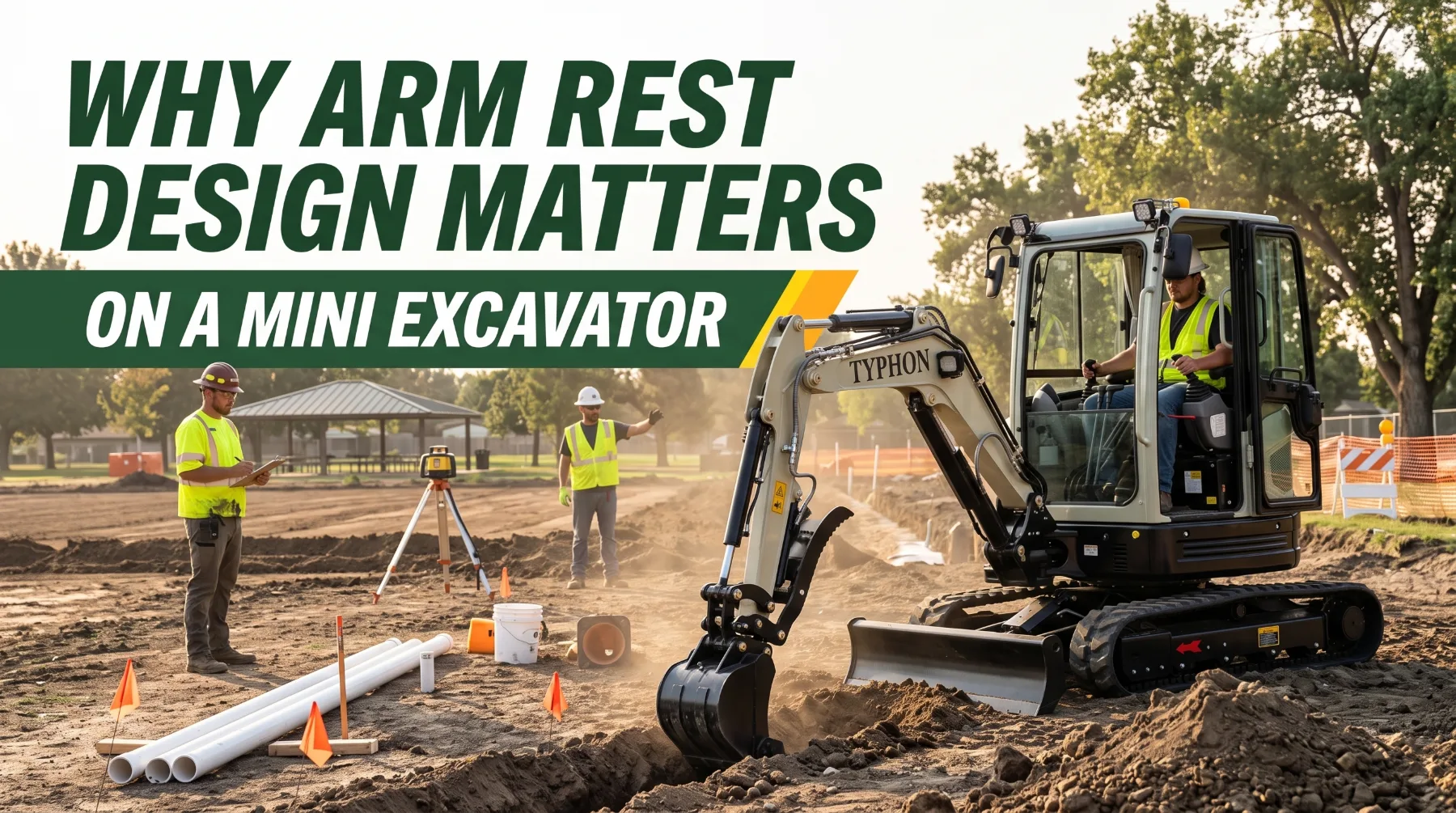
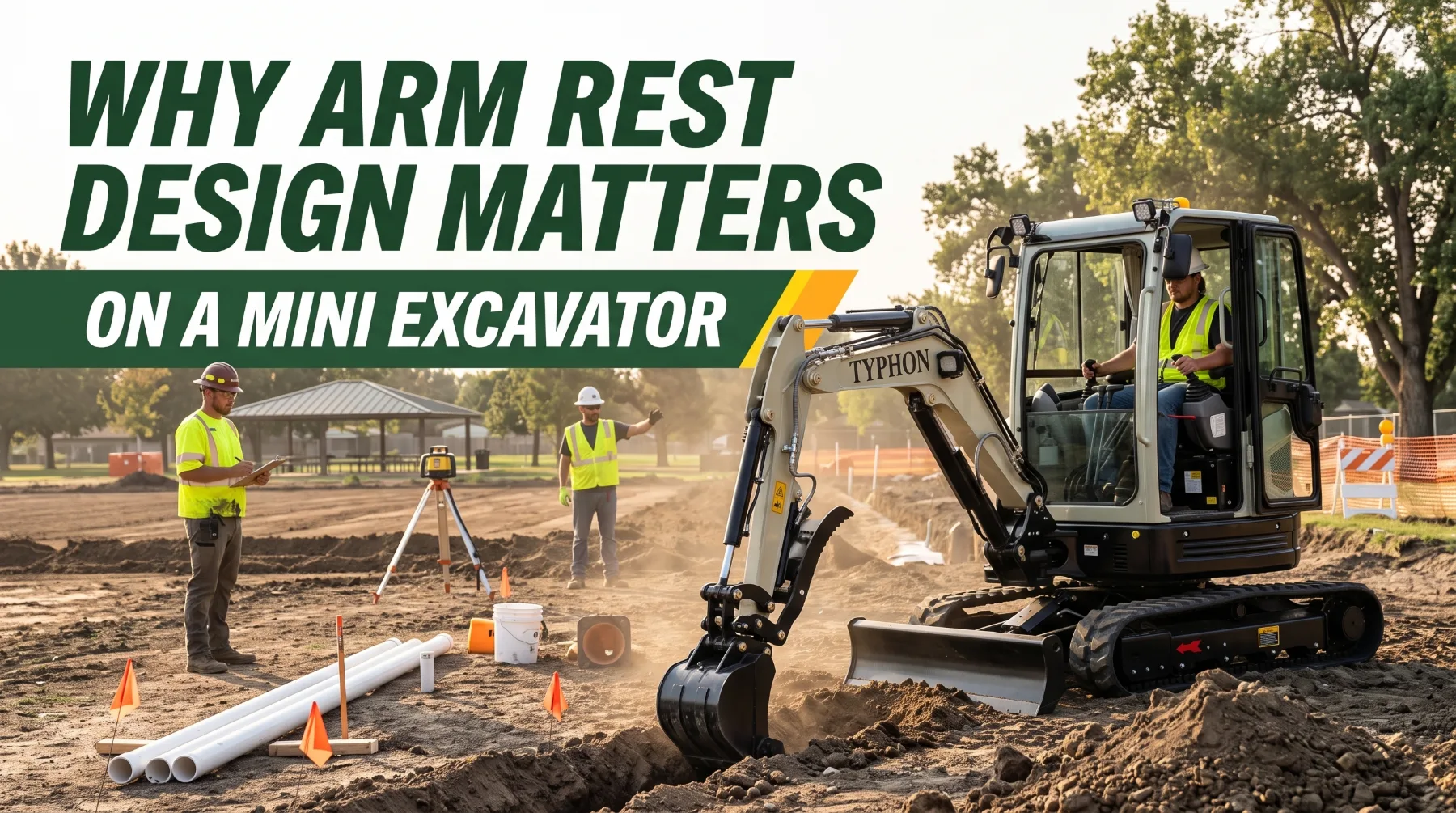
Long hours of trenching can place steady physical demands on a mini excavator operator. Repeated movements such as lowering the boom, moving the arm, curling the bucket, swinging, and dumping can become tiring when performed continuously throughout the day. As fatigue builds, the operator may shift position, lean forward, or repeatedly adjust their arms to reach the controls.
Operator comfort depends on how well the seat, controls, armrests, visibility, and surrounding workspace support natural working movements. Controls that are positioned too far away or a seat that does not provide adequate adjustment can make repetitive operation more tiring. Clear visibility of the bucket and work area also helps reduce unnecessary leaning and repositioning during excavation.
Maintaining a comfortable operating position can support better control throughout a full shift. Adjusting the seat and controls before work begins, keeping frequently used controls within easy reach, and maintaining a clear view of the digging area can reduce unnecessary movement. For repetitive trenching and landscaping work, a well-designed operator station can help maintain consistent productivity while reducing physical strain.
Keep Joysticks Easy to Reach
Arm rest support only works well when the joysticks sit where the hand naturally falls. Joystick placement should align with the arm rest, so the operator can grip the controls without stretching forward, reaching sideways, or lifting the forearm away from its support.
When controls stay within comfortable reach, frequent functions become easier to perform. Boom, arm, bucket, and swing inputs happen continuously during excavation, and an operator shouldn't have to reposition the entire arm for each one. The wrist and hand handle the fine movements, while the arm rest keeps the rest of the arm in place.
A poor match between arm rest and joystick has the opposite effect. If the controls sit too far ahead or too low, operators tend to hover their arms or lean forward. That breaks the supported position and adds effort to every cycle.
Key takeaway:akeaway: Joystick placement should work naturally alongside the arm rest, keeping controls within comfortable reach so operators can perform frequent functions without constantly repositioning their arms.
Support a Stable Working Position
A mini excavator arm rest gives the operator's forearm a solid place to rest while the hand stays near the controls. That support anchors the arm, so the operator isn't holding it up through muscle effort alone. With the forearm settled, the hand can make small, deliberate joystick inputs from a steady base.
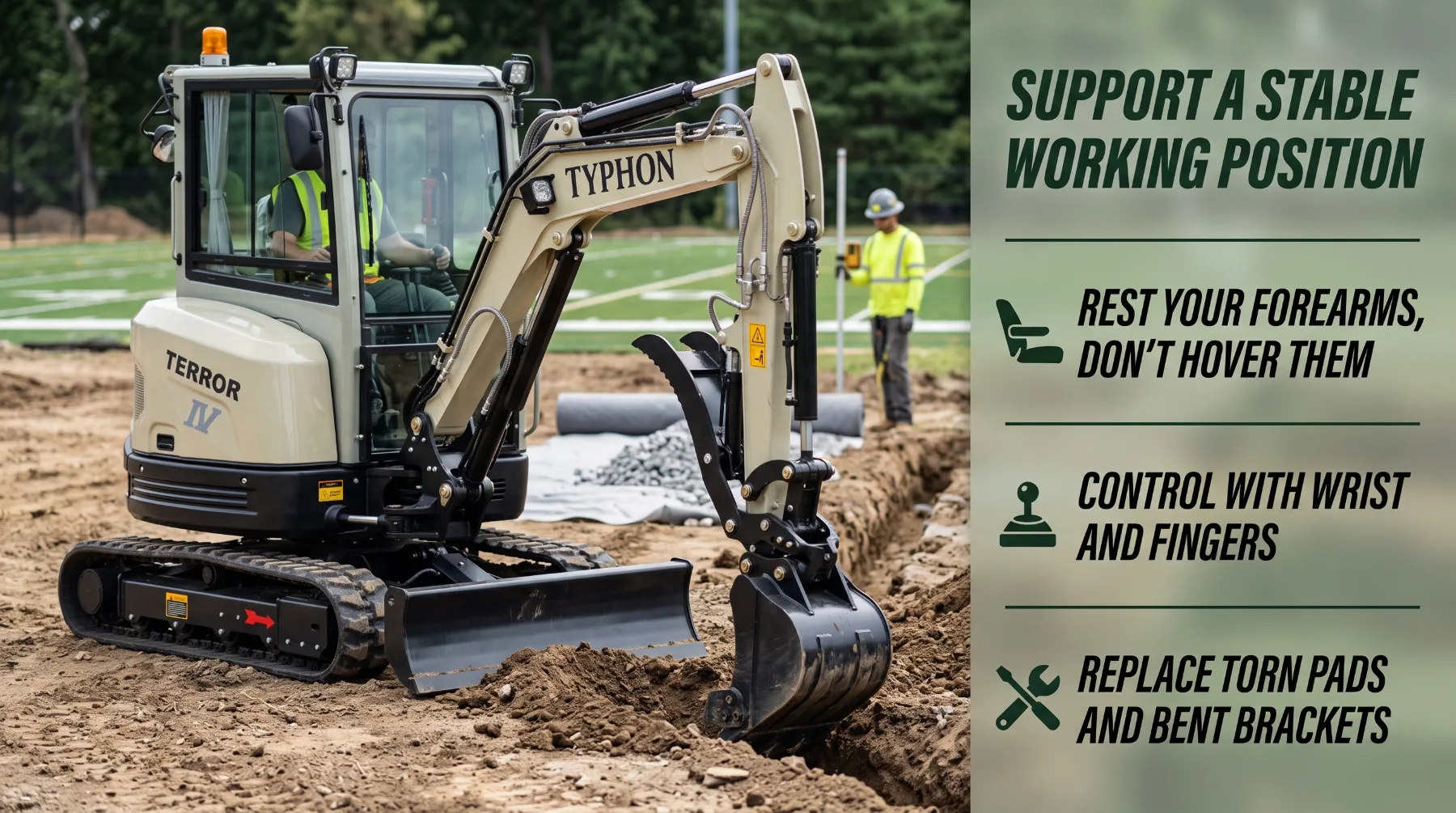
Stability matters most during repeated machine movements. Each digging cycle involves shifting forces as the boom lowers, the bucket loads, and the upper structure swings. A suitable arm rest position helps the operator keep a consistent posture through those changes rather than bracing against every motion.
Precision work benefits directly. Grading close to a finished surface, digging near buried utilities, or placing material in a tight spot all depend on fine control. A stable forearm supports the smooth, measured inputs those tasks demand.
Key takeaway:akeaway: An arm rest supports the operator's forearm while the hand stays near the controls, helping maintain a stable operating posture during repeated machine movements.
Reduce Repetitive Arm Movement
Excavation is built on repetition. A single trench can require thousands of control inputs over a shift, and each work cycle calls for the same sequence of movements again and again. How much the arm moves during those inputs has a real effect on the operator.
Proper arm support reduces unnecessary movement. When the forearm stays anchored, the operator can control the machine through smaller wrist and hand motions instead of larger shoulder and elbow movements. That economy of motion helps the operator maintain a consistent position throughout repetitive tasks.
Consistency also supports productivity. An operator working from the same supported position can repeat cycles at a steady pace with predictable results. Less wasted motion means more attention stays on the bucket, the trench, and the surrounding work area.
Key takeaway:akeaway: Proper arm support reduces unnecessary movement during repeated excavation inputs and helps the operator maintain a consistent position throughout repetitive work cycles.
Improve Long-Shift Comfort
Extended operating periods place strain on the arms, shoulders, and upper body. A task that feels effortless in the first hour can become tiring by the end of the day when the operator station doesn't provide adequate support. That fatigue can affect focus and consistency.
A well-designed operator station helps maintain a comfortable posture over longer shifts. Arm rests that support the forearms reduce the load on the shoulders. Combined with a supportive seat and well-placed controls, they help the operator stay relaxed and upright rather than hunched or tense.
Comfort ties directly to reliable work. Operators who stay comfortable can maintain their attention on the job, respond to changing site conditions, and keep a steady pace through the full shift. Scheduled breaks remain important, but a supportive operator station makes the time between them more manageable.
Key takeaway:akeaway: Long shifts can strain the arms, shoulders, and upper body, and a well-designed operator station with proper arm support helps maintain a comfortable posture over extended operation.
Work Alongside Good Visibility
Arm rest design never works in isolation. The arm rest and control console should not interfere with the operator's ability to see the bucket, the excavation area, the travel path, or surrounding obstacles. Support that blocks sightlines creates a new problem while solving an old one.
Seat position, control placement, and visibility need to work together. If an arm rest or console sits too high, the operator may lean forward or to one side to see the bucket, which undoes the benefit of a supported posture. A well-integrated layout lets the operator see the work clearly while sitting back in a stable, supported position.
Clear sightlines matter for both precision and safety. Operators need to watch the bucket edge while digging, check for people and equipment nearby, and monitor the path when traveling or repositioning. A layout that supports good posture and good visibility at the same time lets them do all of this without compromise.
Key takeaway:akeaway: Arm rest position should not interfere with sightlines to the bucket, excavation area, travel path, or surrounding obstacles, and seat position, control placement, and visibility should work together.
Consider Operator Adjustments
Operators come in different body sizes and prefer different seating positions. A setup that fits one operator well can leave another stretching for the controls or sitting with the arms at an awkward angle. That's why adjustability is valuable on machines shared across a crew.
Where adjustment is available, position the arm rest and seat together. The goal is a posture where the forearms rest comfortably, the hands reach the joysticks naturally, and the operator can see the work area clearly. Depending on the machine, adjustments may include seat height, fore-and-aft seat position, arm rest height, or control console position.
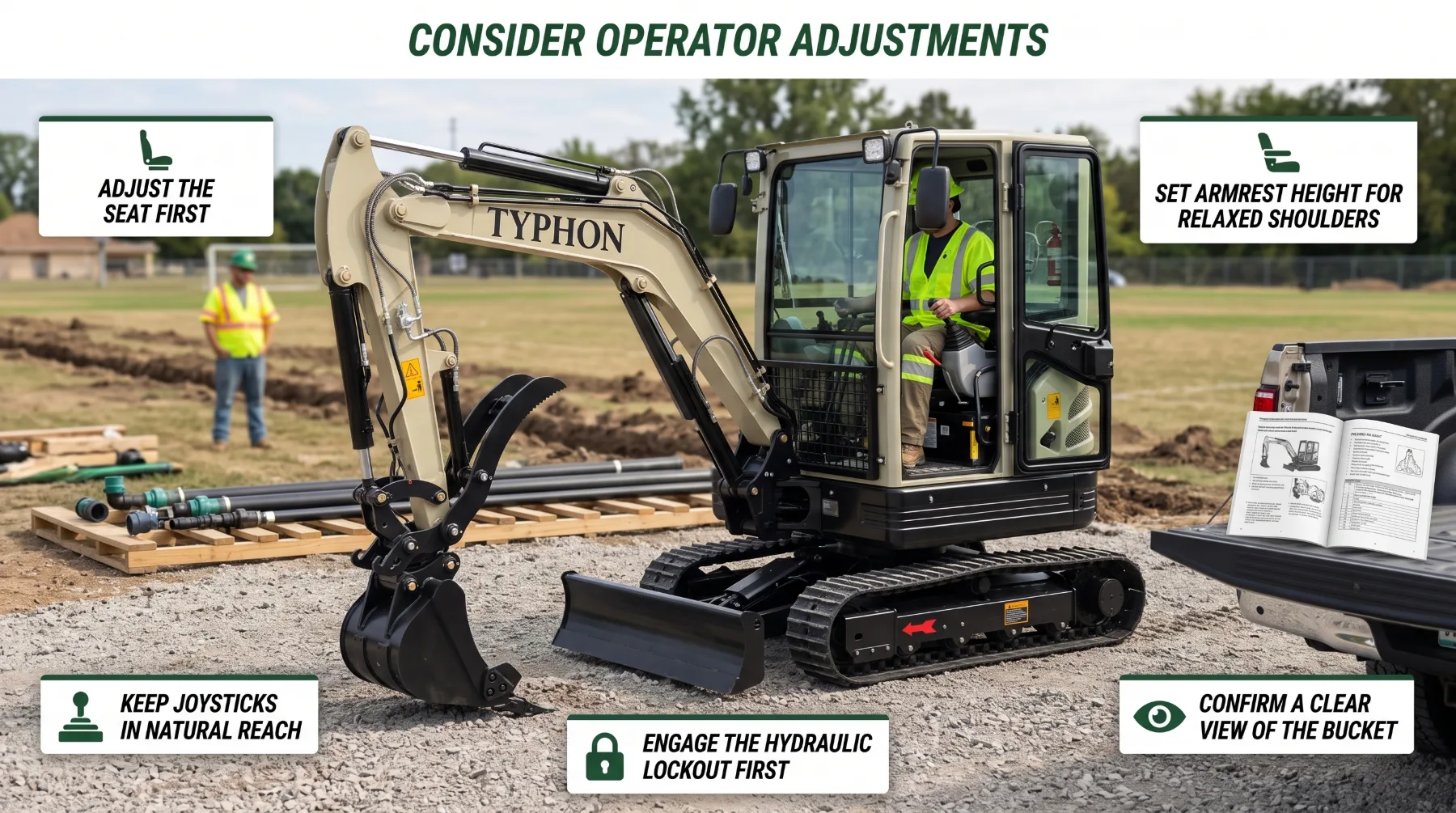
Making these adjustments should be part of every shift change. An operator who climbs into a machine set for someone else and starts working immediately may spend the day in an awkward position. A minute spent adjusting the seat and arm rests pays off in comfort and control for hours afterward.
Key takeaway:akeaway: Operators vary in body size and seating preference, so position the arm rest and seat, where adjustment is available, to keep controls accessible without creating an awkward posture.
Conclusion
Armrest design influences mini excavator operator comfort, control, and consistency by supporting the forearms and positioning the hands naturally near the joysticks. Proper forearm support can reduce unnecessary arm and shoulder movement during repetitive digging, swinging, grading, and attachment operations, while joystick placement should allow operators to make controlled inputs without repeatedly lifting or reaching their arms. Seat and armrest adjustments should accommodate different operator body positions, while the armrests and control consoles should preserve clear visibility of the bucket, excavation area, travel path, and surrounding obstacles. Operators should adjust the seat and armrests before work, confirm comfortable joystick reach and visibility, verify access to safety functions, and reassess the setup after breaks or when discomfort develops. Maintaining a properly adjusted operator station supports controlled inputs, reduced physical strain, and consistent mini excavator performance throughout extended work cycles.
Frequently Asked Questions
Why are arm rests important on mini excavators?
Arm rests provide forearm support and help keep operators positioned near the controls. Mini excavator operators repeat boom, arm, bucket, swing, and travel movements throughout the day, so stable arm support allows smaller, more precise joystick inputs without relying heavily on shoulder effort. This can improve control during grading, utility work, or digging in tight spaces. It also helps maintain a consistent posture as machine movements and digging forces change, supporting comfortable and steady operation throughout the shift.
Can arm rest design affect operator comfort?
Yes. Arm rest design can significantly affect comfort during long shifts by reducing unnecessary arm movement during repeated functions. Proper support allows operators to use smaller wrist and hand movements instead of larger shoulder and elbow movements, helping reduce upper-body strain. Height and position are also important. An arm rest that is too high, low, or far from the joysticks can cause awkward posture or require the operator to hold the arms unsupported. Proper alignment between the arm rests, joysticks, and seat promotes a relaxed, upright working position.
Should a mini excavator have adjustable arm rests?
Adjustable arm rests are valuable because they can accommodate operators with different body sizes and seating preferences. On shared machines, a fixed position may work well for one operator but force another to stretch or sit awkwardly. When adjustment is available, the arm rest can be positioned so the forearms are supported and the hands reach the joysticks naturally. The seat should generally be adjusted first, since its position affects arm rest alignment. Checking these settings at each shift change supports comfort, control access, and good posture.
What other operator station features matter?
Other operator station features also affect comfort, control, and productivity. An adjustable seat supports proper posture, reach, and visibility, while well-positioned joysticks make frequent functions easier to operate. Clear visibility of the bucket, excavation area, travel path, and surrounding obstacles is important without requiring the operator to lean out of position. Secondary controls, such as auxiliary hydraulics and travel functions, should be easy to reach. Safety controls and hydraulic lockout functions should also remain accessible from the seated position.