
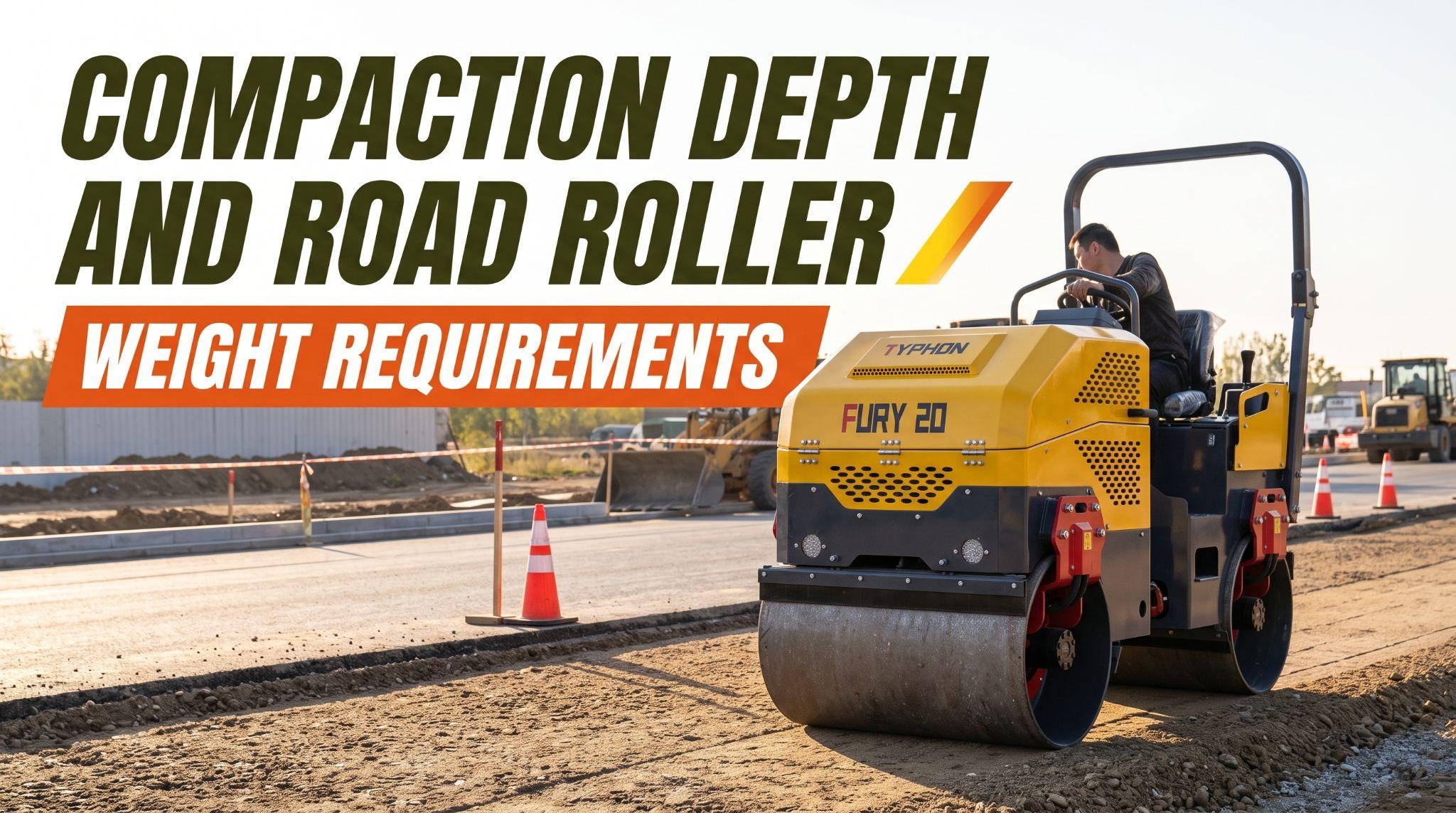
Compaction Depth and Road Roller Weight Requirements

Preparing an aggregate base for a new access road can make a heavy road roller seem like the obvious choice. More machine weight, however, does not automatically mean better compaction. If the roller is poorly matched to the material or the layer is too thick for the available compaction force, the surface may look firm while weaker material remains underneath.
Effective compaction depends on several factors working together. Material type, layer thickness, drum load, vibration settings, travel speed, moisture content, and the number of passes all influence how density develops through the layer. A roller needs to deliver the appropriate force and energy for the material rather than simply relying on its operating weight.
Matching the road roller to the material and compaction requirements helps create more consistent results. Choosing the right drum configuration, setting vibration appropriately, maintaining a suitable travel speed, and following an effective pass pattern can improve density throughout the required depth. Checking the finished work against project specifications also helps confirm that the selected method is producing the required results.
Start With the Required Compaction Depth
Every compaction job should begin with a clear target. Different construction layers need different levels of compaction, and each has its own requirements. Soil preparation, aggregate bases, and asphalt surfaces are not compacted the same way, so the depth and density you need should guide every equipment decision that follows.
Layer thickness is the practical starting point. A thick lift of subgrade soil asks the roller to deliver energy much deeper than a thin asphalt wearing course does. If the layer is thicker than the roller can compact effectively, the surface may look finished while the lower portion stays loose. Selecting equipment based on the actual material thickness and the project specifications prevents that hidden gap.
Specifications also define what "done" looks like. Required density, uniformity, and testing methods tell you what the finished layer must achieve. Reviewing them before choosing a roller keeps the plan tied to measurable results rather than guesswork.
Key takeaway: Soil, aggregate base, and asphalt layers each have their own compaction requirements, so select equipment according to layer thickness and project specifications.
Machine Weight Creates Static Force
A road roller's operating weight contributes to the static force applied through its drum. As the drum presses against the material, its weight creates pressure that helps move particles closer together and reduce voids in the compacted layer. The amount of force applied depends not only on the total machine weight but also on how that weight is distributed across the drum.

Drum load and contact area influence how concentrated the force becomes at the surface. Two rollers with similar operating weights can produce different compaction results when their drum width, diameter, or weight distribution differs. Static weight is therefore only one part of the compaction process and works together with vibration, drum characteristics, and rolling technique.
Operating Weight: Provides the downward force applied through the roller.
Static Pressure: Helps press material particles closer together during rolling.
Drum Load: Influences how much force is concentrated across the drum's contact area.
Weight Distribution: Affects how the machine's weight is transferred between the drum and other components.
Compaction Factors: Weight works alongside vibration, drum design, and rolling technique to achieve the required result.
Key takeaway: Operating weight and drum loading create static pressure on the material, but weight should be evaluated alongside vibration and drum characteristics rather than treated as the only measure of performance.
Material Type Changes the Approach
Clay, sand, gravel, aggregate, and asphalt all respond differently to compaction. The same roller and settings that work well on one material can be ineffective, or even counterproductive, on another. Knowing what you're compacting is essential to choosing the right method.
Cohesive and granular materials behave in distinct ways. Cohesive soils such as clay hold together and resist particle movement, so they often benefit from kneading or pressure-focused methods, and padfoot drums are commonly used for this work. Granular materials such as sand, gravel, and aggregate respond well to vibration, which helps particles shift and settle into a denser arrangement. Moisture content also affects both types, so follow project guidance on suitable moisture conditions.
Asphalt adds another variable: temperature. Asphalt must be compacted while it remains within a workable temperature range, which makes rolling timing just as important as roller selection. Starting too late, or allowing the mix to cool before reaching the required passes, limits how much density you can achieve.
Key takeaway: Cohesive soils, granular materials, and asphalt each respond differently to compaction, and asphalt work also requires attention to material temperature and rolling timing.
Vibration Adds Dynamic Force

Vibratory rollers go beyond static weight. Drum movement transmits additional dynamic energy into the material, delivering repeated impacts that help particles rearrange and settle. This dynamic force often allows a roller to compact deeper and more efficiently than static pressure alone.
Two settings control that energy: frequency and amplitude. Frequency is how often the drum vibrates, while amplitude reflects how far the drum moves with each cycle. In general, higher amplitude pushes energy deeper and suits thicker layers, while lower amplitude suits thinner lifts and surfaces such as asphalt, where too much force can cause problems.
The highest setting is not automatically the best choice. Excessive vibration on thin layers, stiff material, or an already dense surface can cause drum bounce, uneven results, or damage to the material. Match frequency and amplitude to the surface being compacted, and follow the manufacturer's operating guidance for your specific machine.
Key takeaway: Vibration adds dynamic force that helps densify suitable materials, but frequency and amplitude should match the surface being compacted rather than defaulting to the highest setting.
Passes Affect Final Density
Compaction is rarely achieved in a single pass. Density builds gradually as the roller works the material, so reaching the target normally requires a planned rolling pattern rather than one quick run. Each pass adds compaction, although the gains typically decrease as the layer approaches its achievable density.
Operating speed has a direct effect on what each pass accomplishes. Moving too quickly reduces the time the drum spends over any given spot, and with vibration on, it means fewer impacts per section of surface. A steady, controlled speed helps each pass deliver consistent energy. Uneven speed can leave inconsistent density across the work area.
The rolling pattern matters as well. Overlapping passes help prevent untreated strips, and working in a consistent sequence supports uniform results from edge to edge. Monitor the surface response as you go, and follow the project's requirements for density and uniformity, including any testing that confirms when the layer is complete.
Key takeaway: Compaction requires a planned rolling pattern with multiple passes at a steady speed, while monitoring surface response and following project requirements for density and uniformity.
Match Roller Weight to the Application
Choosing the right roller involves more than reading an operating weight on a specification sheet. Several factors should be weighed together: material type, layer depth, surface condition, machine size, vibration capability, and jobsite requirements. Each affects whether a machine can reach the required compaction efficiently.
Mismatches work against you in both directions. A roller that is too light or lacks suitable vibration may not compact thick layers to the required depth. A roller that is too heavy or too aggressive for thin lifts or sensitive surfaces can cause crushing, displacement, or surface damage. Site conditions matter too, since confined areas, slopes, and nearby structures can limit which machine sizes are practical.
The most reliable approach is to start from the job and work toward the machine. Define the material, lift thickness, required density, and site constraints first. Then select a roller whose weight, drum characteristics, and vibration capability fit those requirements.
Key takeaway: Select a roller by considering material type, layer depth, surface condition, machine size, vibration capability, and jobsite requirements together, not operating weight alone.
Conclusion
Compaction depth depends on the interaction between roller operating weight, drum loading, vibration, material characteristics, lift thickness, passes, and travel speed. Static drum loading provides pressure, while vibration adds dynamic energy, but effective compaction also depends on whether the roller configuration and settings suit the material, such as cohesive soil, granular material, or asphalt. Lift thickness determines the depth that must be compacted, while vibration frequency, amplitude, pass count, overlap, and operating speed influence how evenly compaction energy is applied through the layer. Before work begins, operators should confirm project density and lift requirements, assess material moisture or temperature, evaluate drum characteristics and loading, select suitable vibration settings, establish a consistent rolling pattern, and monitor surface response through required density testing. Matching roller weight, drum configuration, vibration settings, operating technique, and project specifications provides a more reliable basis for achieving uniform compaction at the required depth.
Frequently Asked Questions
Does a heavier road roller always compact deeper?No. A heavier roller applies more static pressure, but weight alone doesn't determine compaction depth. Material properties, vibration settings, drum design, layer thickness, and operating technique all play a role. A lighter vibratory roller with suitable amplitude may compact a granular layer more effectively than a heavier static roller. In some cases, excess weight can even crush or displace material on thin lifts. The best results come from matching the roller's weight, drum characteristics, and vibration capability to the specific material and layer thickness.
Why does material type matter?Different materials respond differently to static pressure and dynamic vibration. Cohesive soils such as clay resist particle movement and often benefit from kneading or pressure-focused methods. Granular materials such as sand, gravel, and aggregate respond well to vibration, which helps particles settle into a denser arrangement. Asphalt must be compacted within a workable temperature range, so timing becomes critical. Identifying the material before starting helps you choose the right roller, settings, and rolling method.
What does vibration contribute to compaction?Vibration adds dynamic force to the static weight of the roller. As the drum vibrates, it transmits repeated energy into the material, helping particles rearrange and densify. This often allows compaction to reach deeper into suitable materials than static pressure alone. Frequency and amplitude settings control how that energy is delivered. Higher amplitude generally suits thicker layers, while lower amplitude suits thinner lifts and asphalt. Settings should always match the surface and follow the manufacturer's guidance.
How many passes does a road roller need?There's no single number that applies to every job. The required passes depend on the material, layer thickness, equipment, and project specifications. Most compaction work needs a planned rolling pattern with multiple overlapping passes at a steady operating speed. Operators should monitor surface response throughout and rely on the project's density requirements and testing to confirm when the layer is complete.