
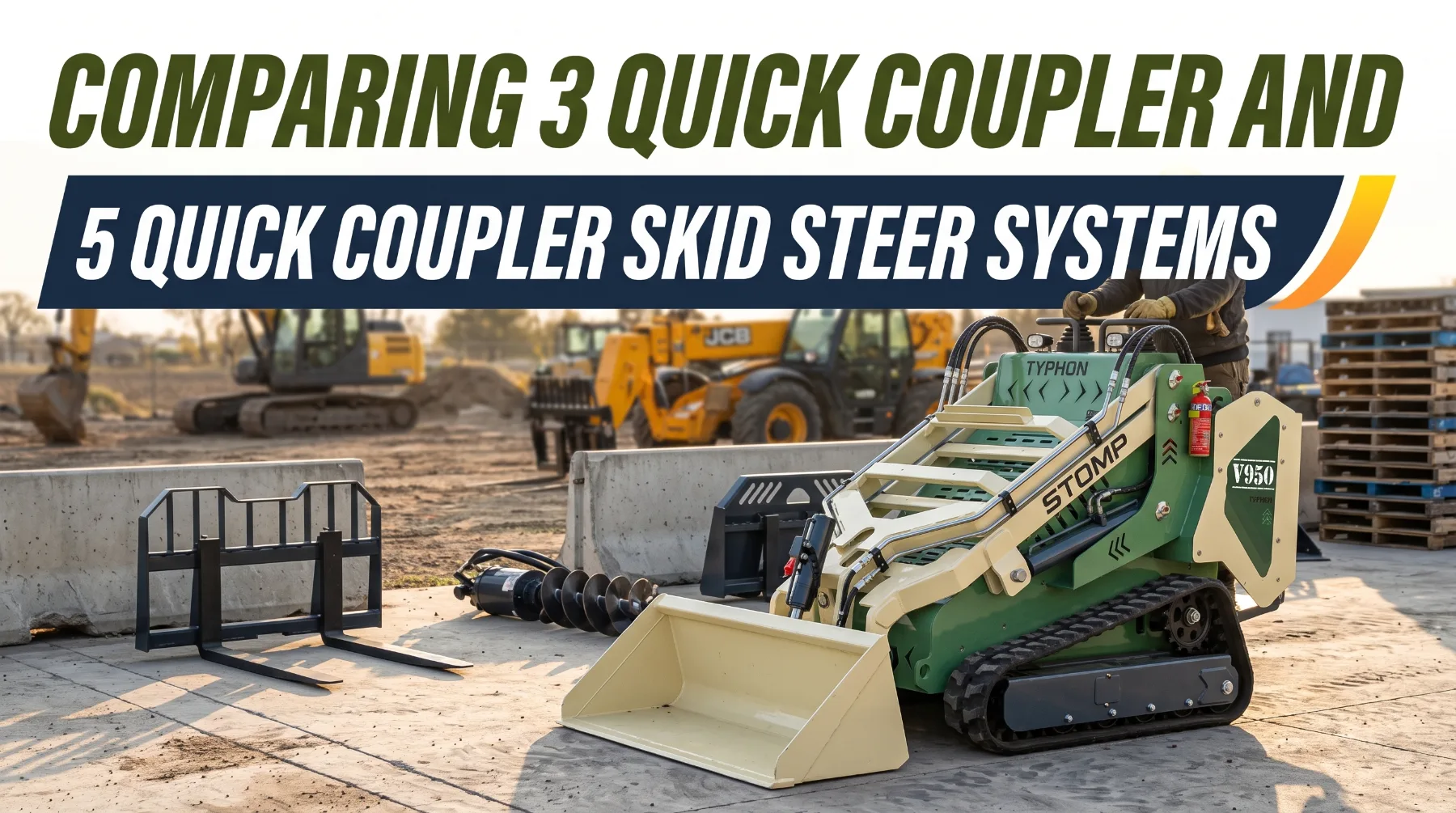
Comparing 3 Quick Coupler and 5 Quick Coupler Skid Steer Systems
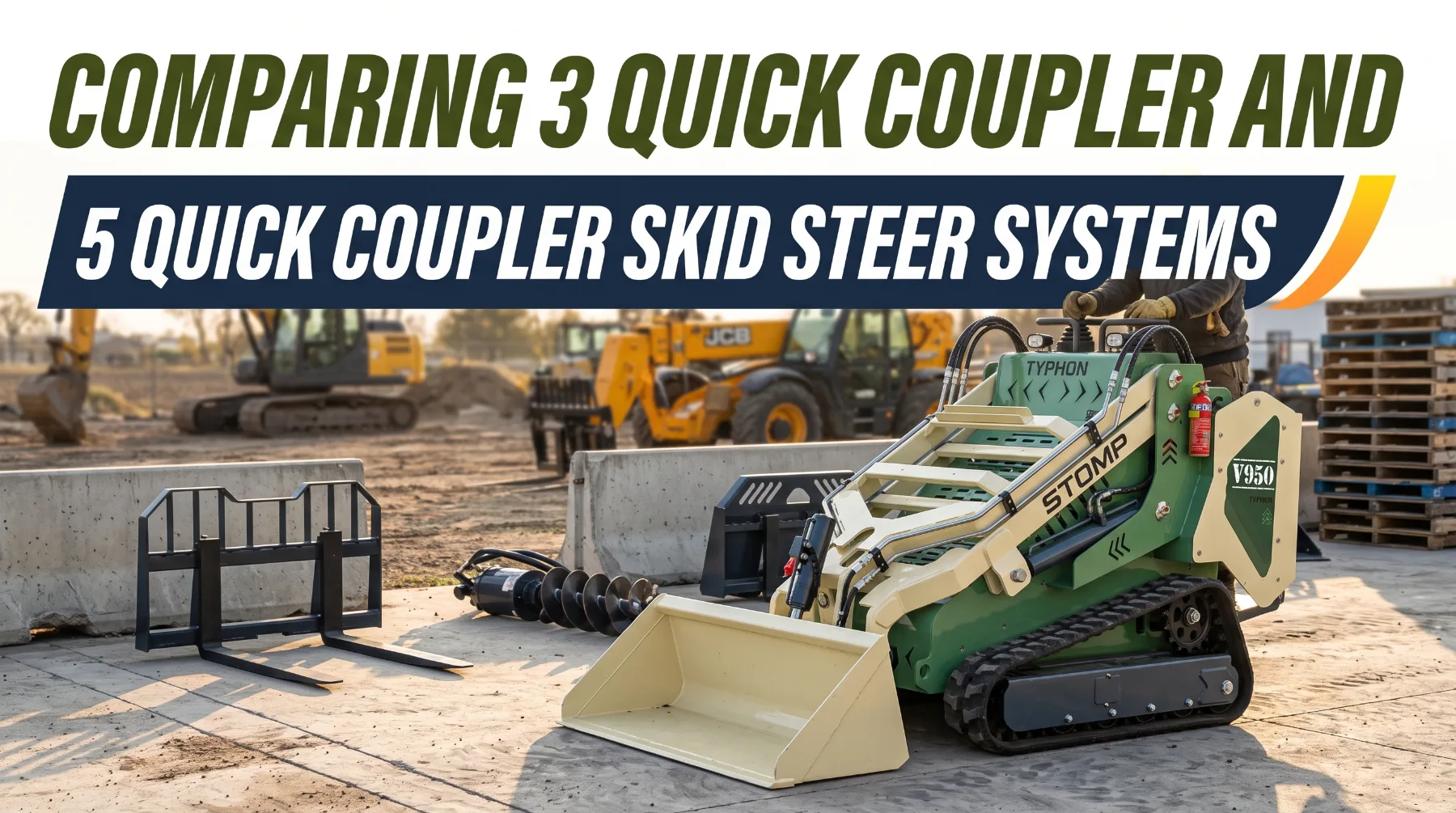
Starting a site preparation project can require a skid steer to handle several different tasks in a single shift. The crew may clear brush using a grapple, drill post holes with an auger, move pallets of blocks with forks, and finish grading with a bucket. When attachments need to be changed several times before lunch, compatibility between the machine and each attachment becomes an important part of keeping the work on schedule.
Attachment compatibility depends on more than whether an attachment physically reaches the machine. The mounting points, coupler dimensions, locking mechanism, hydraulic connections, and attachment interface all need to match the skid steer. If a newly purchased grapple does not align correctly or its locking system cannot engage, the operator may be unable to connect it safely and the planned work can come to a stop.
Checking compatibility before bringing attachments to the jobsite can help prevent unnecessary delays. Confirming the coupler type, mounting dimensions, hydraulic requirements, and locking system allows crews to prepare attachments that are ready for use. Proper compatibility makes it easier to switch between grapples, augers, forks, buckets, and other attachments as the day’s work changes.
Three-Point Coupler Configuration
A 3 quick coupler system uses three primary connection points between the skid steer and a compatible attachment. These points work together to hold the attachment in position and transfer working forces from the machine to the tool.
The design provides a straightforward connection arrangement. Operators who regularly use attachments built around this configuration can become familiar with the alignment and locking steps, which helps keep changes consistent from one tool to the next.
The key is matching. A three-point system works as intended only with attachments designed for that specific interface. Before adding new tools to your fleet, confirm they were built for the same three-point arrangement your machine uses.
Key takeaway: A 3 quick coupler system uses three primary connection points and provides a straightforward connection arrangement for operators who use attachments designed around this configuration.
Five-Point Coupler Configuration
A 5 quick coupler system uses five connection points to secure the attachment. This creates a different attachment interface, with its own layout and engagement points.
This configuration may suit machines or tools specifically designed for five-point connection systems. Some equipment and attachments are built around this interface from the start, so the coupler and tool are intended to work as a matched pair.
As with any coupler, the five-point system depends on compatibility. Attachments must be designed for the same connection layout and locking method. Using a five-point coupler doesn’t make a tool compatible on its own. The interface must match on both sides.
Key takeaway: A 5 quick coupler system uses five connection points to secure the attachment and may suit machines or tools specifically designed for five-point connection systems.
Attachment Connection Process
Connection design affects how an operator engages and secures an attachment. Each system has its own alignment steps and locking sequence, and following that sequence correctly is essential to safe operation.
Start by understanding the locking sequence for your specific coupler. That includes how the attachment should be aligned, how the coupler engages the mounting points, and how the locking mechanism is activated, whether manually or hydraulically. The operator’s manual is the most reliable reference for these steps.
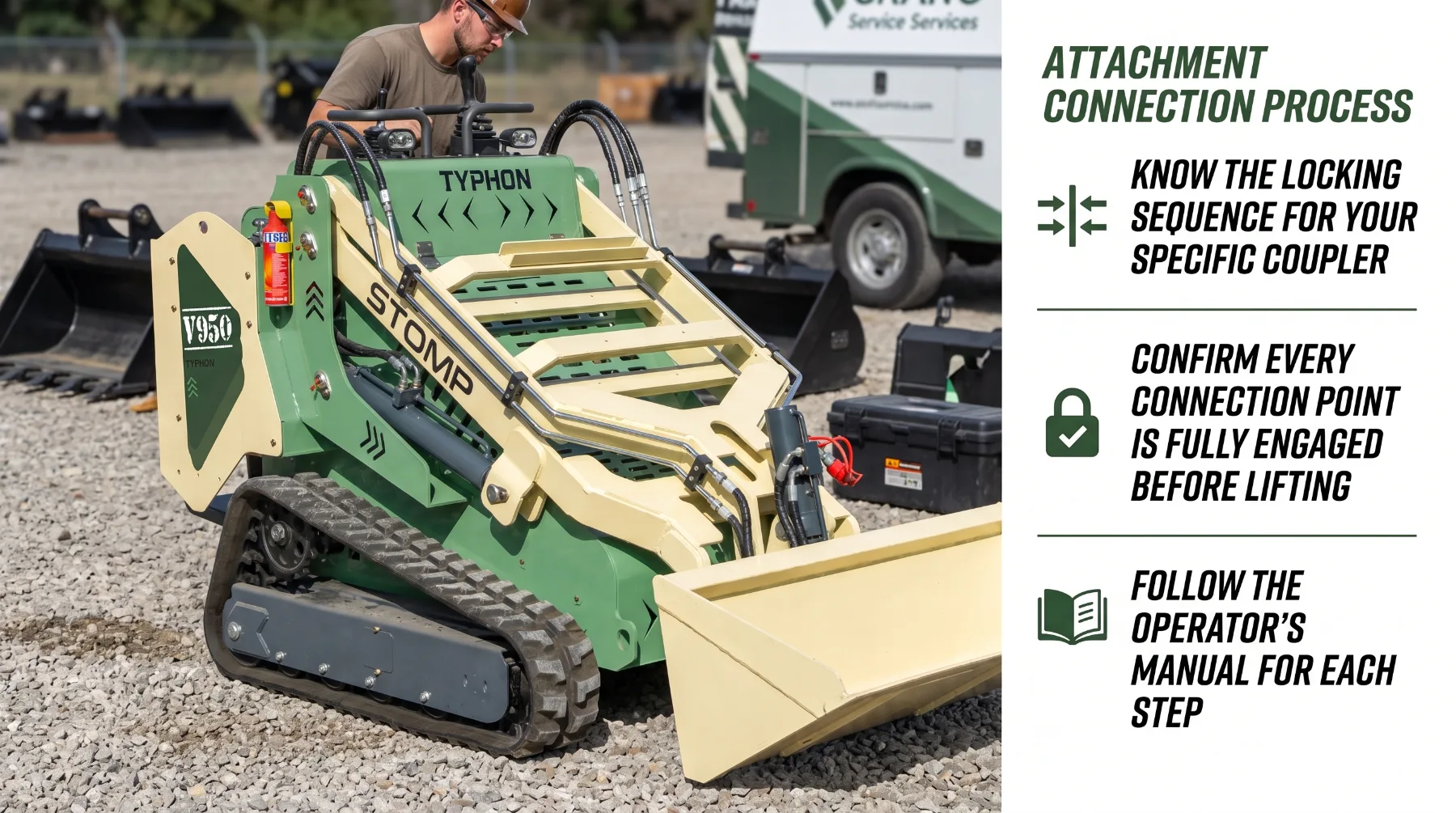
Verification comes next. Confirm that every connection point is fully engaged before lifting or operating the attachment. Complete a visual inspection to check that locking components are in their secured position and that nothing has shifted out of place. A partially engaged coupler can allow an attachment to loosen or separate during work, which creates a serious hazard for the operator and anyone nearby.
Key takeaway: Operators should understand the locking sequence, verify that every connection is properly engaged, and complete a visual inspection before operating the attachment.
Attachment Fit Matters
The number of connection points alone does not determine whether an attachment will work. Two systems with the same number of points can still differ in important ways.
Compatibility depends on several details. The coupler and attachment must use compatible dimensions, connection locations, and locking mechanisms. Attachments that require hydraulic power, such as augers, grapples, and some trenchers, also need compatible hydraulic connections, along with flow and pressure requirements the machine can meet.
Checking fit before purchase prevents costly mistakes. Review the attachment manufacturer’s specifications and compare them against your skid steer and coupler. When you’re unsure, confirm compatibility with the equipment or attachment supplier before the tool arrives on site.
Key takeaway: The coupler and attachment must use compatible dimensions, connection locations, locking mechanisms, and hydraulic connections where applicable, regardless of the number of connection points.
Daily Attachment Changes
Many contractors rely on a skid steer because it can handle a wide range of jobs with one machine. During a typical workday, an operator may switch between buckets, forks, grapples, augers, trenchers, and other attachments depending on the task at hand. These changes can require the coupler to be used several times, especially on projects where different phases of work are completed throughout the day. Frequent attachment changes make the coupler an important part of maintaining an efficient workflow.
A suitable coupler system helps make these attachment changes more organized and consistent. When every attachment in the lineup shares the same compatible interface, operators can follow familiar connection steps each time they change tools. This consistency can reduce unnecessary pauses between tasks while making it easier to confirm that an attachment is properly connected before operation. A compatible system also helps reduce the chance of connection errors caused by unfamiliar attachment interfaces, allowing the operator to move from one task to another with fewer interruptions.
Planning supports efficiency as well. Stage attachments in an accessible area near the work, keep mounting surfaces clean, and sequence tasks to limit unnecessary changes. Each change should still include full engagement checks, no matter how often it happens during the day.
Key takeaway: Contractors who switch between buckets, forks, grapples, augers, and other tools may use the coupler several times daily, and a suitable system can make attachment changes more organized and reduce downtime.
Maintenance and Inspection
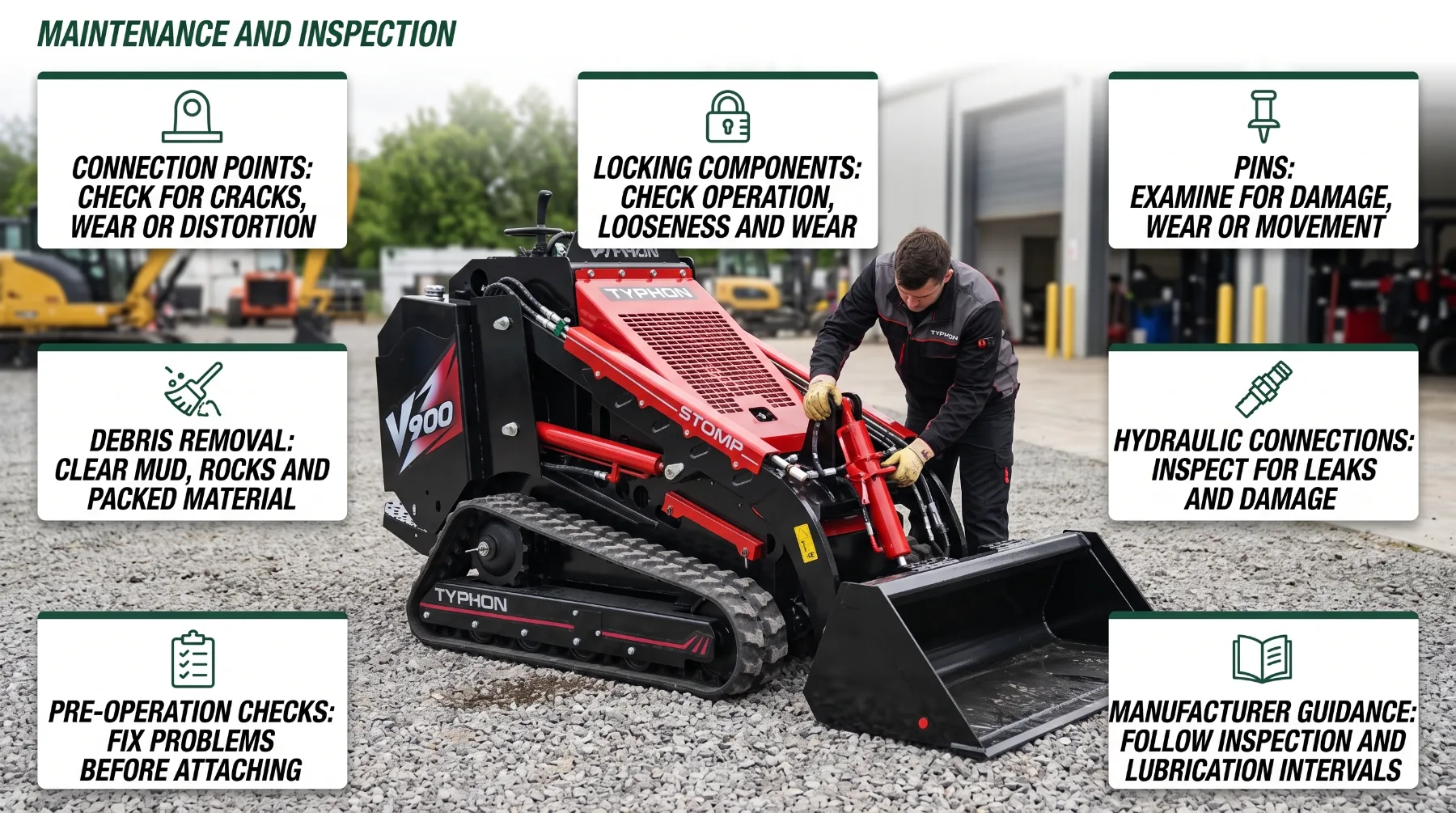
Quick couplers require regular inspection because they carry heavy attachments, experience repeated loading and impact, and often operate in dusty or dirty environments. Routine checks help identify wear or damage before it affects the connection between the machine and attachment.
Inspect the coupler as part of the daily pre-operation routine. Check mounting areas, pins, locking components, and hydraulic connections where applicable. Remove mud, rocks, and other debris that could interfere with full engagement, and address any damaged or worn components before operation. Always follow the manufacturer’s maintenance and lubrication requirements.
Connection Points: Inspect mounting areas for cracks, wear, distortion, or other damage.
Locking Components: Check locking mechanisms for proper operation, looseness, and excessive wear.
Pins: Examine attachment pins for damage, wear, or movement that could affect secure connection.
Debris Removal: Clear mud, rocks, and packed material that could prevent full coupler engagement.
Hydraulic Connections: Inspect hydraulic fittings and lines for leaks, damage, or contamination.
Pre-Operation Checks: Identify and address problems before attaching or operating equipment.
Manufacturer Guidance: Follow recommended inspection intervals, lubrication procedures, and replacement requirements.
Key takeaway: Inspect connection points, locking components, pins, mounting areas, and hydraulic connections for wear, damage, or debris that could affect secure attachment engagement.
Conclusion
Three-point and five-point quick coupler systems use different attachment connection arrangements, so compatibility depends on the specific machine, attachment, connection locations, locking mechanism, hydraulic requirements, and coupler configuration rather than the number of connection points alone. A three-point system uses three primary connection points for compatible attachments, while a five-point system provides five connection points for machines and tools designed around that interface. The connection process should follow the manufacturer’s specified locking sequence, with every pin, lock, and mounting point fully engaged before operation. Frequent attachment changes also require clean mounting surfaces and consistent connection procedures to maintain efficient workflow. Regular inspection of pins, locking components, mounting areas, hydraulic connections, and coupler surfaces helps identify wear, damage, debris, leaks, or contamination before they affect attachment security. Matching the coupler and attachment correctly and verifying full engagement after every connection supports secure, reliable skid steer attachment operation.
Frequently Asked Questions
What is a 3 quick coupler on a skid steer?A 3 quick coupler is an attachment connection system that uses three primary connection points to secure compatible tools to a skid steer. The system is designed for attachments built specifically around its three-point interface. Proper alignment and locking are essential for a secure connection, so operators should confirm that the attachment and coupler are designed to work together before use.
What is a 5 quick coupler system?A 5 quick coupler system uses five connection points as part of its attachment interface. Like other coupler designs, it requires attachments that are specifically built to match the system’s dimensions and connection arrangement. The attachment must align correctly and lock securely before operation. Checking compatibility between the skid steer, coupler, and attachment helps prevent connection and performance problems.
Can any skid steer attachment fit either system?No. Attachments must match the specific coupler configuration, connection dimensions, locking mechanism, and hydraulic requirements when applicable. An attachment designed for one system may not connect correctly to another, even if it appears similar. Always check the manufacturer’s specifications for both the skid steer and attachment before purchasing, installing, or operating a new tool.
What should operators inspect before using a quick coupler?Inspect the connection points, locking components, pins, mounting areas, and hydraulic connections before operation. Remove dirt or debris that could prevent proper engagement, then confirm that all locking components are fully engaged. Check the attachment for visible damage or looseness as well. Completing this inspection helps ensure the attachment remains securely connected during work.