
Skid Steer Lift Arm Geometry, Dump Height, and Loading Reach
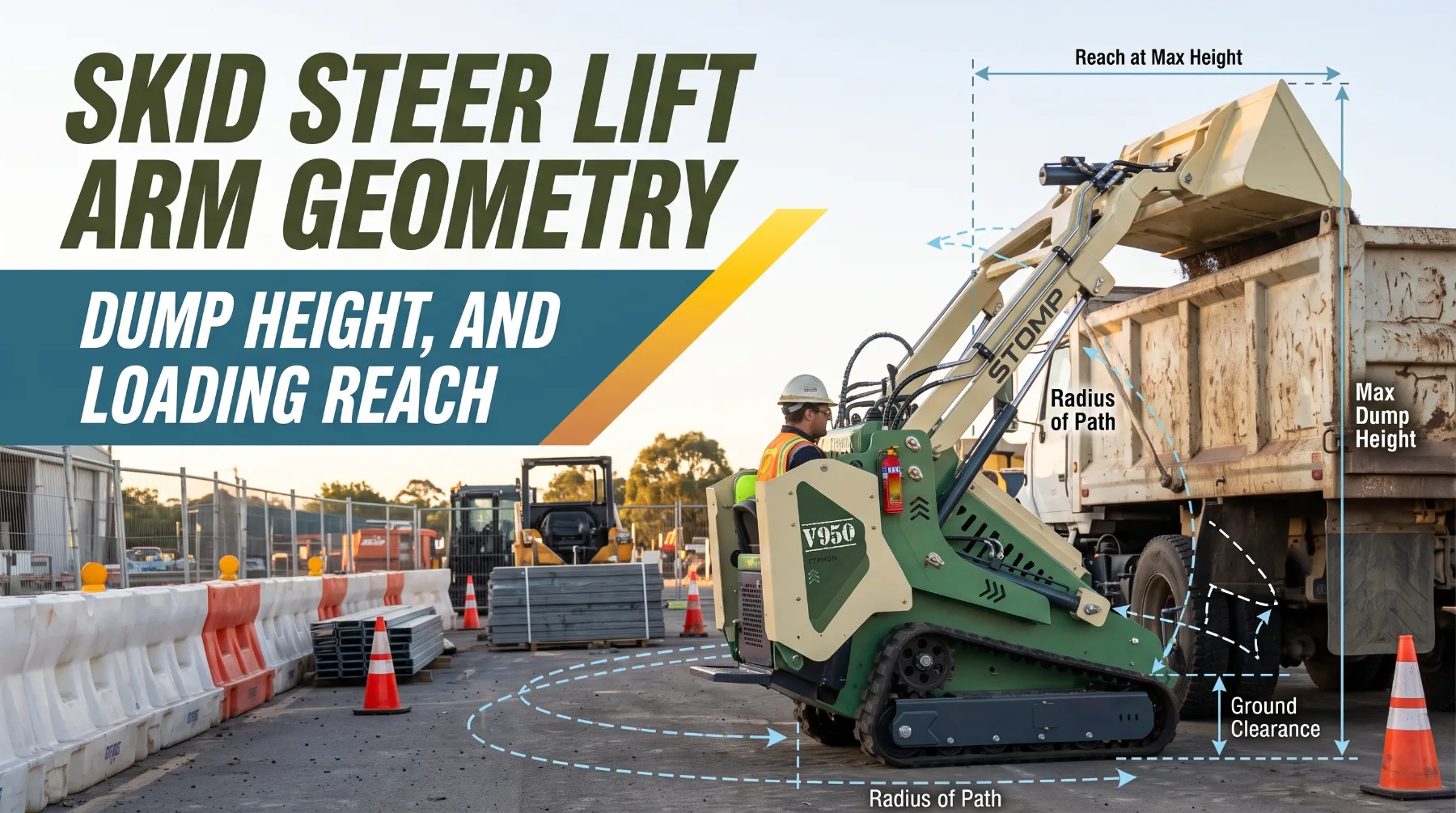
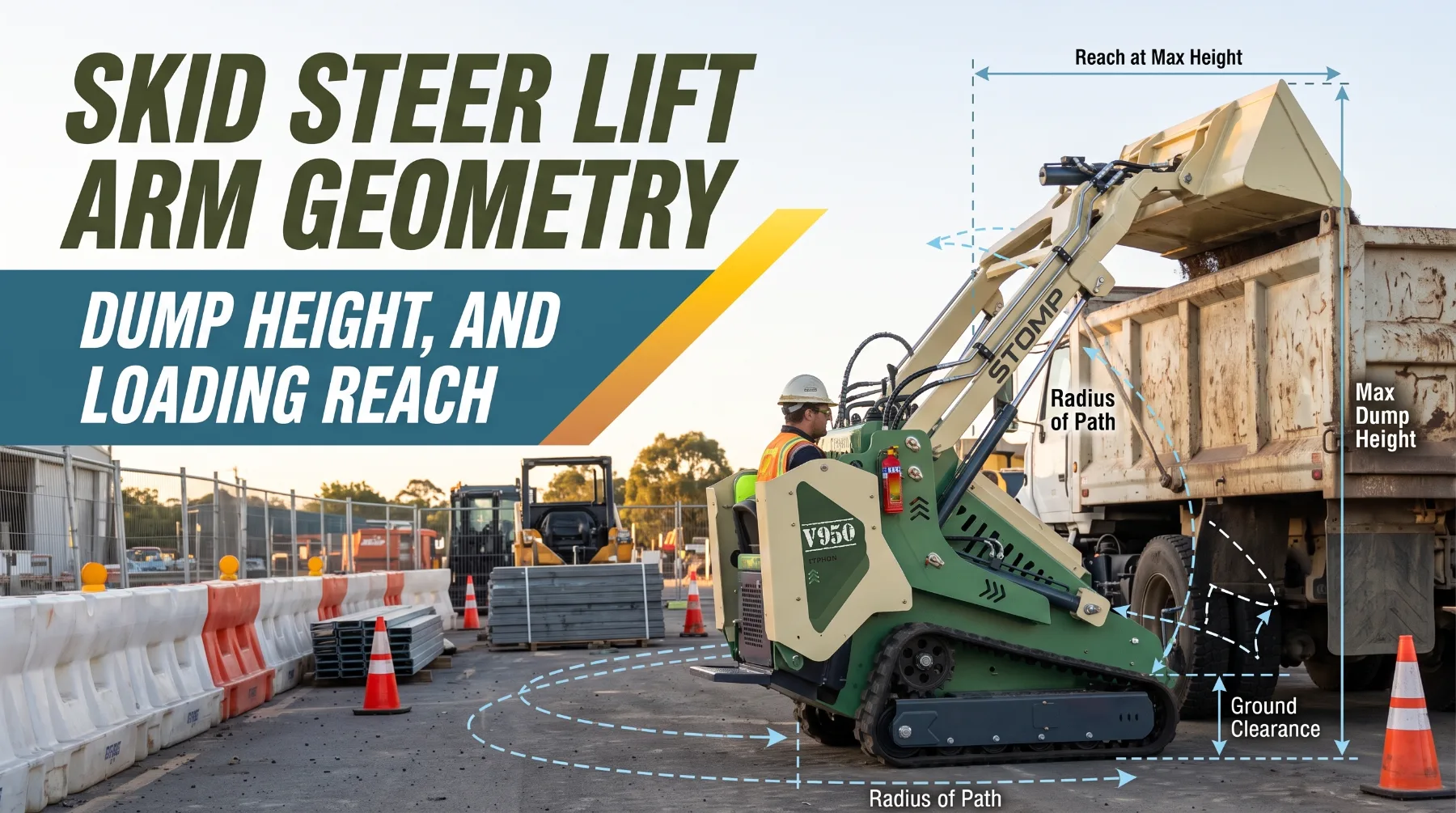
Loading aggregate into a dump truck requires more than simply raising a full bucket. Once the skid steer reaches the truck, the bucket must clear the side, rise to the required height, and extend far enough to place the material toward the desired area of the bed. As the lift arms move upward, the bucket follows a specific path determined by the machine's geometry. Lift arm design, dump height, and forward reach therefore work together to determine where the bucket can place its load at the top of the cycle.
Lift arm geometry affects how the bucket travels as it rises, including how far forward it moves and how its position changes near the maximum lift point. Dump height establishes the vertical clearance available for loading, while forward reach determines how far the bucket can extend over the truck bed. These dimensions influence whether the operator can load directly into the target area or needs to reposition the machine.
During repeated loading cycles, the relationship between these measurements becomes especially important. Matching the skid steer to the truck height and loading conditions helps reduce awkward positioning and unnecessary repositioning. Understanding the lift path also gives the operator a clearer idea of where the bucket will be at different heights, making each loading cycle more predictable.
How Lift Arm Geometry Shapes Movement
Lift arm geometry is the design of the linkage that raises the attachment, and it determines the path the bucket follows as it travels from ground level to maximum height. That path isn't a straight line straight up; it's a controlled arc or trajectory set by how the arms and linkage are built. Because the geometry governs the whole motion, it also sets the relationship between lift height, forward reach, and bucket position at every point in the cycle.
That's why two skid steers with similar lift heights can behave quite differently. Different arm designs produce different performance characteristics through digging, loading, and placement, favoring reach at some heights and closeness at others. The geometry is what ties those traits together, so understanding it tells you far more about how a machine will load than any single height figure on its own.
Key takeaway: Lift arm geometry sets the path the bucket follows from ground to full height, defining the relationship between lift height, forward reach, and bucket position throughout the cycle.
Reaching the Loading Point
Forward reach is how far the bucket can extend from the machine when the arms are raised, and it directly shapes how you load. With enough reach, the bucket can place material toward the center of a truck bed, a hopper opening, or a stockpile rather than dropping it short at the near edge. That center placement makes for a more even, complete load and cuts down on cleanup and repositioning.
Reach also affects how close the skid steer has to get to the target. A machine with good reach can place material without crowding right up against the truck or hopper, which gives the operator more room to work and speeds up each cycle. How much reach you actually need depends on the machine configuration and the type of loading work, so the right amount is the amount that comfortably places material where it belongs.
Key takeaway: Forward reach lets the bucket place material toward the center of a truck bed, hopper, or stockpile without the skid steer needing to move as close to the target.
Dump Height for Material Placement
Dump height determines how high the bucket can be positioned to release material over a truck, container, hopper, or other barrier. It directly affects whether the machine can place material where it needs to go without hitting the side of the target. When loading into a tall truck bed or raised hopper, the bucket needs enough height and clearance to pass over the edge and discharge the material cleanly.
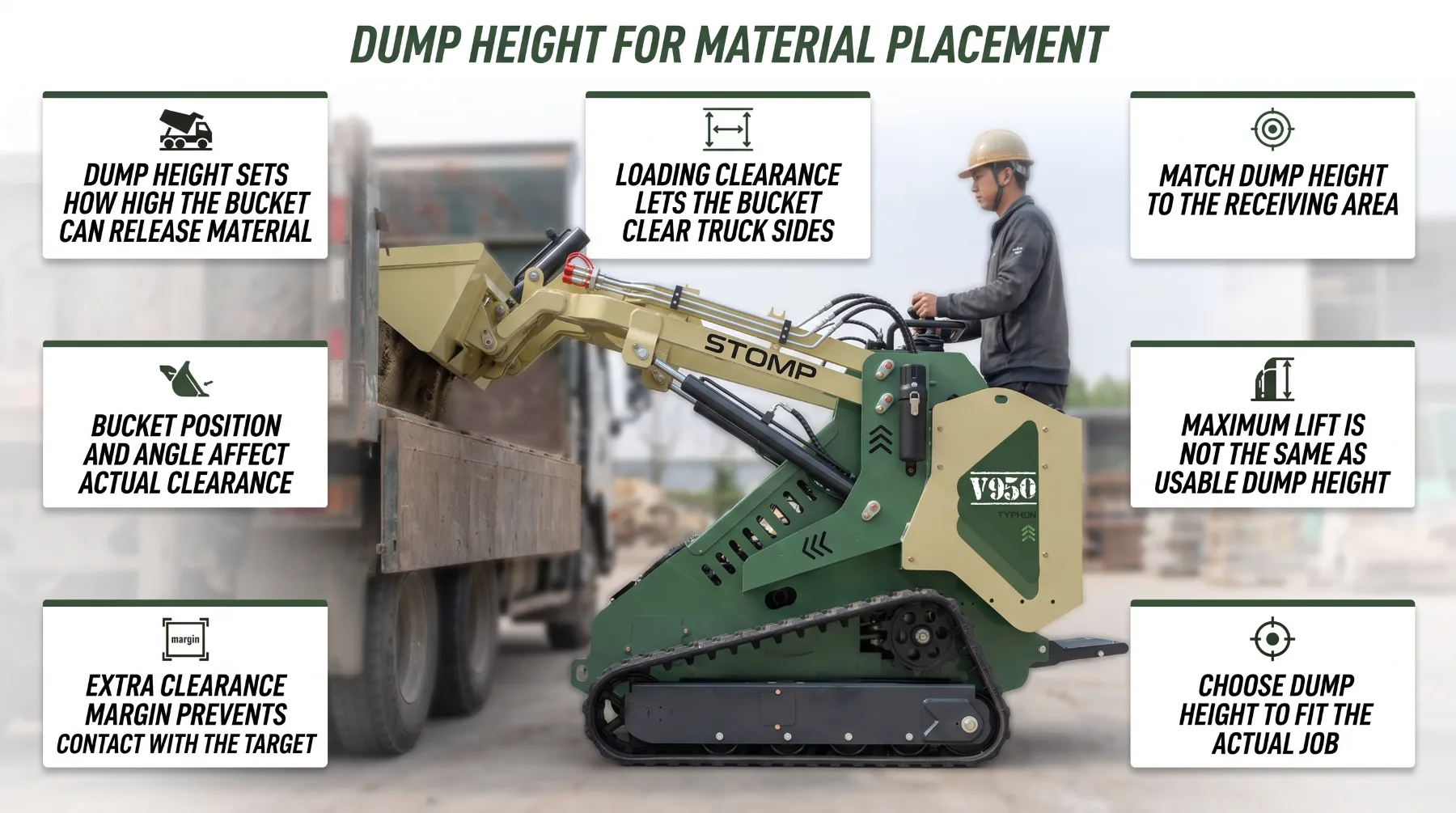
The important point is to consider the actual clearance required by the job rather than looking only at the machine's maximum lift height. Maximum lift is measured at a specific point on the loader, while the usable dump height depends on the target's height, the bucket position, and the angle during dumping. Allowing a practical clearance margin helps ensure the machine can complete the loading task smoothly.
Dump Height: Determines how high the bucket can reach when releasing material.
Loading Clearance: Provides the space needed to clear truck sides, containers, or barriers.
Target Height: The height of the receiving area should guide the required dump height.
Bucket Position: The bucket's position and dump angle affect the actual clearance available.
Maximum Lift: A machine's maximum lift figure does not always represent its usable dumping height.
Clearance Margin: Extra working clearance helps prevent the bucket or material from contacting the target.
Application Match: Choosing the appropriate dump height ensures the machine suits the actual loading and material-handling requirements.
Key takeaway: Dump height determines whether the bucket can clear a truck side or barrier to release material, so consider the actual clearance the target needs rather than relying only on maximum lift height.
Vertical and Radial Lift Paths
Skid steer lift arms generally fall into two broad path types, and the difference comes down to how the bucket moves forward as it rises. A vertical-path design keeps the attachment closer to the machine throughout the lift, holding the bucket in tighter as it climbs. That trait is useful when staying close to the machine matters, particularly when loading tall trucks and placing material high, where keeping the load near the machine's center supports the lift.
A radial-path design, by contrast, swings the bucket along a curved arc that provides useful reach at lower and mid-range heights. That makes a radial path well suited to digging and lower-level loading work, where reaching out at ground and mid heights is an advantage. Neither path is simply better; each suits different work, so the right choice depends on whether your loading leans toward high placement or lower-level reach.
Key takeaway: Vertical-path arms keep the attachment closer to the machine and suit high loading, while radial-path arms offer useful reach at lower and mid heights for digging and lower-level loading.
Bucket Position at Maximum Height
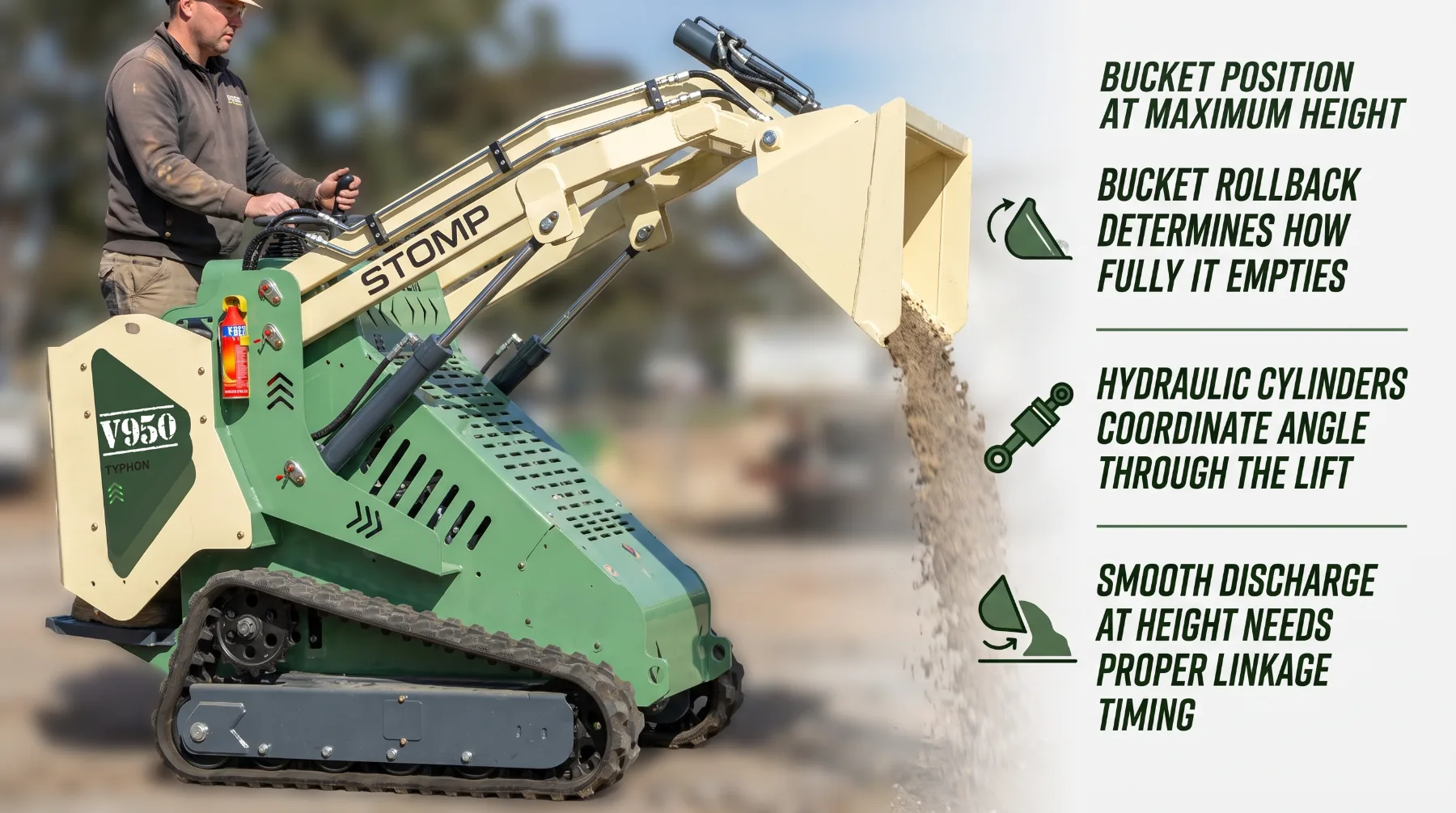
Reaching the right height and reach only pays off if the bucket can actually empty once it gets there. Bucket rollback and dump angle determine how material leaves the attachment, and the bucket needs enough tilt range to discharge its load fully at the required height and reach. A bucket that can't roll far enough forward at the top of the lift leaves material behind, turning what should be one clean dump into a partial one.
That tilting motion is controlled by the linkage and the hydraulic cylinders working together throughout the lifting cycle. As the arms raise, the cylinders manage the bucket's angle so it can hold the load securely on the way up and then tip cleanly to release it at the target. Smooth, complete discharge at full height depends on that coordination, which is why bucket movement deserves as much attention as lift height and reach.
Key takeaway: Bucket rollback and dump angle control how material discharges, so the bucket needs sufficient tilt range at full height and reach, with the linkage and hydraulic cylinders managing that movement through the cycle.
Loading Different Equipment
The lift geometry that works well for one target may not suit another, because different loading points make different demands. Loading a dump truck, a hopper, a trailer, or another machine each calls for its own combination of height and reach. A tall truck rewards strong dump height and high placement, while a low trailer or a ground-level hopper may lean more on reach at lower heights.
Getting it right means matching the machine to the specific loading point before the work begins. Truck side height, hopper opening size, the clearance around the target, and the loading distance all factor into whether the skid steer can place material cleanly. Weigh those together, and you can position the machine to load in a steady rhythm rather than constantly repositioning to compensate for a mismatch between the geometry and the target.
Key takeaway: Required lift geometry changes with the target, so consider truck side height, hopper opening, clearance, and loading distance, and match the skid steer to the loading point to avoid unnecessary repositioning.
Conclusion
Skid steer lift arm geometry determines the attachment's movement through the lifting cycle and influences the height, reach, and position available for material placement. Linkage design controls the bucket's path from ground level to maximum lift, while forward reach determines how far the attachment can extend toward a truck, hopper, or stockpile without excessive repositioning. Dump height must provide sufficient clearance over the actual receiving point, while bucket rollback and dump angle determine whether the load can be fully discharged at the required height and reach. Vertical lift configurations generally keep the attachment closer to the machine during the upper portion of the lift path, while radial lift configurations provide a different reach profile through the lower and middle lifting range. Because each loading target has different height, clearance, and placement requirements, machine geometry should be evaluated against the actual loading point rather than maximum lift height alone. Matching lift path, dump height, forward reach, bucket movement, and target dimensions helps maintain efficient loading cycles and reduces unnecessary repositioning when working with trucks, hoppers, stockpiles, and other material-handling points.
Frequently Asked Questions
What does skid steer lift arm geometry affect?Lift arm geometry determines the attachment's path as it moves upward, forward, and backward through the lifting cycle. It affects the relationship between lift height, reach, and bucket position, so two skid steers with similar maximum lift heights can behave differently. Some designs keep the bucket closer to the machine at height, while others provide more reach at lower or mid-range positions. Geometry therefore influences digging, loading, and material placement.
Why is dump height important?Dump height determines whether the bucket can clear the side of a truck, hopper, or other elevated target before releasing material. Maximum lift height alone does not show whether the bucket can reach the required discharge point because bucket position and target clearance also matter. Match the machine's dump height to the actual height of the truck bed or hopper, with enough clearance for reliable loading.
What is loading reach?Loading reach is the distance the attachment can extend from the machine at a specific lift height. It determines how far the bucket can place material into a truck bed, hopper, or stockpile. Greater reach can reduce the need to position the skid steer directly against the target and helps place material more effectively. Since reach changes with lift height, it should be considered alongside lift arm geometry.
What is the difference between radial and vertical lift?Radial lift follows a curved path, generally providing useful reach at ground and mid-range heights, which suits digging and lower-level loading. Vertical lift follows a more vertical path, keeping the bucket closer to the machine as it rises and often providing greater reach at higher positions. Radial designs suit work that needs lower-level reach, while vertical lift is useful for high placement such as loading tall trucks.