
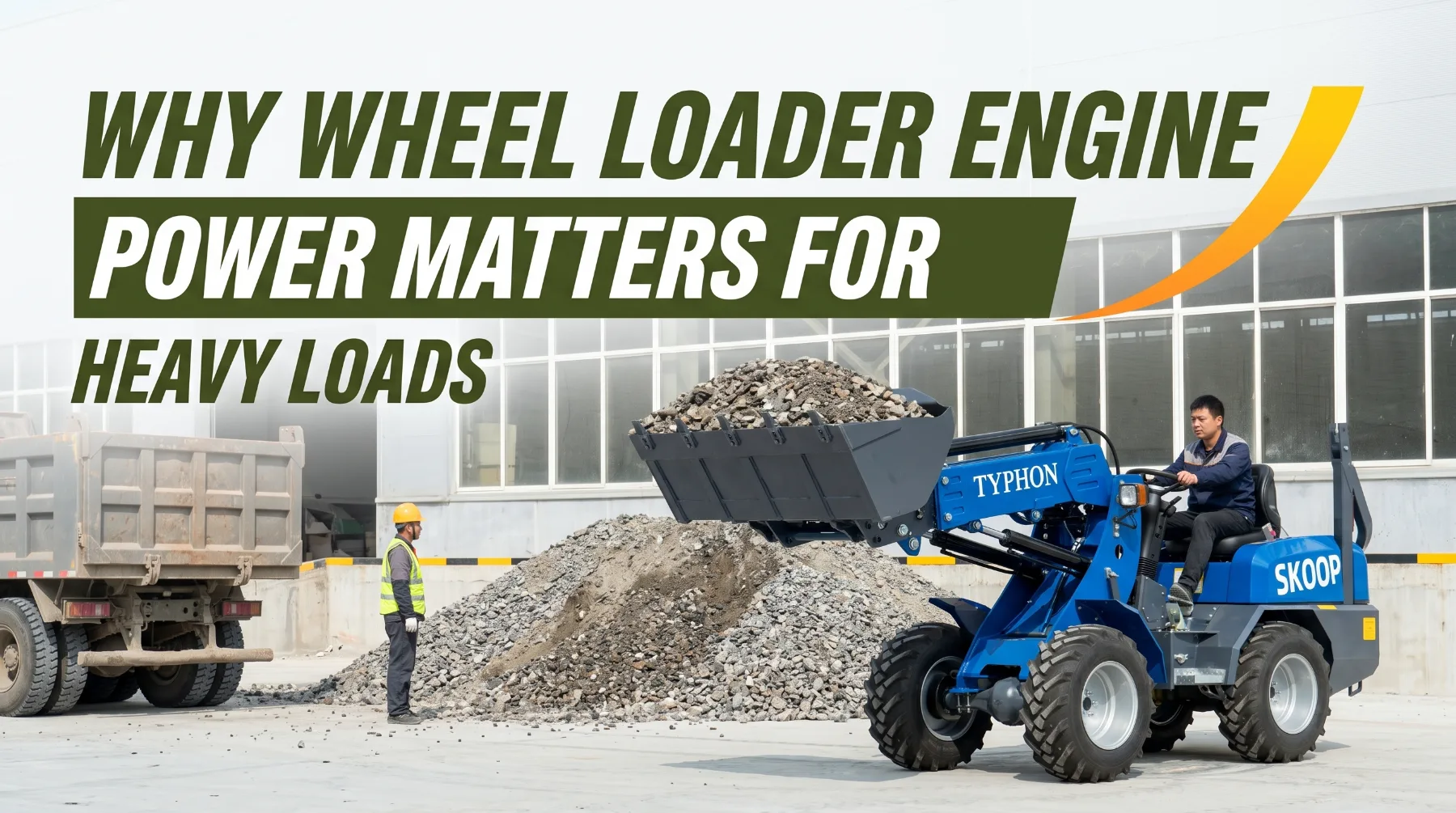
Why Wheel Loader Engine Power Matters for Heavy Loads
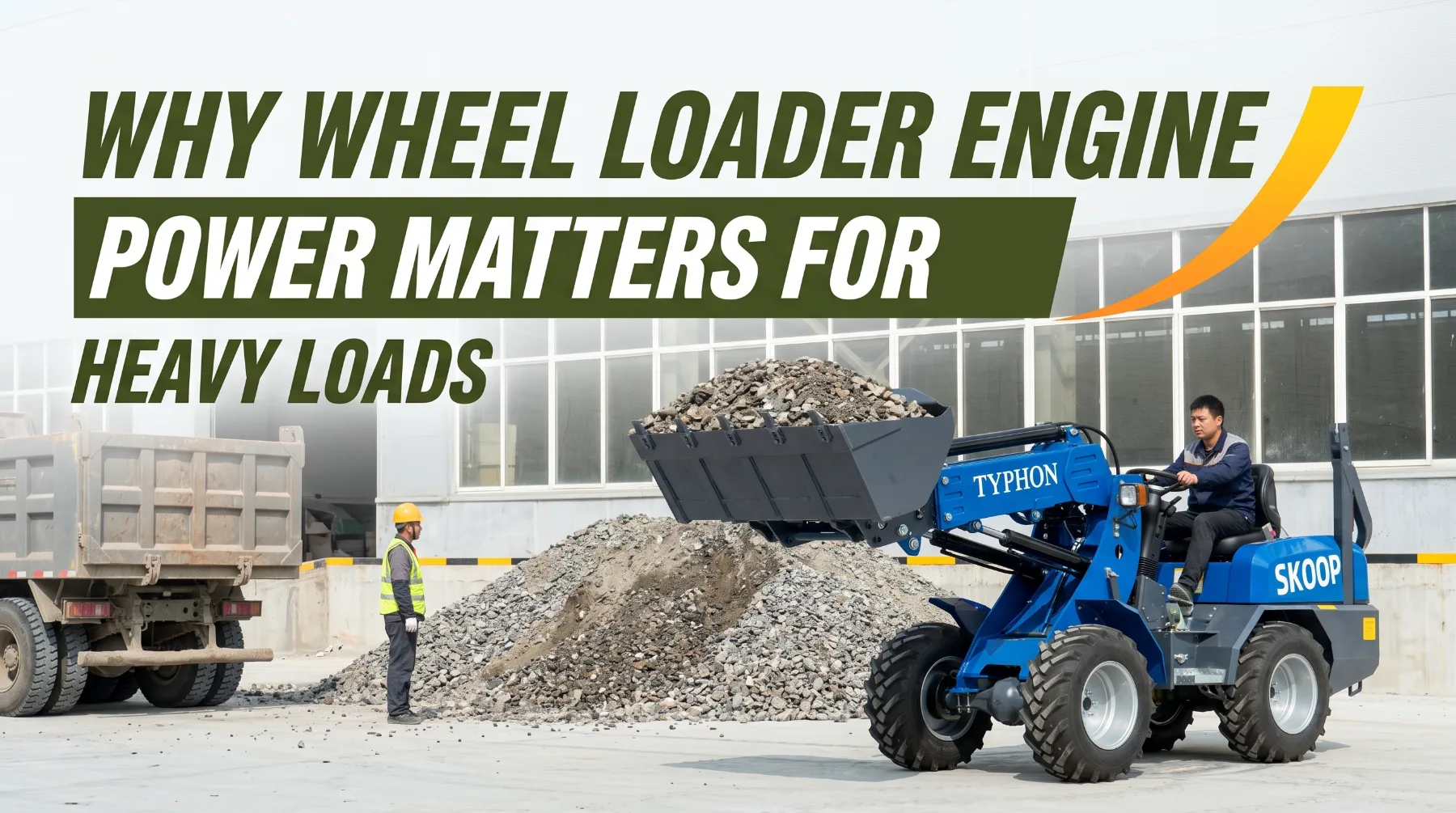
Wheel loaders can share a bucket size, a tire spec, and a similar price tag, yet one muscles a full load up the ramp with ease while the other bogs down halfway and forces the operator to back off. The difference usually comes down to engine power and how well it holds up when the load turns heavy. Engine power isn’t just a headline number for bragging rights. It sets the ceiling on how much the loader can lift, how fast it cycles, and how confidently it climbs with a packed bucket. Buyers who fixate on bucket capacity alone often discover, too late, that the engine behind it can’t feed the demand a heavy load creates.
Power deserves your attention because it sits at the source of everything a loader does under strain. A well-matched engine keeps the hydraulics fed, holds pace on a grade, and moves material shift after shift without laboring. Undersize it, and heavy loads expose the gap in every cycle.
That gap becomes especially important when comparing machines that look similar on paper. A larger bucket or higher rated capacity does not automatically mean faster production if the engine lacks the output to handle that load efficiently. The best match is a loader whose engine power supports the machine’s weight, hydraulic system, terrain, and typical payload, leaving enough reserve to maintain performance when several demands hit at once.
How Engine Power Feeds the Hydraulic Lift System Under Heavy Load
A wheel loader lifts through hydraulics, and the engine is what makes those hydraulics work. The engine drives the pumps that pressurize fluid and send it to the lift and tilt cylinders, raising the arms and curling the bucket. Every lift you make draws on engine output, and a heavy bucket draws on far more of it than a light one.
When the load is light, the pumps meet little resistance and the engine handles the demand easily. Pack that bucket to capacity, and the cylinders must push against far greater force, so the pumps demand more from the engine to keep the arms rising. If the engine has the output to answer, the lift stays brisk and smooth. If it doesn’t, engine speed sags, pump output drops with it, and the loaded bucket crawls upward instead of climbing.
The same relationship affects more than lift speed. During a working cycle, the engine may need to power the hydraulic system while the loader is also traveling, steering, or pushing into a material pile. When those demands overlap, available engine power becomes critical to maintaining hydraulic response. A properly matched engine gives the pumps enough support to keep lift and tilt functions responsive, even when the loader is carrying a heavy load and working under sustained demand.
Key takeaway: The engine drives the pumps that lift the bucket, so heavy loads demand more engine output, and an engine with enough power keeps the lift fast and steady where a weak one bogs down.
How the Torque Curve Shapes Bucket Force When Loads Resist
Horsepower gets the spotlight, but torque is what carries a heavy load. Torque is the twisting force the engine produces, and it’s what the pumps and the drivetrain draw on when the bucket meets resistance. The torque curve maps that force across the full range of engine speeds, and its shape tells you far more about heavy-load performance than any single peak.
Consider what happens when a loader crowds a full bucket into a dense pile. Resistance climbs, engine speed gets dragged down, and the machine needs strong torque at those lower speeds to keep pushing and lifting at once. An engine with a broad, flat torque curve holds its force as speed drops, so the bucket keeps filling and rising. An engine that makes its power only near the top of its range sags the moment speed falls, and the bucket stalls mid-cut. Same headline horsepower, very different results in the pile.
Key takeaway: Heavy loads pull engine speed down, so a broad torque curve that holds force at low and mid speeds delivers stronger, steadier bucket force than a machine that peaks high and fades.
How Power Demand Shifts Through a Load-and-Carry Cycle
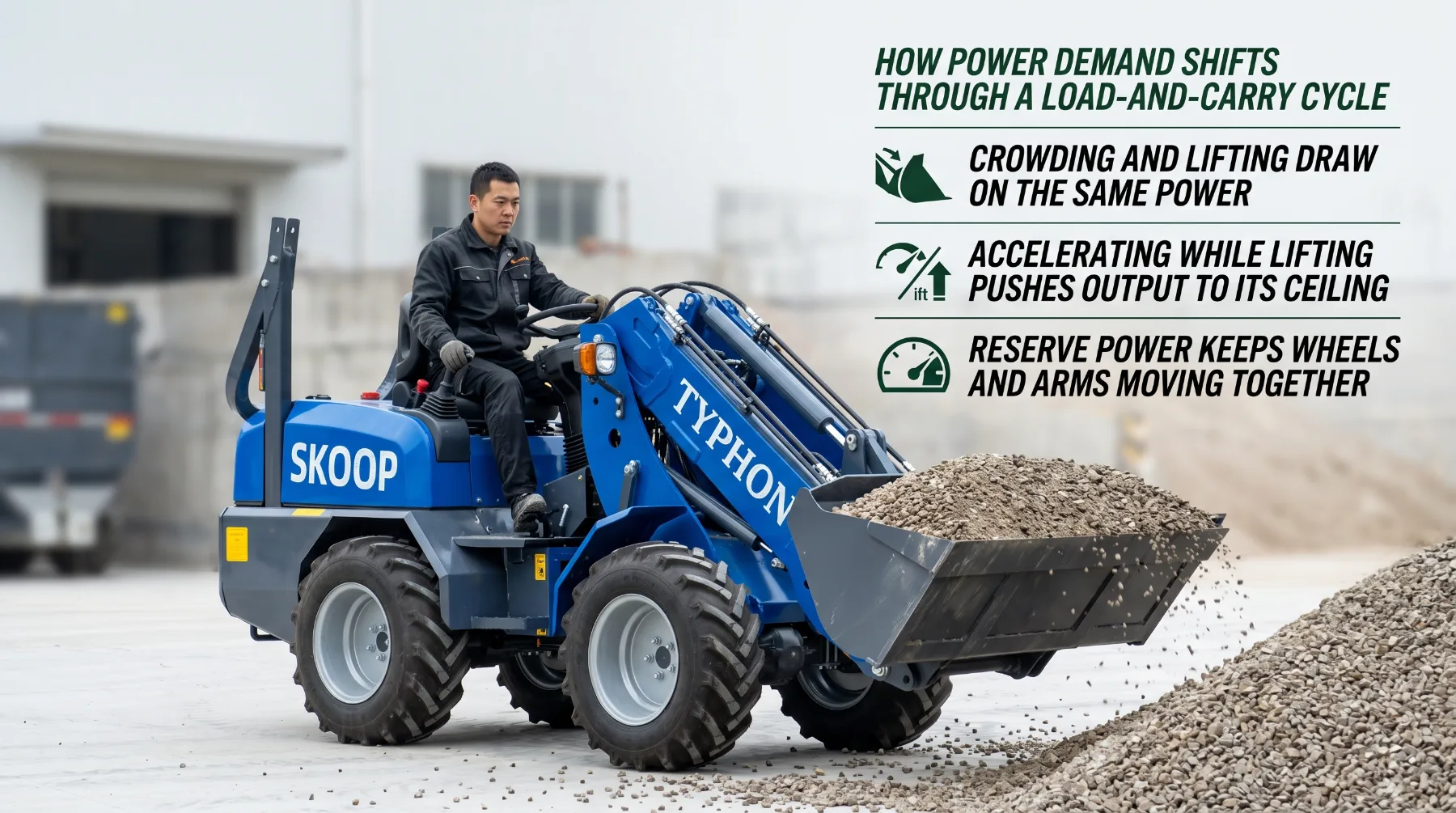
A wheel loader rarely does one thing at a time, and a heavy load makes that juggling act harder. A typical load-and-carry cycle stacks demands on the engine in sequence and often all at once: crowding into the pile, curling and lifting the bucket, reversing out, driving to the target, then raising to dump. Each phase pulls on the same finite pool of engine power, and the heavier the load, the deeper each pull.
The toughest moment comes when demands overlap. Accelerating away from the pile while raising a full bucket asks the engine to feed traction and hydraulics together, and output climbs toward its ceiling. A loader with power in reserve absorbs that combined draw and keeps both the wheels turning and the arms rising. One without reserve forces a trade-off: the operator eases off the throttle to lift, or slows the lift to keep moving, and either way the cycle stretches. Across hundreds of cycles a day, that lost time and strain compound into real cost.
This is why horsepower matters beyond the number on the specification sheet. The useful question is how much power remains available when the loader is already working hard. Engine output has to support hydraulic demand, drivetrain resistance, and the load itself without constantly operating at the edge of its capacity. When that reserve is sufficient, the loader can maintain more consistent travel and lift speeds, making each cycle smoother and helping the operator move material efficiently without unnecessary pauses or repeated adjustments.
Key takeaway: A load-and-carry cycle stacks traction and hydraulic demands together, so engine power in reserve is what keeps a loaded machine driving and lifting at once instead of trading one for the other.
How Grades and Site Conditions Amplify Power Requirements
Flat, firm ground flatters any loader. Grades and rough conditions expose whether the engine has the power a heavy load really needs. Driving a full bucket up a ramp asks the engine to lift the load and haul the whole machine against gravity at the same time, and that combined draw can far exceed anything the loader faces on level ground.
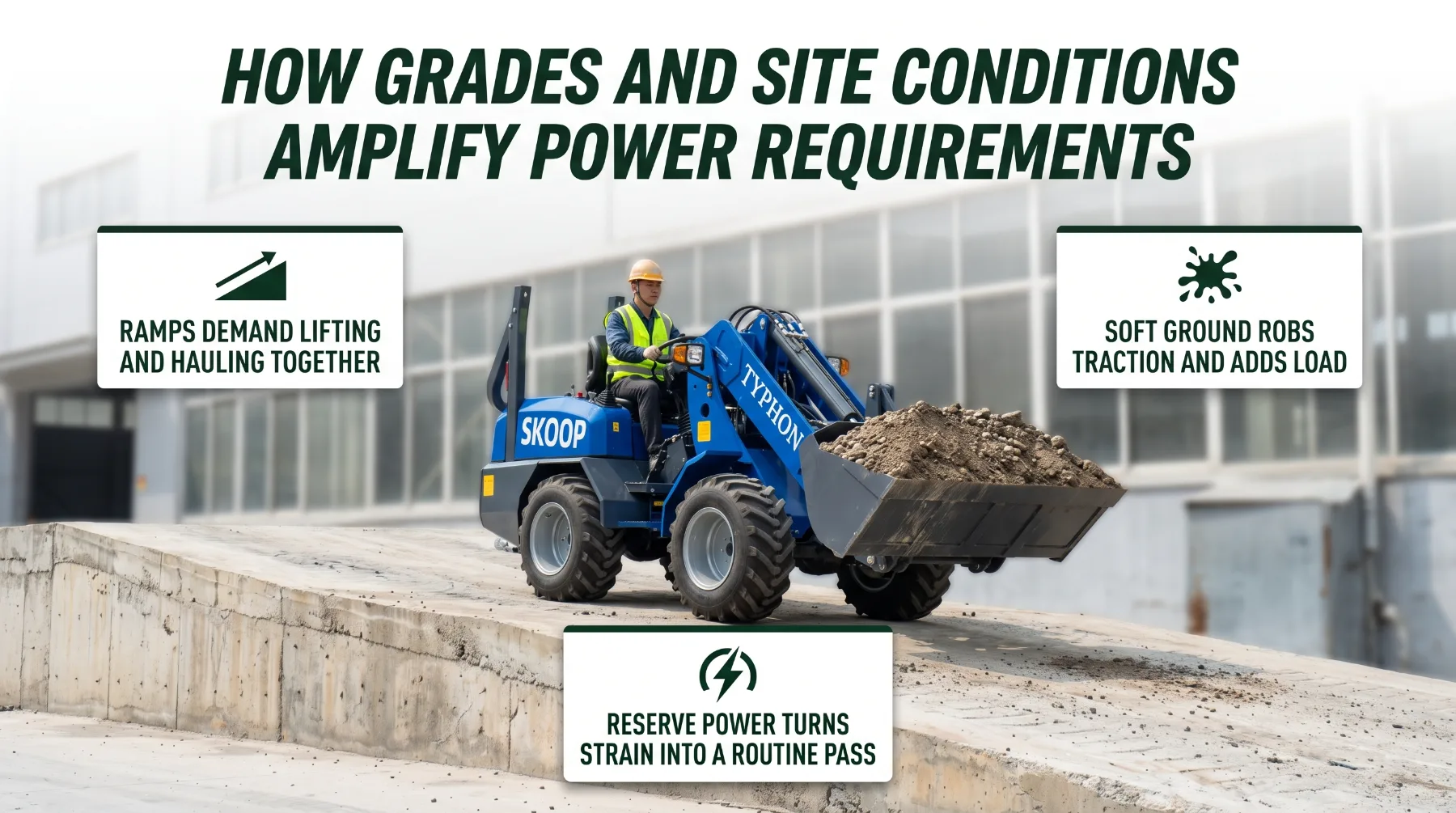
Site conditions layer on more demand. Soft, muddy, or loose surfaces rob traction, so the engine works harder to keep the wheels driving through the muck. Dense, sticky material resists the bucket and raises the hydraulic pressure the pumps must build. Cold starts, high altitude, and long push distances each add their own tax on output. A loader sized comfortably for flat, easy work can find itself outmatched the moment the job moves to a graded, cluttered, or high pile face. Reserve power is what turns those demanding conditions into a routine pass rather than a struggle.
The difference becomes even more noticeable when difficult conditions repeat throughout the day. Each climb, push, or breakout adds another period of high engine demand, leaving less capacity for smooth acceleration and hydraulic response. If the engine is consistently operating near its limit, travel speed can drop, hydraulic functions can slow, and the operator may need to change the sequence of each cycle to keep the machine moving. Adequate power reserve gives the loader more room to handle these combined demands without sacrificing the pace of the work.
Key takeaway: Grades, soft ground, dense material, and altitude all raise the power a heavy load demands, so reserve output is what lets a loader hold its pace when conditions turn tough.
Conclusion
Engine power and heavy-load performance are closely linked through the hydraulics and drivetrain, as lifting full buckets and climbing grades demand power and torque at the same time. Sufficient power keeps lifting, traction, and travel speed steady, while strong torque helps maintain performance under resistance. Grades, soft ground, dense material, and altitude can increase demand, so match engine power and torque to your heaviest routine loads, consider the conditions you work in, and confirm the loader can handle your toughest cycles without excessive strain.
Frequently Asked Questions
Why does my wheel loader slow down so much when the bucket is full?
A full bucket increases the demand on both the hydraulics and drivetrain. Lifting the load requires higher hydraulic pressure, while driving or climbing at the same time draws power from the same engine. As demand approaches the engine’s available output, engine speed can drop, reducing pump output and slowing both lifting and travel. This is normal when operating near the machine’s power limit. A loader with more power reserve can maintain better speed under the same load, which is why engine capacity should match your heaviest routine work.
Is horsepower or torque more important for handling heavy loads in a wheel loader?
For heavy-load work, torque is especially important because engine speed drops when the bucket meets strong resistance. An engine with strong low-speed torque can maintain force as it slows, helping the loader keep filling and lifting under load. Horsepower still matters because it supports hydraulic flow and productive cycle speeds. Look at both figures, including the engine speed where peak torque occurs, and favor a broad low-speed torque curve for demanding work.
Will a bigger engine always be the better choice for heavy loads?
Not necessarily. The right engine should match your actual loads, terrain, and duty cycle rather than simply being the largest option. More power helps when regularly handling full buckets, dense material, ramps, or soft ground, but excess capacity can increase fuel use and purchase costs when it is rarely needed. Size the engine for your heaviest routine tasks and toughest conditions so it has enough reserve to work comfortably without carrying unnecessary capacity.