
Is a 20ft Mini Electric Scissor Lift Enough for Your Facility?
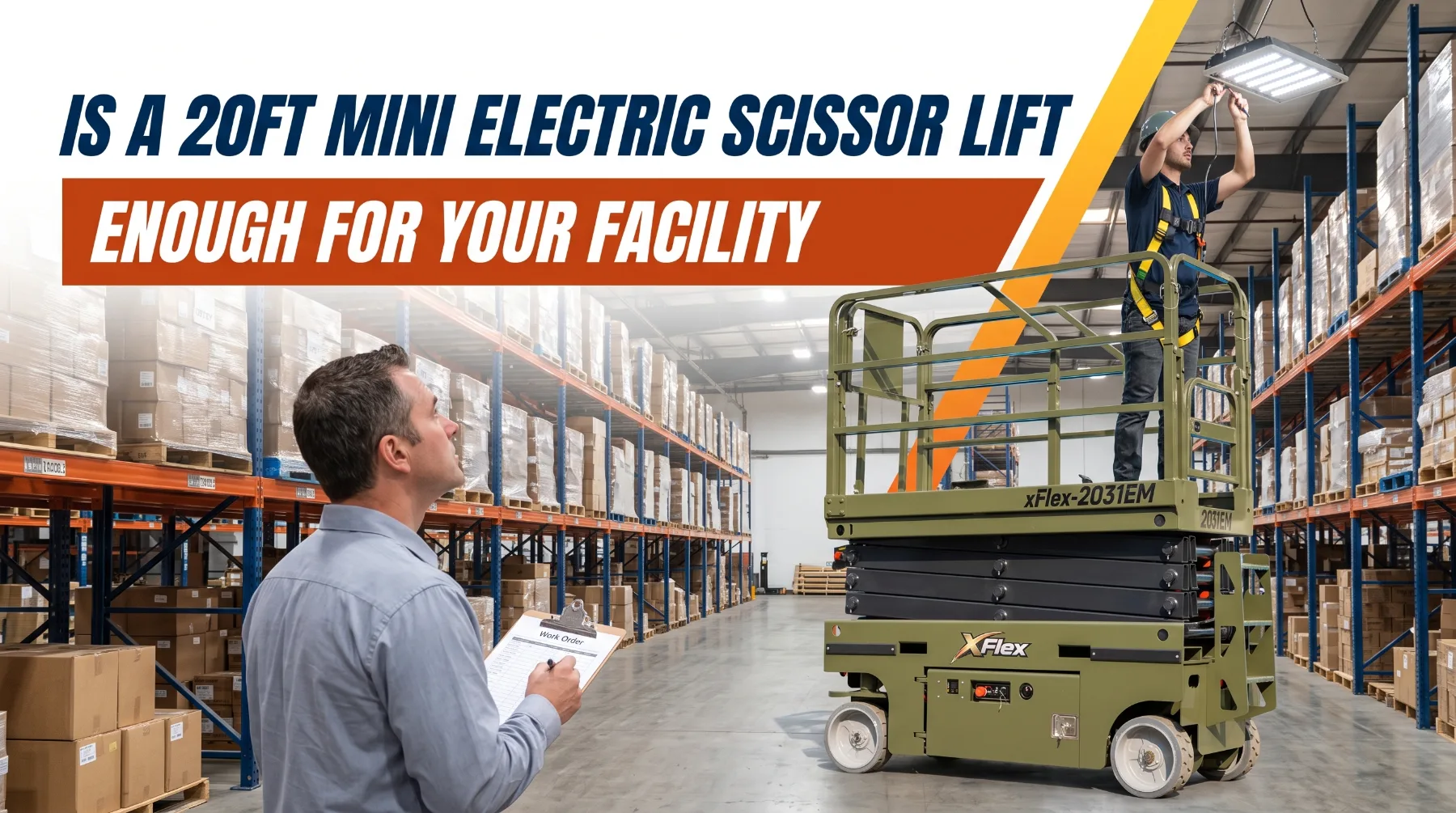
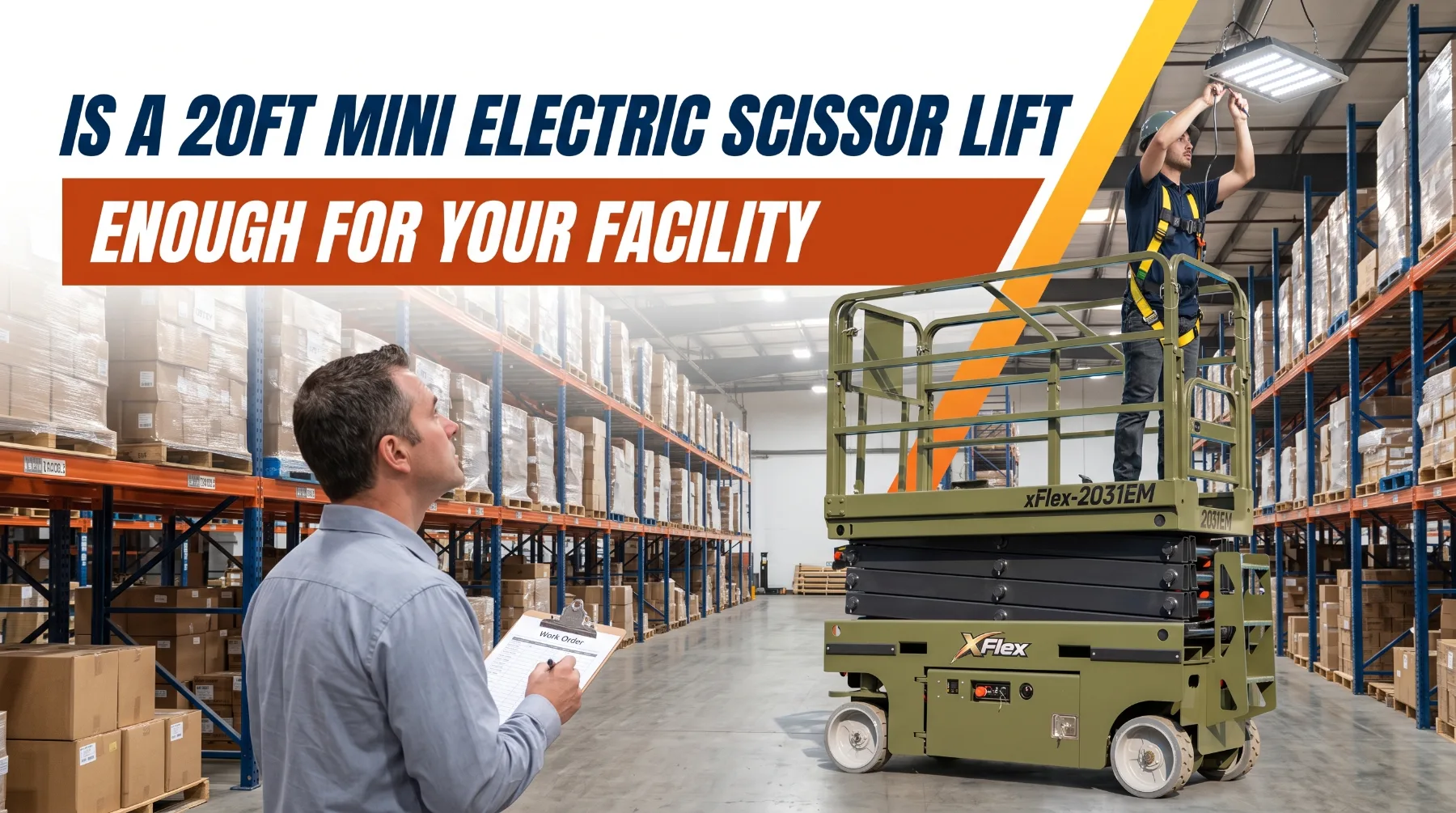 A maintenance supervisor at a mid-sized distribution center gets a call about a flickering light fixture above aisle seven, and the clock is already ticking toward the afternoon shift. The old solution was a wobbly ladder and a spotter, a setup that made everyone nervous and slowed the whole job. This time the supervisor rolls out a compact electric scissor lift, positions it under the fixture, and raises a technician to the work in under a minute. The repair takes ten minutes, the aisle reopens fast, and no one holds a ladder while glancing over a shoulder. That quiet swap of a ladder for a small powered platform is exactly the decision many facilities face, and the question underneath it is simple: does a 20ft mini electric scissor lift actually cover the work your building throws at it? Choosing the right lift height and size shapes safety, productivity, and cost across every overhead task your team handles. Get it right and a modest machine earns its keep daily; get it wrong and you either overspend on capability you never use or fall short when the ceiling climbs..
How Working Height Affects Machine Performance
Height sits at the center of every scissor lift decision, because the whole point of the machine is to put a worker safely where the task lives. A lift that falls short forces awkward stretching, tiptoe reaching, or a return to the ladder you were trying to retire, none of which serve safety or speed. Matching the platform's reach to the height of your typical work is the single choice that determines whether the machine solves the problem or merely relocates it. Safety improves the moment a proper lift replaces a ladder, and the numbers behind ladder incidents make the case plainly. Falls from ladders send thousands of workers to emergency rooms every year, and many of those falls happen during exactly the kind of overhead maintenance a scissor lift handles with a guarded platform and a stable base. Giving your team a secure, railed surface to stand on removes the balance risk that a ladder never can. Productivity rises alongside safety when the height fits the job, since a technician on a stable platform works with both hands and full attention rather than clinging for balance. Time lost to repositioning ladders, fetching spotters, and second-guessing footing adds up across a week of overhead tasks, so a lift that reaches comfortably keeps the work flowing. Key takeaway: matching platform height to your facility's overhead work protects your team and speeds every job, which is why reach deserves the first and hardest look.
What a 20ft Working Height Actually Delivers
Numbers deserve a careful reading here, because a "20ft" lift almost always describes working height rather than the height of the platform itself. Working height adds roughly six feet to the platform height, on the assumption that an average worker's reach extends about that far overhead, so a machine rated near 20 feet of working height typically raises the platform to around 14 feet. Reading the spec correctly keeps you from expecting reach the machine was never built to provide. Real tasks fall neatly within that envelope across most standard commercial and light industrial buildings. Servicing lighting, HVAC vents, sprinkler heads, security cameras, and signage in a space with ceilings in the 14 to 20 foot range sits comfortably inside what this class of lift handles, which covers a large share of retail floors, offices, workshops, and smaller warehouses. For facilities built to those common ceiling heights, a 20ft working height often meets the everyday maintenance list without strain.
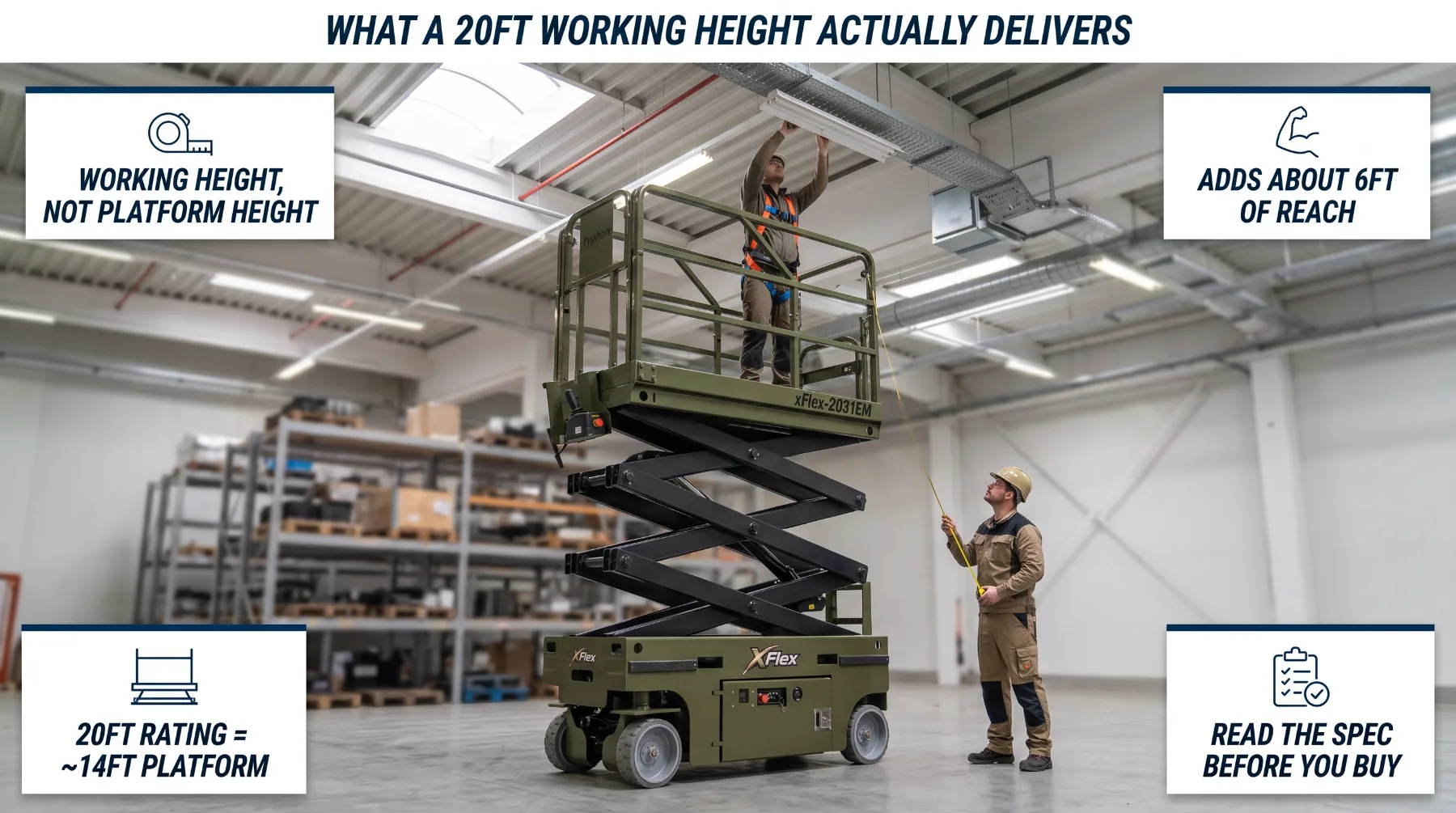 Judgment enters when you inventory the actual heights your team reaches most often, rather than the single tallest point in the building. Walk the floor, note the height of the fixtures you service on a routine basis, and compare those figures against the platform height the machine truly delivers. Key takeaway: a 20ft rating means roughly 14 feet of platform height and about 20 feet of overhead reach, which suits the routine tasks in buildings with standard ceilings, so measure your real work before you trust the label.
Indoor Electric Operation and the Advantages It Brings
Clean power is where an electric scissor lift separates itself sharply from engine-driven equipment, and indoors that difference is not a luxury but a requirement. An electric lift runs on batteries with no exhaust and no fumes, so it works safely in enclosed spaces where a combustion engine would foul the air and threaten anyone nearby. For any task inside a sealed building, that emission-free operation settles the fuel question before it begins. Quiet running follows close behind, and it matters more than buyers often expect. Because an electric drive hums rather than roars, technicians can work overhead without shouting over an engine, communicate clearly with a spotter on the floor, and operate in occupied spaces like stores, offices, and hospitals without disrupting the people around them. A lift that stays quiet keeps a facility functioning normally while maintenance carries on above. Maneuverability rounds out the indoor case, since a mini electric scissor lift is built compact for exactly these conditions. Its tight frame rolls through standard doorways, fits into narrow aisles, and turns in confined corners where a larger machine would jam, and non-marking tires protect finished floors as it travels. Key takeaway: indoor electric operation delivers emission-free, quiet, and nimble performance suited to enclosed and occupied spaces, which is precisely why this class of lift belongs inside your facility.
Floor Load and Space Constraints Worth Weighing
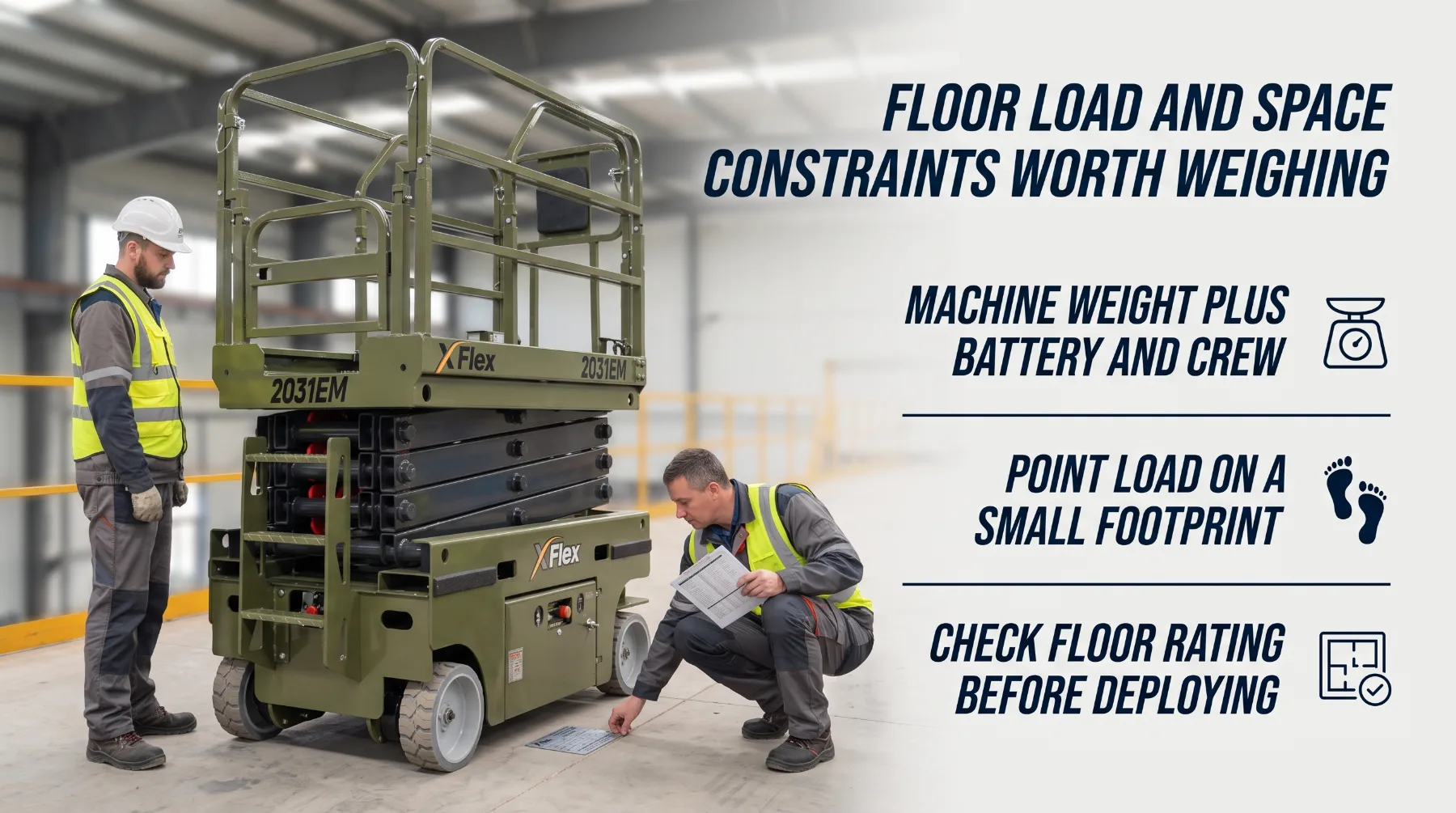
Weight on the floor is a limit many buyers overlook until it becomes a problem, because a scissor lift concentrates real mass onto a small footprint. Even a compact electric model carries a substantial load once you add its own frame, its battery pack, and the workers and tools aboard, so confirming that your floor can bear that point load matters on upper levels, mezzanines, and older slabs. Checking the machine's weight against your floor's rated capacity is a step worth taking before the lift ever arrives.
 Doorways and aisles set the practical boundaries of where the lift can actually go, and a machine that cannot reach the work is no help at all. Measure the narrowest doorways, the tightest aisle widths, and the lowest overhead clearances along the routes your team travels, then compare them against the lift's stowed dimensions to confirm it fits the paths it must use. A mini electric model earns its name here, since its slim profile is designed to slip through spaces that stop bigger equipment cold. Storage and charging deserve a place in the plan as well, because the lift needs a home when the work is done. Setting aside a spot near a standard electrical outlet lets the machine recharge overnight and stay ready for the next task, while keeping it clear of traffic and out of the way of daily operations. Key takeaway: weighing floor load capacity, doorway and aisle clearances, and a charging spot ensures the lift both reaches the work and lives comfortably in your building.
Weight Capacity and Platform Size Considerations
Payload determines how much the platform can safely carry, and it covers far more than the weight of a single worker. The rated capacity must hold the technician, every tool in hand, and any materials riding up with them, so a job that sends two workers aloft with a box of fixtures asks more of the machine than a solo bulb change. Adding up the realistic weight of people plus gear tells you whether a given lift's capacity fits your heaviest routine task. Platform dimensions shape what the crew can actually accomplish once they reach the work, since a cramped deck limits both the people and the parts that fit aboard. A mini scissor lift keeps its platform compact to preserve maneuverability, which suits one worker with hand tools well but grows tight when a job needs two people or bulky materials. Picturing your typical task on the deck, with the worker and everything the job requires, reveals whether the space serves the work or fights it. Extensions offer a useful middle ground on many models, and they deserve consideration when reach at height falls just short. A sliding platform extension pushes the deck out a few extra feet to bridge a gap over an obstacle or against a wall, letting a worker reach a spot the base platform could not quite touch without repositioning the whole machine. Key takeaway: matching the rated capacity to your real payload and the platform size to your actual tasks, with an extension where it helps, ensures the lift carries the work rather than constraining it.
When Stepping Up to a Taller Machine Makes Sense
Ceilings that climb beyond the standard range are the clearest signal that a 20ft lift will leave your team reaching. A facility with high warehouse racking, tall industrial ceilings, or open spaces built well above 20 feet needs a machine rated to those heights, since asking a shorter lift to cover work it cannot reach simply returns you to ladders and risk. When your routine tasks live at 25, 30, or more feet overhead, a taller lift is not an upgrade but a baseline requirement. Heavier and larger jobs push the decision the same direction, because some work outgrows a mini platform regardless of height. Tasks that demand two workers aloft, heavy replacement components, or a broad deck to stage materials call for a larger scissor lift with greater capacity and a roomier platform, even when the ceiling itself sits within a mini lift's range. Reading the weight and space your heaviest jobs require guards against buying a machine that reaches the height but cannot handle the load. Mixed demands across a facility often point toward a considered fleet rather than a single compromise machine. An operation with both routine low-level maintenance and occasional high or heavy work may pair a nimble mini electric lift for daily tasks with a taller or larger unit for the exceptions, or lean on rentals to cover the rare job. Key takeaway: taller ceilings, heavier jobs, and mixed demands all signal when to step beyond a 20ft mini lift, so weighing your full range of work keeps you from buying too little machine.
Conclusion
Deciding whether a 20ft mini electric scissor lift fits your facility comes down to matching the machine honestly to the work your building demands, and the whole picture holds once you weigh each factor in turn. Start by recognizing why reaching the right height protects your team and speeds every task, then read the spec correctly so you know a 20ft rating delivers roughly 14 feet of platform height and about 20 feet of reach. Confirm that indoor electric operation suits your enclosed and occupied spaces, check that your floor load, doorways, and aisles accommodate the machine, and match its capacity and platform size to your real payloads. Recognize the signals, taller ceilings and heavier jobs, that call for a larger machine instead. Weigh all six, and the answer becomes clear rather than a guess. Before you decide, measure your routine work heights, tally your typical payloads, and map the paths the lift must travel so the machine performs from the first job. When you're ready to put a dependable mini electric scissor lift to work, or need help matching the right height and capacity to your facility, reach out to a trusted equipment specialist who can match reliable equipment to the results your work depends on.
Frequently Asked Questions
Does a 20ft scissor lift mean the platform rises 20 feet? No. A 20ft rating usually means working height, including an operator’s reach. The platform itself may rise to around 14ft. Always check whether the specification lists platform height or working height. Why choose an electric scissor lift over a gas or diesel model indoors? Electric models produce no exhaust and operate quietly, making them ideal for indoor work. Compact designs and non-marking tires also help with narrow spaces and finished floors. How do I know if I need a taller lift instead? Consider your highest work areas and typical load requirements. If your work exceeds the lift’s working height or requires more platform capacity, choose a taller or larger model.