
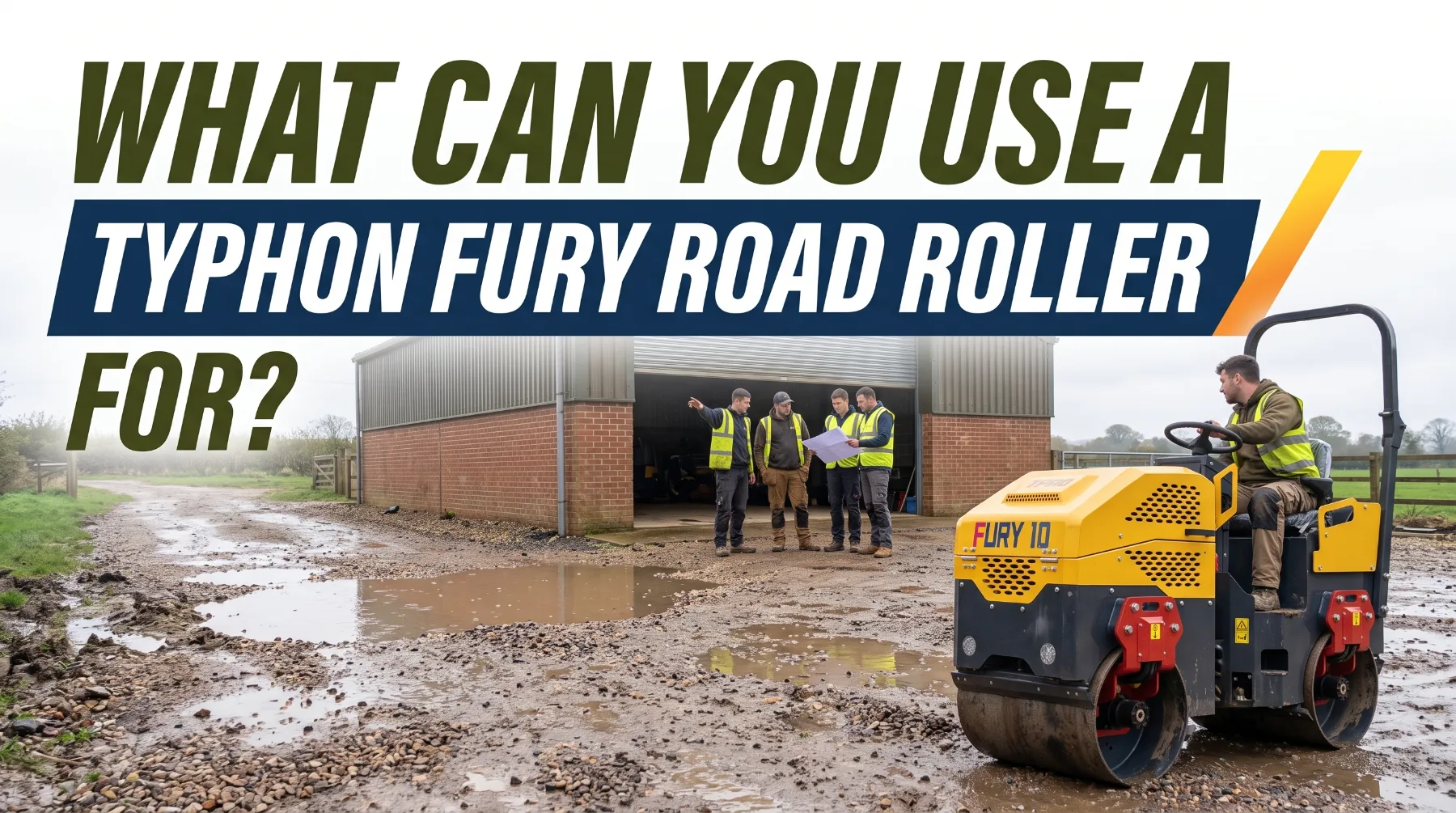
What Can You Use a TYPHON FURY Road Roller For?
 A small paving crew wraps up a fresh gravel driveway for a rural homeowner, and the surface looks smooth enough until the first rain rolls through. Days later the owner calls back, frustrated, because loose stone has shifted, tire ruts have formed near the garage, and puddles now sit where the grade should have shed water. The crew leader knows the fix, and it isn't more gravel. The base was never properly compacted, so every load that crossed it pushed the material around instead of locking it in place. He'd skipped bringing a roller to save a trip, figuring the truck tires would settle things, and now he faces a redo that costs more than the compaction ever would have. A compact machine like the TYPHON FURY Road Roller would have pressed that base firm in a single afternoon and saved the callback entirely. A road roller earns its keep by pressing loose material into a dense, stable surface that holds up under traffic, weather, and time, and the TYPHON FURY handles a wider range of compaction work than many operators expect from a machine its size. Knowing what it can tackle helps you match the right tool to the job, avoid failed surfaces, and stretch one machine across many tasks. This guide walks through the six main jobs a TYPHON FURY Road Roller does well:
- Compacting soil and subgrade before building
- Firming gravel driveways and access roads
- Rolling fresh asphalt on patches and small lots
- Preparing pathways, trails, and walkways
- Settling backfill over trenches and utilities
- Finishing landscaping and hardscape bases
Here's where each job fits and how the machine handles it.
Building a Solid Base in the Soil Below
Groundwork sets the fate of everything stacked on top of it, so soil compaction is the first and most important job a TYPHON FURY takes on. Loose or disturbed earth holds air pockets and moisture that let a structure settle unevenly over time, and pressing that ground into a dense, uniform mass is what stops cracks, sinkholes, and shifting foundations before they start. The roller drives out the voids and knits the soil particles tight, giving whatever comes next a surface it can trust. Subgrade preparation is where this pays off most clearly. Before a slab, a shed pad, a patio, or a parking area goes in, the exposed soil needs to reach a firm, level state that won't budge under load, and running the FURY across it in overlapping passes brings the ground to that condition. Damp soil compacts far better than bone-dry or soaking material, so timing your rolling to the right moisture level makes the difference between a base that locks in and one that never fully firms. What this means: run the TYPHON FURY over disturbed soil and subgrade before you build, since a properly compacted base is the single factor that keeps everything above it stable and level for years.
Firming Up Gravel Drives and Access Roads
Gravel behaves like a puzzle of loose stones until something forces the pieces to interlock, and this is exactly the work a compact road roller is made for. A freshly spread driveway or rough access road has gaps between the aggregate, and without proper compaction, the surface can rut, wash out, and shift under traffic. As explained in Understanding Drum Width, Weight and Their Impact on Performance, the roller’s drum width and weight play an important role in how evenly and effectively the material is compacted. Pressing the layer down helps lock the stones together, creating a stronger surface that can handle weight and resist movement. Layered rolling produces the strongest result on these jobs. Spreading and compacting the gravel in stages, rather than dumping one deep pile and hoping it settles, lets the FURY reach full depth and lock each lift before the next goes down. A well-rolled gravel drive resists potholes, keeps its crown for drainage, and needs far less regrading down the road, which is why smart crews never skip this step even on a modest residential job. Key takeaway: compact gravel drives and access roads in layers with the TYPHON FURY, since interlocking the stone is what turns a loose scatter of aggregate into a durable surface that holds its shape.
Pressing Fresh Asphalt Into a Sealed Surface
Asphalt demands compaction while it's still hot, and a compact roller like the FURY handles the patchwork and small-scale paving that larger machines can't reach economically. Hot mix arrives full of air, and rolling it promptly presses those voids out, bonds the material to the layer beneath, and seals the surface against water that would otherwise seep in and tear the pavement apart through freeze and thaw. The window is short, so having the right roller staged and ready matters as much as the mix itself.
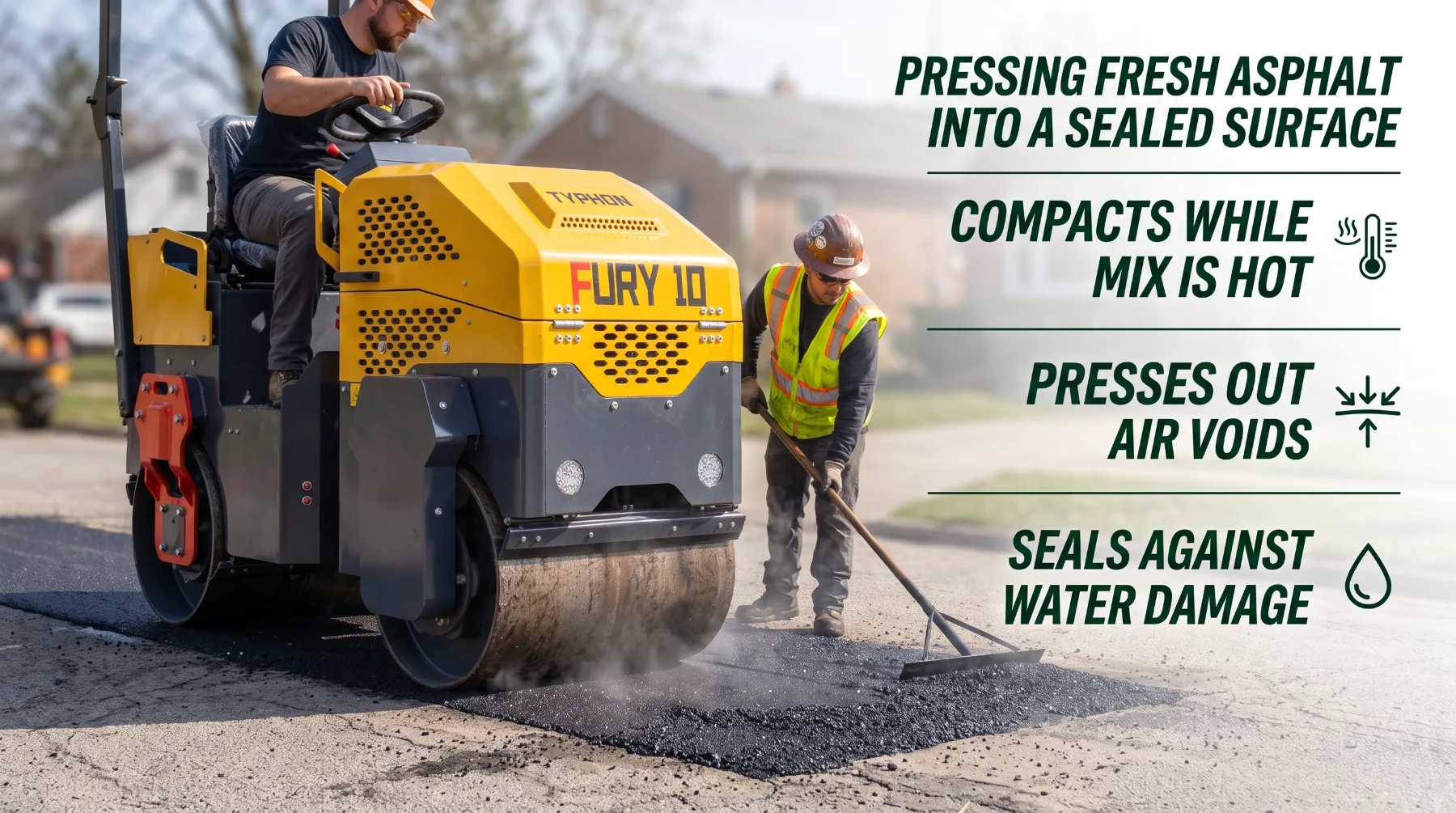 Repairs and tight lots are where this capability shines. Driveway patches, pothole fills, small parking areas, and utility cut restorations all need firm, smooth compaction, yet none justify a full-size paving train, so the FURY steps in to finish these jobs cleanly and affordably. Rolling in steady overlapping passes while the asphalt stays workable produces a tight, even surface that resists raveling and looks professionally laid. What this means: put the TYPHON FURY to work on fresh asphalt patches and small paving jobs while the mix is hot, since prompt compaction seals the surface and bonds it firm against water and traffic damage.
Shaping Firm Pathways and Trails Underfoot
Walkways carry a different kind of traffic than roads, yet they fail the same way when the base stays loose, so path and trail compaction is a natural fit for a machine this size. Crushed stone paths, decomposed granite trails, and packed-earth walkways all need a firm, even surface that won't turn to mud, shift underfoot, or wash away in a downpour, and the FURY presses these materials into a stable tread that stays comfortable to walk and ride on. Parks, gardens, and residential grounds benefit especially from this work. A garden path rolled tight resists weeds pushing through, drains cleanly after rain, and holds its shape season after season with minimal upkeep, while a compacted trail supports foot traffic, bikes, and light carts without rutting. The machine's compact size lets it maneuver through narrow routes and around plantings that a bulky roller would flatten, making it well suited to finished landscape settings. Key takeaway: use the TYPHON FURY to compact crushed stone and earthen pathways, since a firmed tread stays stable, sheds water, and holds its shape long after loose material would have broken down.
Settling Backfill Over Trenches and Buried Lines
Excavation always ends with a hole that needs filling, and how you return that soil decides whether the ground above stays level or sinks into a scar months later. Trench and backfill compaction is a job crews often rush, yet loosely returned earth over a pipe, cable, or utility line settles unevenly as it consolidates, leaving a depression that pools water and cracks any surface laid across it. The FURY presses each layer of backfill down so the ground reconsolidates properly and stays flush with the surrounding grade. Careful, staged filling protects both the surface and what lies beneath. Returning the soil in lifts and compacting each one guards against the deep settlement that damages driveways, sidewalks, and lawns restored over a trench, and it helps shield the buried line from shifting ground pressure. Keeping the machine clear of the pipe's immediate cover and building up compacted layers above it balances thorough compaction with protecting the utility. What this means: compact trench backfill in lifts with the TYPHON FURY, since settling the soil properly prevents the sinking, pooling, and cracking that plague surfaces restored over buried utilities.
Finishing Landscape and Hardscape Foundations
Landscaping projects live or die on the base beneath the visible surface, and hardscape compaction is where the FURY quietly earns its place on a crew's equipment list. Paver patios, retaining wall footings, artificial turf beds, and stone bases all rely on a dense, level foundation to stay flat and true, and skipping the compaction step leaves pavers rocking, turf rippling, and walls leaning within a season. Pressing the base material firm gives every finished element a stable platform that resists movement.
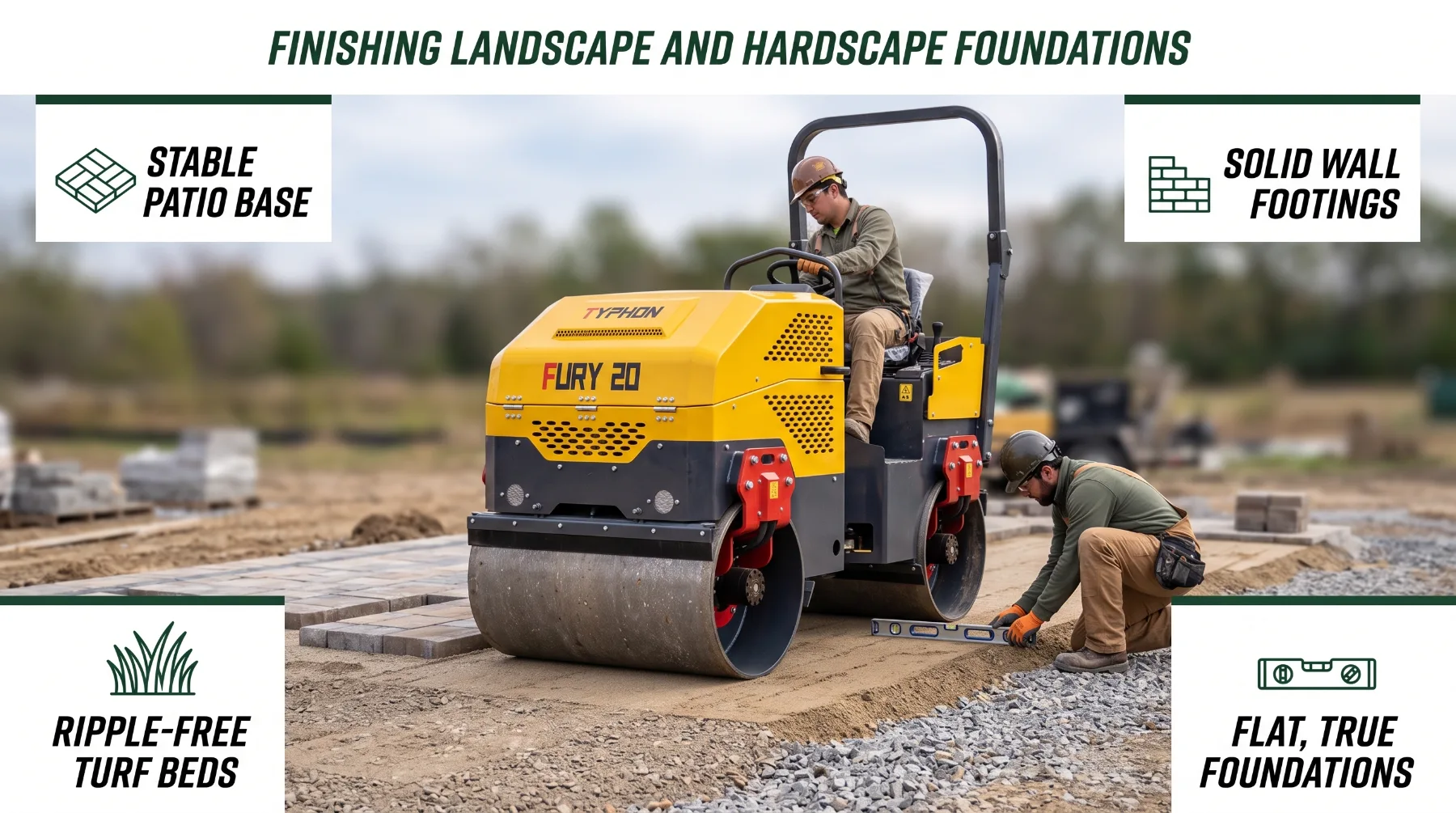 Base aggregate handling rounds out this work. Compacting crushed stone or road base in thin lifts before the sand and pavers go down creates the unyielding foundation a quality hardscape demands, and the roller's even pressure produces a more consistent result than hand tamping across a broad area. For contractors building patios, walkways, and turf installations, the FURY speeds the base preparation while raising the finished quality. Key takeaway: rely on the TYPHON FURY to compact hardscape and landscape bases in thin lifts, since a dense, level foundation is what keeps pavers, turf, and walls stable and true over the life of the project.
Conclusion
Understanding what a TYPHON FURY Road Roller can do is rarely a mystery once you see how one machine covers the full range of compaction work, from the ground up to the finished surface. Start with soil and subgrade, since a firm base under a build stops the settling that ruins everything above it, then move to gravel drives and access roads where interlocking the stone creates a durable surface. Roll fresh asphalt promptly to seal patches and small lots, compact pathways and trails into stable treads, and settle trench backfill in lifts so the ground stays level over buried lines. Finish with hardscape and landscape bases, where a dense foundation keeps pavers, turf, and walls true. Match the machine to each of these jobs, and you'll turn loose, unreliable material into surfaces that hold up under traffic, weather, and time instead of failing and forcing a costly redo. Before your next project, plan your compaction into the schedule, roll in overlapping passes at the right moisture level, and build your base in layers so every surface you finish stays firm from the first pass to the last. When you're ready to put a dependable, versatile road roller to work, or need help matching the right machine to your compaction jobs, reach out to a trusted equipment specialist who can pair a reliable unit with the results your projects depend on.
Frequently Asked Questions
Can a TYPHON FURY Road Roller compact both soil and asphalt? Yes, and that versatility is one of its strongest selling points. The machine presses loose soil and subgrade into a dense, stable base before building, driving out the air pockets and moisture that cause uneven settling. It also compacts fresh hot asphalt on patches, driveway repairs, and small parking areas, sealing the surface against water and bonding it to the layer beneath. The key with each material is technique: compact soil at the right moisture level for the tightest lock, and roll asphalt promptly while the mix is still hot and workable. Used correctly on both, the FURY replaces the need for separate machines on smaller jobs. How many passes does it take to compact gravel properly? It depends on the depth and the material, but the reliable approach is to compact in layers rather than counting passes on a single deep pile. Spread the gravel in stages, then run the FURY over each lift in steady, overlapping passes until the surface stops visibly settling and feels firm underfoot. Most lifts firm up in several passes, though damp material and a properly limited layer depth reach full compaction faster. Layered rolling lets the machine reach full depth and lock each stage before the next goes down, which produces a far stronger, longer-lasting surface than trying to compact everything at once. Is a compact road roller enough for a residential driveway? For most residential driveways, yes. A compact road roller like the TYPHON FURY delivers the compaction force needed to firm gravel bases, settle subgrade, and roll asphalt patches on the scale a typical home project demands, and its smaller size lets it maneuver in tight driveways and around landscaping that a full-size roller couldn't reach. Larger commercial roads and heavy highway work call for bigger machines, but for driveways, access roads, pathways, and small lots, the compact roller matches the job well. Compacting in layers and keeping your passes overlapping ensures the surface reaches full strength regardless of the machine's size.