
What Sets the V900 Apart From Standard Skid Steers
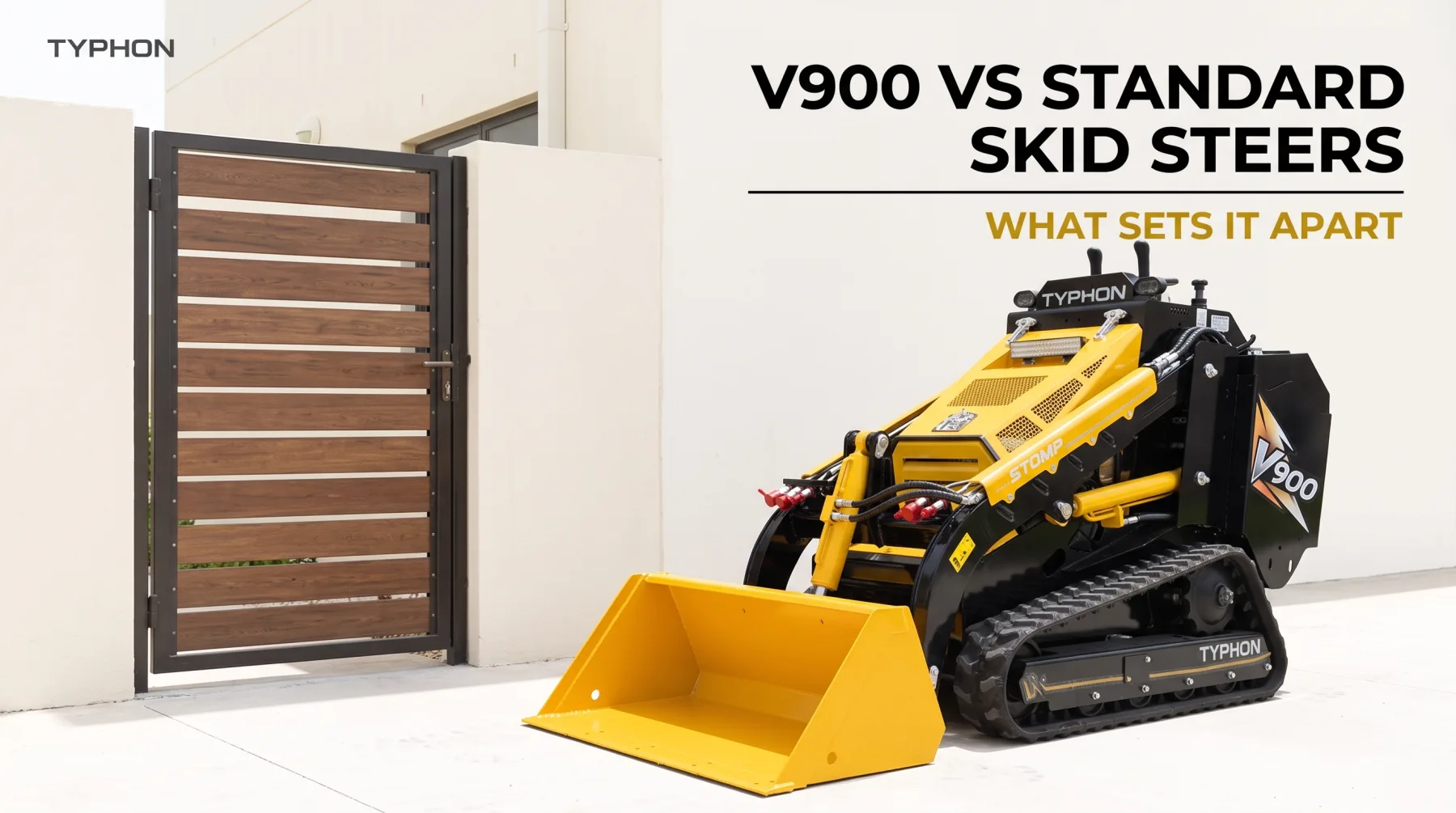
A landscaper lands a backyard renovation behind a row of townhomes, quotes the job confidently, and shows up with his full-size skid steer only to find the 84-inch machine won't clear the 36-inch side gate by a mile. He spends the morning hauling material by wheelbarrow across the yard while the machine sits idle on the trailer, and by afternoon he's calling around for a smaller unit he doesn't own. The full-size loader wasn't the wrong machine for power. It was simply too big to reach the work, and the whole day's schedule paid for it. That gate is exactly why the difference between a compact V900 and a standard skid steer deserves real thought before you load the trailer.
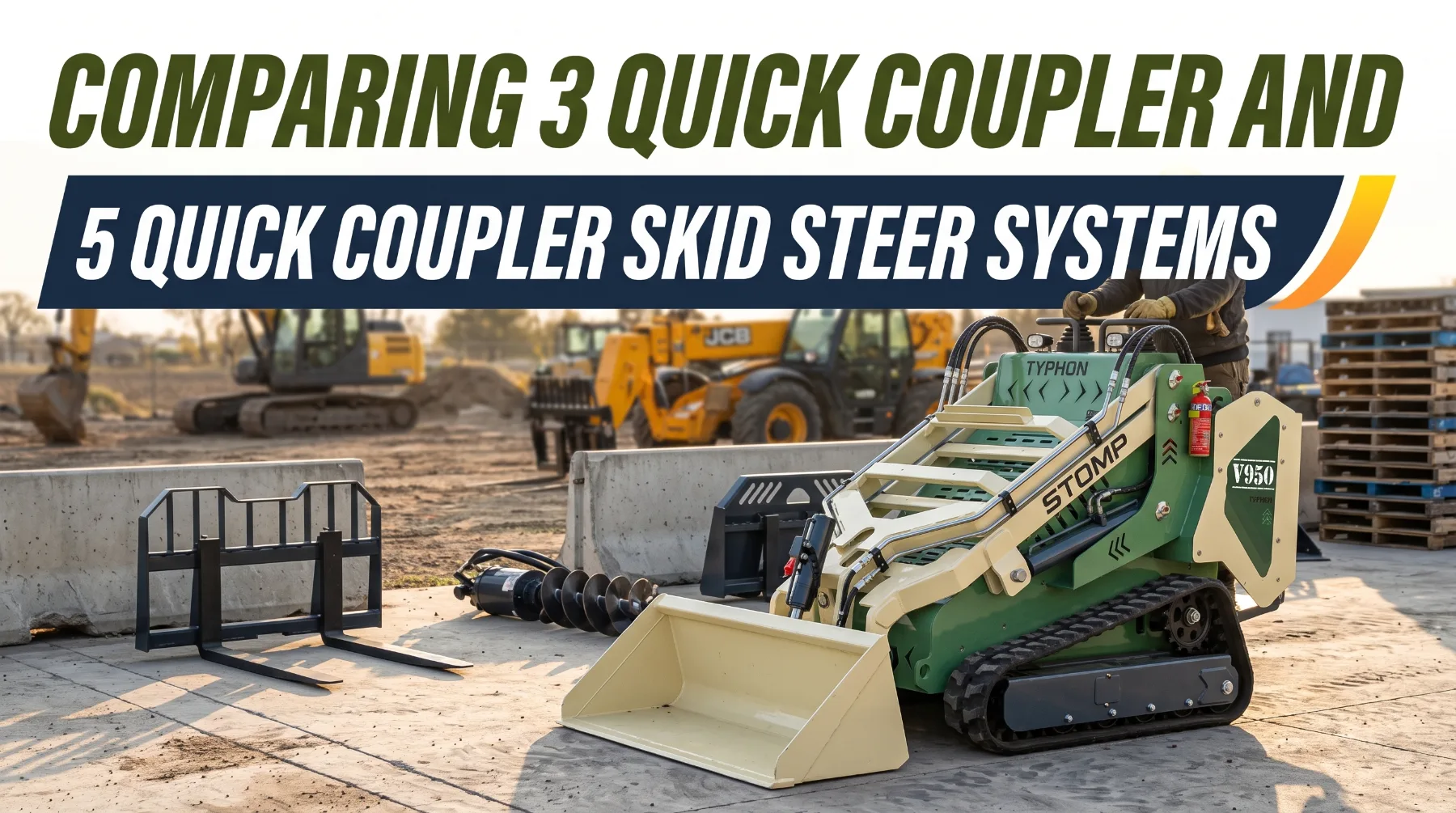
Both machines run the same family of quick-attach tools and tackle overlapping work, which fools plenty of buyers into treating the choice as a formality. It isn't. The V900 is a compact, stand-on machine built to fit where full-size loaders can't, while a standard skid steer trades that access for raw power and capacity. This guide breaks down the core split between the two, how width and access differ, what the capacity and power gap really means, how weight and ground pressure factor in, the fuel and cost picture, and how to match either one to your work. Here's how to choose with confidence.
The Core Split Between the Two Machines
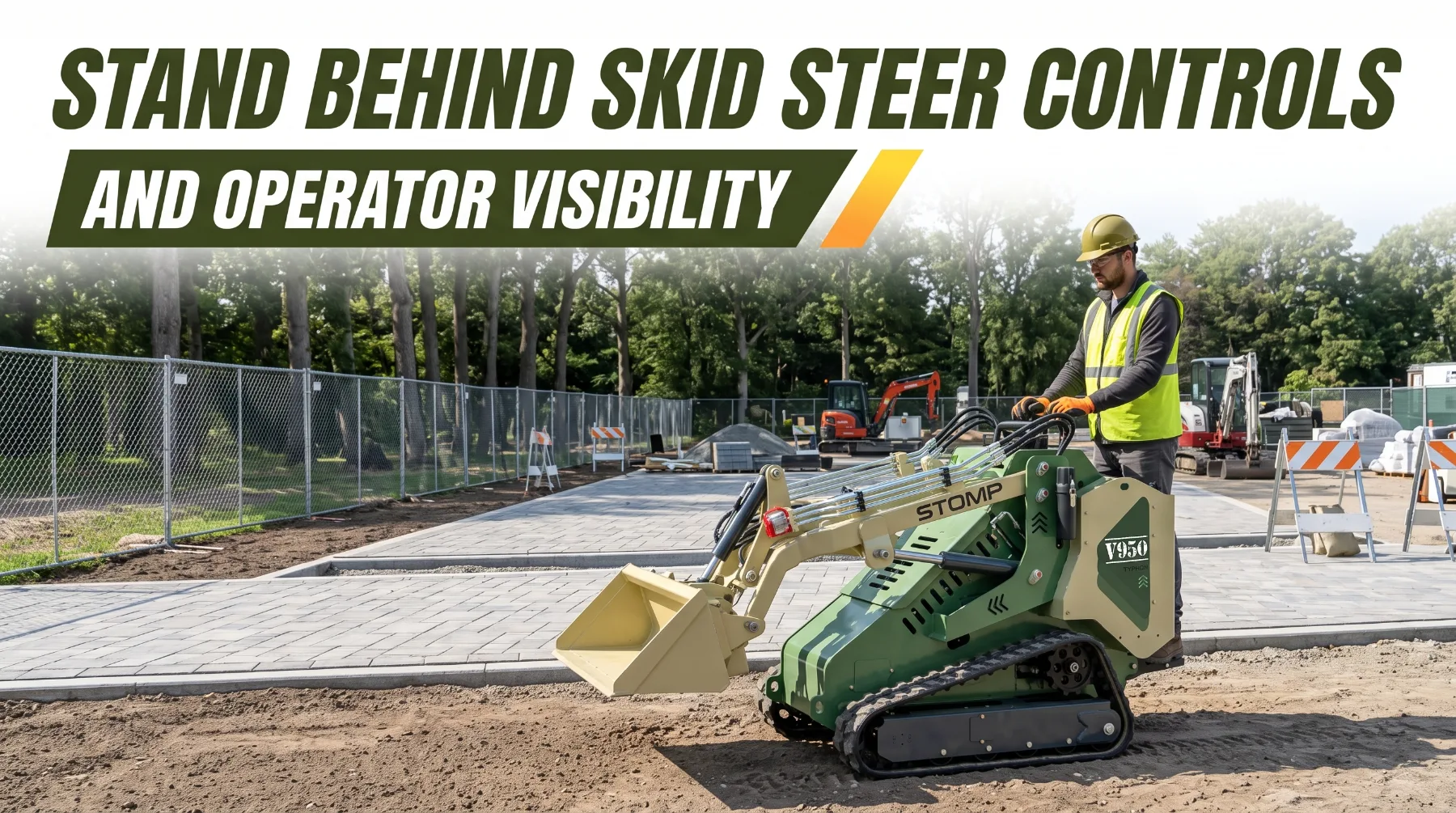
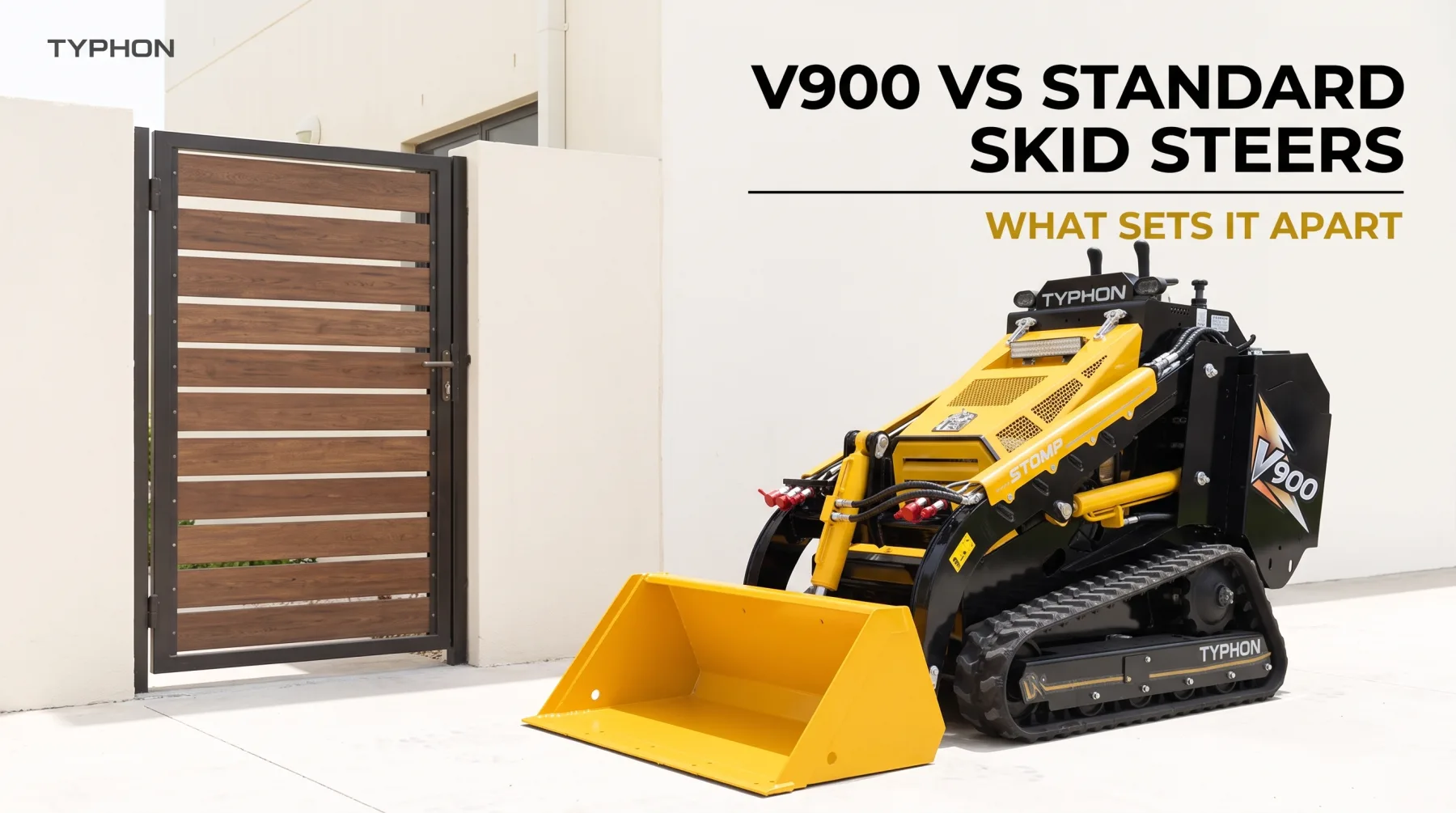
Design tells the story before you ever start working. The V900 is a compact, stand-on skid steer measuring just 35.9 inches wide with a 1,014 lb rated operating capacity, built around access and maneuverability. A standard skid steer, by contrast, runs roughly 84 inches wide with a 4,200 lb or higher capacity and a seated, enclosed cab, built around power and volume.
Purpose separates them more than any single spec. One machine squeezes through gates and works tight yards where a bigger unit would never fit, while the other moves large volumes of material fast across open sites. Neither replaces the other; each wins where the other struggles.
Key takeaway: Think of the V900 as a compact access specialist and a standard skid steer as a full-size volume machine. Match the choice to whether your work is tight and light or open and heavy, and the rest of the decision falls into place.
Width and Where Each Machine Can Reach
Access is where the V900 leaves a full-size skid steer parked at the curb. At 35.9 inches wide, it slips through standard 36-inch gates, fence openings, and doorways that an 84-inch machine can't approach, which opens up backyards, courtyards, interior demolition, and narrow side yards that would otherwise mean hand labor. That compact footprint is the whole reason the machine exists.
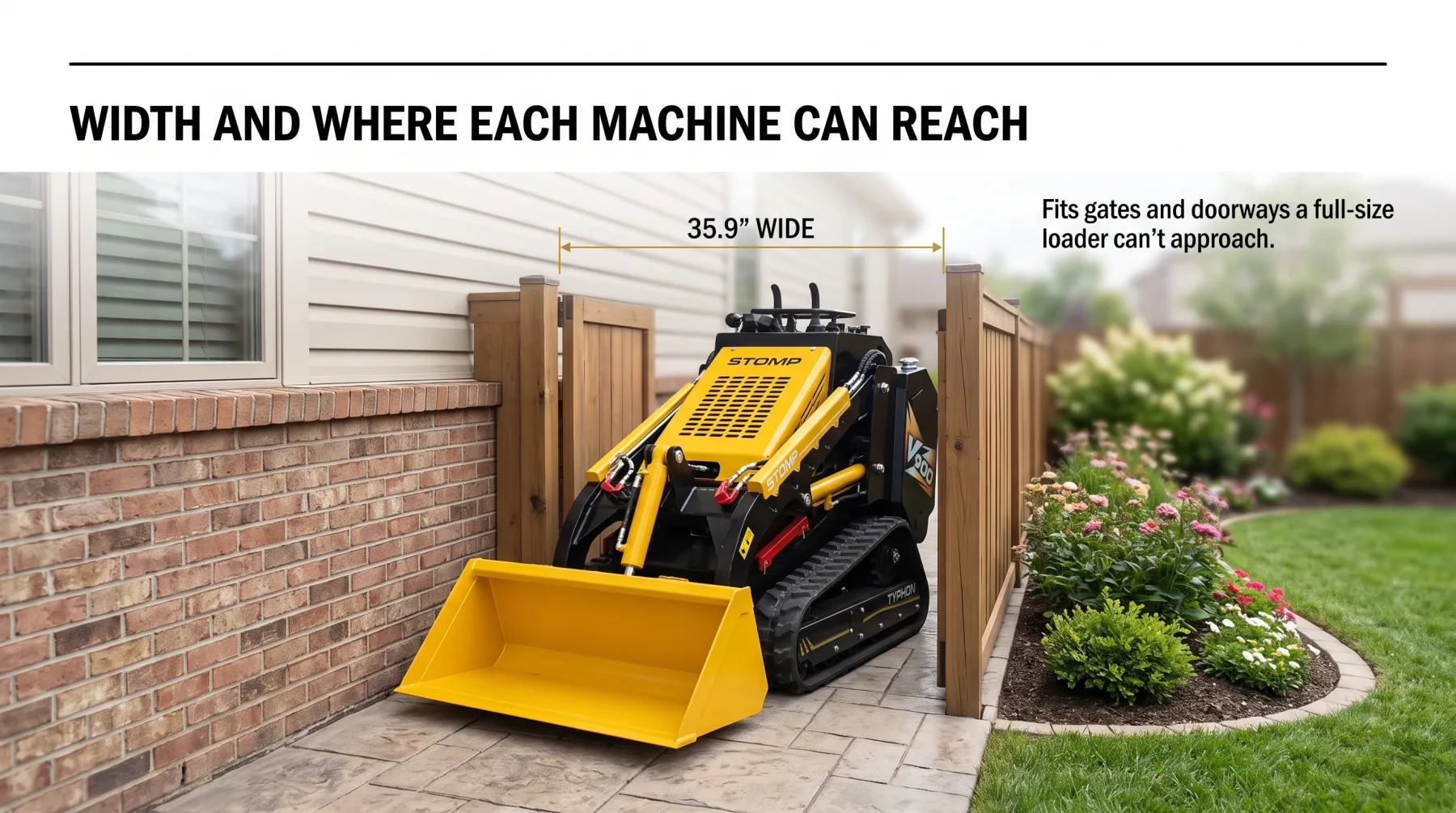
Space overhead and around the machine matters too. The V900's smaller frame turns and repositions in tight quarters where a full-size loader would clip fences, walls, and landscaping on every swing. Residential renovation, urban work, and jobs boxed in by structures all reward a machine that fits the space instead of fighting it.
Full-size skid steers reclaim the advantage the moment the space opens up. On a wide commercial lot or an open dirt site, an 84-inch machine covers ground and moves material far faster than a compact unit, so its width becomes an asset rather than a liability. Room to work is what the standard machine needs to shine.
What this means: Measure your tightest access point before anything else. If gates, doorways, or narrow paths gate your work, the V900's 35.9-inch width decides the job; if you work open sites, a wider standard machine earns its keep.
The Capacity and Power Gap You Can't Ignore
Lifting capacity is where a standard skid steer pulls clearly ahead. With a rated operating capacity of 4,200 lb or more against the V900's 1,014 lb, a full-size machine lifts and carries roughly four times the load per cycle, backed by 60 to 120 horsepower engines that push through dense material without straining. Heavy loading, big grading jobs, and steady high-volume work all reward that muscle.
Volume per hour compounds the difference on large jobs. A full-size skid steer scoops a bigger bucket, drives it farther, and empties it faster, so moving a large pile of fill or loading a steady line of trucks goes far quicker with the heavier machine. Raw throughput favors the standard unit every time the space allows it.
The V900 answers with enough capability for the work it's built for. Its 1,014 lb rating and three hydraulic valves handle buckets, augers, grapples, breakers, and forks across landscaping, light demolition, and residential tasks, where fitting the space matters more than maximum load. Asking it to match a full-size machine's volume misreads its purpose entirely.
Key takeaway: A standard skid steer wins decisively on lifting capacity, engine power, and volume per hour. The V900 carries less by design, so lean on it for access and versatility rather than heavy, high-volume loading.
Weight, Ground Pressure, and Turf Impact
Machine weight shapes what each unit does to the ground beneath it. The V900 tips the scales around 2,800 lb, while a full-size skid steer often runs 11,000 lb or more, and that gap changes everything about how each machine treats a soft or finished surface. A lighter machine leaves a gentler footprint on lawns, pavers, and delicate ground.
Turf and finished surfaces favor the compact machine sharply. A full-size loader's weight ruts wet lawns, cracks pavers, and compacts soil in ways that create expensive repairs on residential and landscaping jobs, while the V900's lighter frame rolls across the same ground with far less damage. Working over finished surfaces you can't afford to tear up points straight at the lighter unit.
Traction and stability, though, lean toward the heavier machine on demanding ground. A full-size skid steer's weight plants it firmly for pushing dense material, climbing grades under load, and holding steady with a heavy attachment out front, where a lighter machine might slip or lift. Heavy pushing and loaded slope work reward the mass a standard machine carries.
What this means: Read the ground you'll work most. Soft, finished, or turf-sensitive surfaces favor the V900's light 2,800 lb footprint, while heavy pushing on firm ground rewards a standard machine's weight and traction.
Fuel, Running Costs, and Ownership Value
Operating cost is where the V900's compact size quietly pays off. Burning roughly 1.2 gallons per hour against the far thirstier appetite of a 60-to-120-horsepower full-size machine, the V900 sips fuel across a full day, which trims running costs noticeably over a busy season. Lower fuel use adds up every hour the machine works.
Purchase price and transport follow the same pattern. A compact stand-on machine costs less to buy than a full-size loader, rides on a lighter trailer behind a smaller tow vehicle, and demands less to store, so the total cost of owning one stays leaner across the board. Smaller machines, smaller bills at nearly every turn.
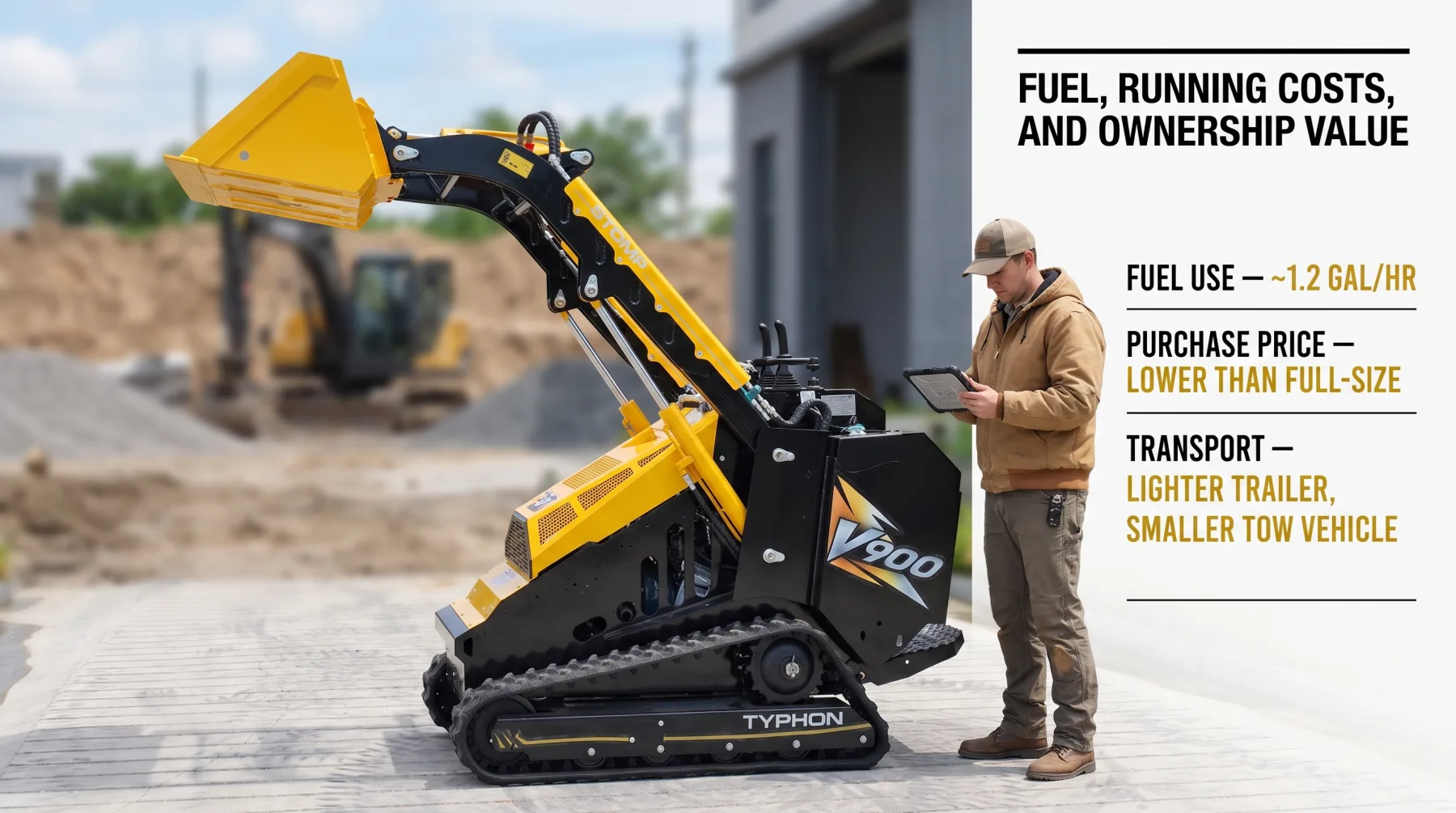
Return on either machine flows from how well it fits the work, not the sticker alone. The V900 pays back through low running costs and access to jobs a bigger machine can't reach, while a full-size skid steer earns its higher cost through the volume and power that make big jobs manageable. Matching the machine to your real work is what protects the investment either way.
Key takeaway: The V900 runs leaner on fuel, transport, and purchase price, while a full-size machine costs more but returns more on high-volume work. Weigh running costs against the jobs each machine actually wins for you.
Matching the Machine to Your Real Work
Job type points you toward the right machine faster than any spec sheet, so picture the work honestly. Tight-access landscaping, residential renovation, interior demolition, and turf-sensitive jobs lean hard toward the V900, since fitting the space and sparing the ground matter more than raw load. Open-site grading, heavy loading, and high-volume material handling point clearly to a full-size skid steer built for throughput.
Site conditions shape the choice nearly as much as the task. Gated yards, finished surfaces, and cramped urban work favor the compact, lightweight V900 that reaches the job without tearing it up, while wide, firm, open ground favors a heavier machine that covers distance and moves volume fast. The space and the surface usually settle the question.
Consider a contractor running mostly backyard hardscape and drainage work across gated residential lots. That operation genuinely suits the V900, since the machine fits the gates, spares the lawns, and swaps attachments for every task. Now picture a crew loading trucks and grading a large open commercial pad all day. That job calls for a full-size skid steer every time. Map your real work against each machine, and the right pairing becomes obvious.
What this means: Sort your typical jobs by access and volume first. If tight spaces and finished surfaces define your work, the V900 fits; if open sites and heavy loads define it, a standard machine wins.
Conclusion
Choosing between the V900 and a standard skid steer comes down to whether your work is tight and light or open and heavy. The V900 measures just 35.9 inches wide, weighs around 2,800 lb, carries a 1,014 lb capacity, burns about 1.2 gallons an hour, and rides on a stand-on platform with three hydraulic valves and a universal coupler, which makes it the access specialist that fits gates and spares finished ground. A full-size skid steer runs roughly 84 inches wide, weighs 11,000 lb or more, lifts 4,200 lb or higher on 60-to-120-horsepower engines, and moves large volumes fast, which makes it the powerhouse for open, heavy work. Match the machine to your access and volume first, then weigh capacity, weight, ground impact, and running costs against your real jobs before you commit. Measure your tightest gate, picture your heaviest load, and let those two numbers guide the call. When you're ready to put a dependable, well-matched skid steer to work, reach out to a trusted equipment specialist who can pair a reliable machine with the results your projects depend on.
Frequently Asked Questions
What is the main difference between a V900 and a standard skid steer? The V900 is a compact, stand-on skid steer just 35.9 inches wide with a 1,014 lb rated operating capacity, built to fit through standard gates and work tight, turf-sensitive sites. A standard skid steer runs roughly 84 inches wide with a 4,200 lb or higher capacity and a seated cab, built for power and high-volume material handling. One prioritizes access and a light footprint; the other prioritizes raw lifting muscle and throughput.
Can the V900 do the same work as a full-size skid steer? Not identically. The V900 runs the same family of quick-attach tools, including buckets, augers, grapples, breakers, and forks through its three hydraulic valves, so it handles a wide range of tasks. It carries far less, though, at 1,014 lb against 4,200 lb or more, so it won't match a full-size machine's lifting capacity or volume per hour. It wins on jobs where fitting tight spaces and sparing finished ground matter most.
Which machine is better for residential and landscaping jobs? The V900 usually fits residential and landscaping work better. Its 35.9-inch width slips through standard 36-inch gates, and its light \~2,800 lb weight leaves a gentler footprint on lawns, pavers, and finished surfaces that a heavier full-size machine would rut or crack. It also sips roughly 1.2 gallons of fuel per hour and costs less to buy and transport. For open, high-volume commercial work, a full-size skid steer remains the stronger choice.